


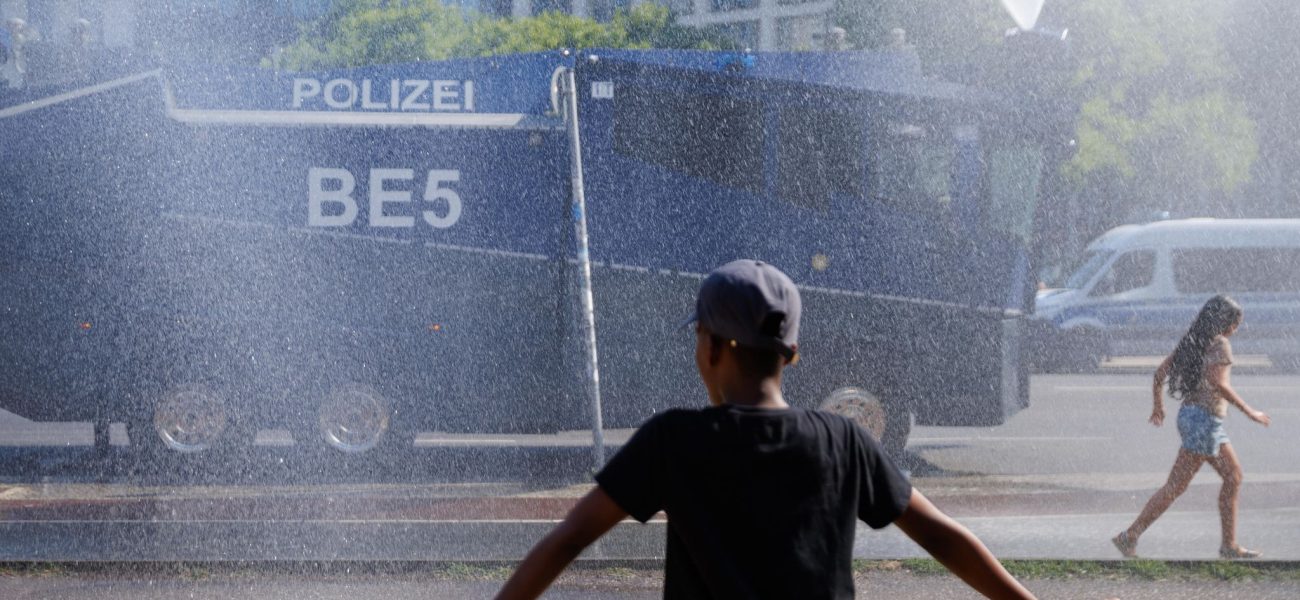
Europe’s Scorcher: Beyond Record Heat, A Chilling Economic Reckoning
POLICY WIRE — Berlin, Germany — The asphalt wasn’t just melting this week in Germany; it felt like the very foundation of Europe’s economic might was beginning to soften. For two days...

POLICY WIRE — Berlin, Germany — The asphalt wasn’t just melting this week in Germany; it felt like the very foundation of Europe’s economic might was beginning to soften. For two days running, thermometers shattered records, pushing temperatures past the once unthinkable 40-degree Celsius mark across swaths of the nation. But let’s be real, the true mercury to watch isn’t in a weather station – it’s in the quiet hum of shuttered factories and the strained power grids trying to cope.
It’s easy to dismiss a heatwave as just another summer nuisance. A reason for lighter clothes, maybe an extra Eis. But when a country synonymous with precision engineering and punctual delivery starts wilting under relentless sun, you don’t just have a climate story. You’ve got a pressing policy headache, a genuine economic disruptor—one that’s arrived years, if not decades, ahead of where many had hoped to be prepared. This isn’t just about air conditioning, folks. This is about national resilience, about the bottom line, about what kind of industrial giant can actually thrive in a rapidly changing world. Germany, with its venerable Mittelstand, its automotive titans, and its reputation for unflappable efficiency, suddenly looks quite vulnerable. And frankly, that’s got some powerful people here more than a little bothered.
Chancellor Olaf Scholz, typically stoic, offered a rare glimpse into the cabinet’s mood. “We’re facing an existential challenge to our prosperity, no less,” Scholz was quoted saying in a closed-door meeting of coalition partners, his remarks later shared by an aide privy to the discussions. “This isn’t simply an inconvenience. It’s an undeniable threat to our energy security, our agricultural yields, — and the health of our workforce. We cannot — we absolutely cannot — continue to rely on half-measures.” His sentiment, unusual for its directness, underscores a creeping realization across the political spectrum: the costs of inaction are quickly outstripping the perceived costs of radical climate adaptation. That’s a shift. A significant one.
Consider the logistical nightmares. Rivers — once the arteries of German industry, ferrying vital goods from the Rhine to the Danube — are running dangerously low. This isn’t theoretical; we’re talking about real impacts on chemical production, steel plants, and a myriad of other sectors reliant on cheap, dependable waterway transport. Barges can’t load as much. Costs rise. Deliveries stall. Supply chains, already stretched thin post-pandemic — and through the conflict in Ukraine, find another knot tightening. Germany, you see, isn’t just an exporter of goods; it’s an exporter of stability, its economic health rippling across the entire Eurozone. But if its engine starts to seize up due to heat, well, everybody catches a cold. We’re talking domino effects, clear as day.
The sheer scale of this problem means Germany is watching how other nations — especially those with climates historically more accustomed to scorching temperatures — adapt. You can’t build entirely new infrastructure overnight, can you? Not for this. The lessons learned, or sometimes unlearned, from countries facing consistent temperature extremes, like those in South Asia, become surprisingly relevant. Look at Pakistan: battling its own unprecedented heatwaves — and glacial melt events for years. That nation knows a thing or two about surviving on the edge of environmental collapse, even as its development struggles under the weight of it. There are harsh realities there, stark warnings. Shared climate means shared pain, — and sometimes, shared expertise – if Berlin is wise enough to ask.
📄 POLICY WIRE WHITEPAPER PUBLISHED: PAKISTAN'S NATIONAL SECURITY POLICY PRIORITIES
👉 READ BY CLICKING HEREBut the government faces a tough sell. Yes, there’s pressure from environmental groups, but there’s also the formidable industrial lobby, ever wary of regulations that might ding competitiveness. It’s a classic European quandary: idealism versus pragmatism. Economy Minister Robert Habeck, a Green Party leader who often walks this tightrope, expressed it rather starkly. “We need robust solutions, and quickly. Our companies, our citizens, they’re feeling the burn – literally,” Habeck stated during a press conference, mopping his brow. “But we can’t just turn off our industries. This requires smart, targeted investment in cooling technologies, in grid resilience, and frankly, in completely rethinking how we manage our water resources. The bills for inaction will be far higher than the investment required now. It’s not a choice; it’s an imperative.” He’s right, you know.
The latest figures from the European Environment Agency aren’t pretty: Europe, as a continent, is warming faster than any other, with temperatures increasing at roughly twice the global average since the 1980s. That’s a stark data point for a region that prides itself on scientific acumen — and foresight. They can see the trends. They simply need to act.
What This Means
This heat isn’t just about German discomfort; it’s a geopolitical tremor, an economic warning shot that will reverberate far beyond continental Europe. Politically, the heatwave accelerates the internal debate within Scholz’s coalition on climate policy. Expect intensified pressure on ministries to fast-track adaptation measures – particularly in infrastructure and energy – and likely a renewed push for ambitious emissions reductions, potentially creating friction with industries resistant to rapid change. But ministers can’t really afford to drag their feet now, can they? Not with this kind of public pressure. Economically, we’re looking at continued disruptions to logistics, increased energy demand (and prices, if grids falter), and a tangible drag on productivity as workers struggle in the oppressive conditions. That translates to higher costs for consumers across the continent, further fanning inflation. Also, it adds yet another layer of stress to the ongoing migration debate; a Germany less stable environmentally might be less stable politically, with knock-on effects for how it manages asylum seekers and economic migrants from more severely impacted regions globally – think beyond just European borders.