


Petrodollar Pitstop: Kessie’s €14M Saudi Exit Rattles Europe’s Football Calculus
POLICY WIRE — Jeddah, Saudi Arabia — The glittering allure of petrodollars, though substantial, doesn’t always tether a player’s ambition indefinitely. Franck Kessie, the Ivorian...

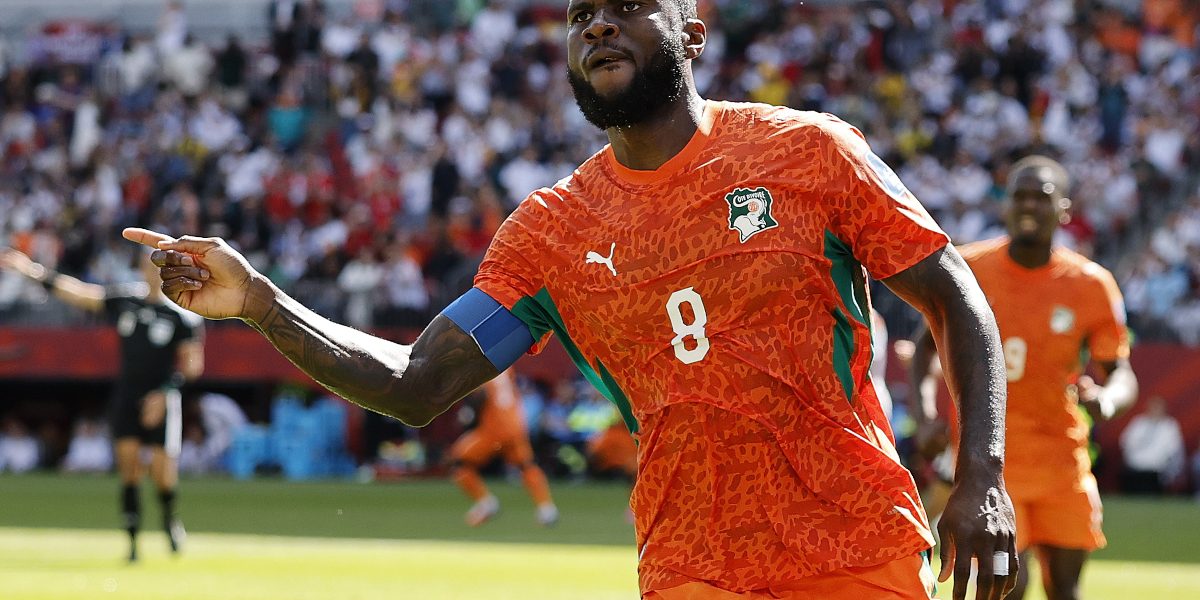
POLICY WIRE — Jeddah, Saudi Arabia — The glittering allure of petrodollars, though substantial, doesn’t always tether a player’s ambition indefinitely. Franck Kessie, the Ivorian midfield enforcer, currently untethered from his Saudi Arabian contract with Al-Ahli, seems to be proof. He’s made it abundantly clear to anyone listening, specifically Juventus, that acquiring him wouldn’t just be a signing; it’d be an absolute stroke of genius. A no-brainer, actually.
It’s not often a World Cup veteran, barely cresting his 20s, sells himself quite so baldly. But Kessie, freed from Al-Ahli come June 30, isn’t playing coy. He’s speaking from the Ivory Coast camp during the 2026 World Cup, an international stage perfect for a bit of self-promotion. Because frankly, who wouldn’t want a dynamic midfielder who’s available on a free transfer, despite just raking in a staggering €14 million annually in the Saudi Pro League?
“Look, I’ve seen the whispers about Juventus,” Kessie reportedly told La Gazzetta dello Sport, a smirk likely playing on his lips. “And I’m just focused on the World Cup, don’t get me wrong. But let’s be honest: I’m in top shape, playing at this level, — and I won’t cost a transfer fee. What more do you need? This is why clubs are queuing up. They’re smart to.”
His words cut through the usual transfer market platitudes with a refreshing bluntness, laying bare the transactional heart of modern football. Kessie knows his worth, — and more importantly, he knows the leverage a free agent at his calibre wields. He’s reportedly ready to slice his annual take from Al-Ahli by more than half, accepting a €4-5 million salary to return to Italy – a figure that, while substantial for mere mortals, represents a significant personal discount for the privilege of Serie A football. According to figures compiled by football finance analysts like CIES Football Observatory, players making this specific transition from Gulf leagues often negotiate salary cuts of 60% or more when returning to European top-tier competition, highlighting the disparity.
And what does Juventus make of this? A senior official, speaking on background, conceded Kessie’s appeal. “Franck’s a player we know well, his history in Serie A speaks for itself, doesn’t it?” the source mused. “He spent years at Milan — and Atalanta, played in over 200 league games there, scoring 41 goals, assisting 16 more. But this isn’t just about his skill set; it’s always about the financial architecture. Can we afford his wage demands, even at a cut? We’re running a business, you know, — and ‘free agents’ aren’t always as free as they sound when salaries are involved.”
📄 POLICY WIRE WHITEPAPER PUBLISHED: PAKISTAN'S NATIONAL SECURITY POLICY PRIORITIES
👉 READ BY CLICKING HEREBecause ultimately, this isn’t just Kessie’s story; it’s a micro-narrative within the macro-saga of global football economics. The Saudi Pro League, fueled by Saudi Public Investment Fund capital, has aggressively recruited top-tier talent, not just for sportswashing narratives (though that’s part of it), but to genuinely elevate their league’s stature. But perhaps a critical question emerges: is it sustainable? Can they truly replicate the competitive fire — and legacy of Europe’s established giants?
For football fans across Pakistan and the broader Muslim world, who avidly follow both local leagues and European titans like Juventus, the spectacle is more than just statistics. A veteran football commentator based in Islamabad, Dr. Hameed Khan, didn’t mince words. “You see this push and pull, don’t you? Players go for the truly life-changing money in Saudi, often towards the twilight of their careers, or perhaps after hitting a plateau. But the competitive spirit, the insatiable desire to win a Champions League or a truly major European league title? That often pulls them back. For many watching in Karachi or Cairo, it’s less about the specific clubs and more about where the real, defining football narrative is being written, where careers are immortalized.” He’s got a point there.
What This Means
Kessie’s potential move back to Serie A isn’t just a transfer; it’s a canary in the coal mine for the burgeoning, cash-rich leagues beyond Europe’s traditional strongholds. It underscores a persistent hierarchy: while Gulf money offers unparalleled financial reward, the perceived prestige and athletic challenge of Europe’s top five leagues often remains paramount. European clubs, traditionally struggling to compete with Saudi wage packets, are now finding leverage in the ‘footballing dream’ – something money can’t fully buy. They’re gambling that players, once their Saudi sojourns complete, will seek to rekindle their competitive flames at a discount. It also means that for all its investment, the Saudi Pro League still struggles with retention against Europe’s storied institutions, subtly hinting that attracting talent is one thing, retaining it against the pull of tradition is another entirely. This cyclical migration of talent, then, represents a dynamic tension – an economic tug-of-war for both individual legacies and the global pecking order of professional football.