


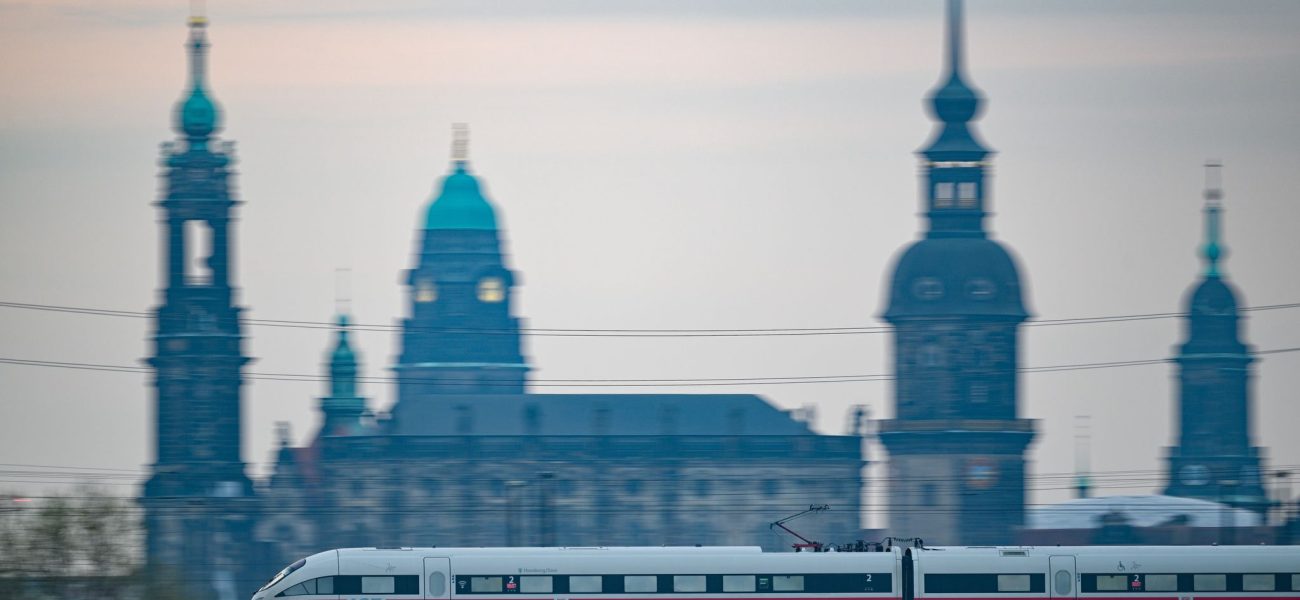
Germany’s Iron Rails Buckle: A Summer Siege on Punctuality and Pride
POLICY WIRE — Berlin, Germany — Who knew that a relentless summer sun could humble even the most unyielding of European reputations? Forget about German engineering, about the fabled efficiency of...

POLICY WIRE — Berlin, Germany — Who knew that a relentless summer sun could humble even the most unyielding of European reputations? Forget about German engineering, about the fabled efficiency of its transport networks; right now, you’d be hard-pressed to find a Deutsche Bahn (DB) train running on time, or even at all, in swathes of the country. This isn’t just a holiday season headache—it’s a very public, scorching examination of what happens when advanced infrastructure meets unprecedented climate reality.
It’s not just the tracks expanding — and warping under the oppressive temperatures. Signal failures are spiking. Overhead power lines sag, sometimes snapping. And the air-conditioning systems on older train models, well, they’re proving about as effective as a politician’s apology—too little, too late, and largely performative. Germany’s federal railway operator has bluntly told folks, don’t bother travelling unless you absolutely must. An advisory—a warning, really—that would’ve been unthinkable for the punctual precision Germans are renowned for.
“We’re witnessing heat levels that push our systems—and our patience—to the very brink,” said Transport Minister Volker Wissing in a recent parliamentary address. He sounded tired. “It isn’t simply about air conditioning anymore; it’s about the physical integrity of steel and concrete, things designed for a different climate reality. This isn’t a temporary glitch. We’re talking about fundamental adaptation needs for our national backbone, and yes, it’s going to cost a packet.” But then, what isn’t?
Because, make no mistake, this isn’t merely about grumpy commuters — and delayed summer plans. There are tangible economic ripple effects. Goods aren’t moving on schedule. Supply chains, already stretched thin post-pandemic, are experiencing yet another choke point. This, in a country that prides itself on industrial output and seamless logistical flow—it’s like watching an expert gymnast suddenly trip over their own feet on the world stage. The cracks in German efficiency are showing, and they’re not just in the asphalt.
“Our staff are doing heroic work, diverting trains, fixing faults as fast as humanly possible,” a Deutsche Bahn spokesperson, Bettina Wegner, commented, her voice strained. “But these are record temperatures, day after day. You can only pour so much cold water on an overheating engine. We’ve introduced slower speeds on sections with high track stress, that’s true. But slowing down? That’s not exactly our core brand promise, is it?” Indeed, it’s not. It’s a concession to an overwhelming natural force.
While Europe gasps, grappling with infrastructure built for temperate zones, some regions across the globe have spent centuries figuring this stuff out. Take Pakistan, for instance. It’s a nation that regularly stares down temperatures exceeding 45 degrees Celsius, where infrastructure projects often have to factor in extreme heat, monsoons, and seismic activity simultaneously. Their approach isn’t always sophisticated, but it’s grounded in a deep-seated understanding of climatic extremes. Europeans—we’re only just beginning to learn these grim lessons.
📄 POLICY WIRE WHITEPAPER PUBLISHED: PAKISTAN'S NATIONAL SECURITY POLICY PRIORITIES
👉 READ BY CLICKING HEREJust last year, Germany saw its national average temperature climb to an astonishing 10.6°C, marking it as the country’s second-warmest year on record, a fact confirmed by the German Weather Service (DWD). That wasn’t an anomaly, was it? It was a precursor. And now we’re seeing those trends bear out in bent tracks — and frayed nerves.
What This Means
This heatwave, disrupting rail across the continent—with Germany simply being the most visible case because of its high standards—is much more than a logistical headache. Politically, it spotlights how truly unprepared many European nations are for sustained climate change impacts. It’s forcing a reassessment of public spending priorities, pushing infrastructure modernization further up the agenda, and raising tough questions about resilience. Because citizens, frankly, expect governments to handle this kind of thing, not just issue polite warnings. It could easily become a political football, with opposition parties pouncing on every delay as a sign of governmental failure. Economically, prolonged disruptions eat into GDP, affect tourism, — and add to the already burgeoning inflation rates. Businesses rely on timely transport; when that’s compromised, the economic engine sputters. We’re seeing investment flows—already hesitant due to global uncertainty—becoming even warier of regions perceived as climate-vulnerable, a new kind of risk assessment emerging for multinational corporations. It’s not just a European problem. When Europe sneezes, the global economy can certainly catch a cold, and rail disruption here can easily affect supply chains from Shanghai to Karachi. But what a way to learn, isn’t it?
This situation also offers a fascinating, albeit unwelcome, opportunity for cross-continental knowledge sharing. Perhaps Germany and its neighbors might start looking to nations that have lived with the fiery breath of summer for centuries—not just for cautionary tales, but for actual engineering solutions and adaptation strategies. It’s a bitter pill to swallow, this concession that you don’t always have the answers, particularly when your national identity is built on competence. And yet, here we’re. Because the sun, it seems, waits for no one—least of all, a German train.