


Rwandan Whispers: A Royal Herd’s Poetic Embrace and the Shifting Tides of Tradition
POLICY WIRE — Kigali, Rwanda — It isn’t just the sun dappling through acacia trees, or the quiet rustle of grass underfoot, that fills the air around Rwanda’s storied long-horned cattle....

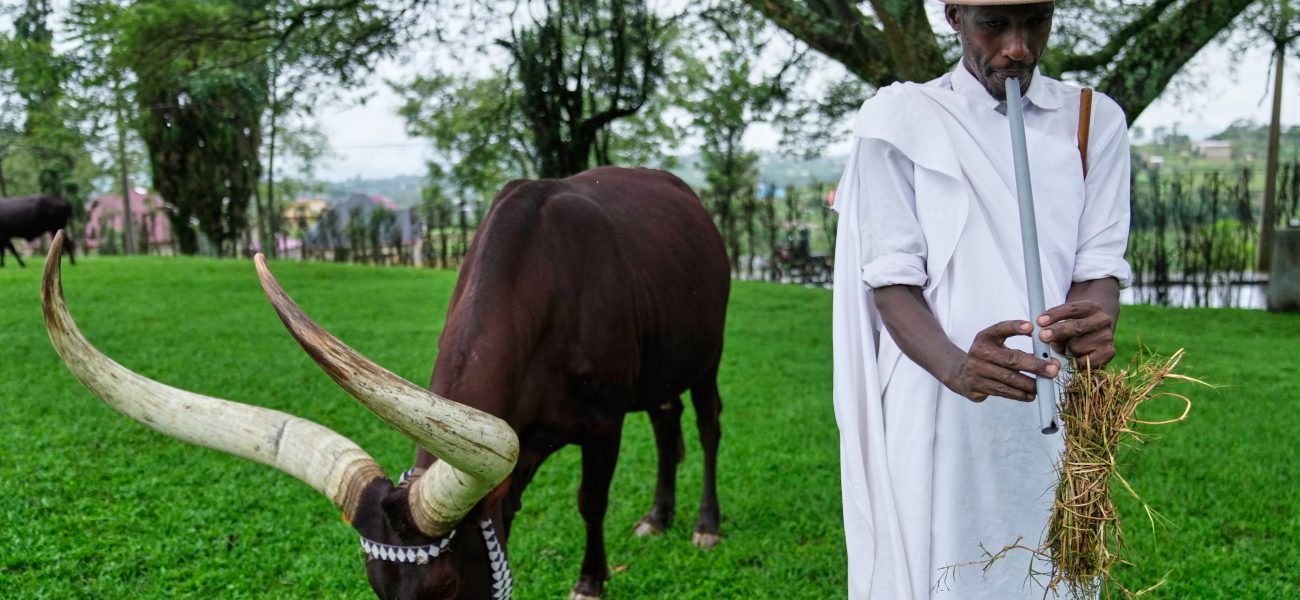
POLICY WIRE — Kigali, Rwanda — It isn’t just the sun dappling through acacia trees, or the quiet rustle of grass underfoot, that fills the air around Rwanda’s storied long-horned cattle. There’s a different kind of sound, too: the rhythmic intonations of ancient poetry, a practiced recitation passed down through generations, directed not at royalty or a discerning human audience, but at beasts. Yes, at cows. These aren’t just any cattle, mind you. They’re the Inyambo, the country’s revered long-horned Bovine aristocracy, heirs to a lineage stretching back millennia, symbols of wealth, power, and incomparable beauty in Rwandan culture. A peculiar devotion, some might say, especially in a world that increasingly measures livestock in purely economic terms.
For centuries, these magnificent creatures, with their lyre-shaped horns spanning formidable distances, weren’t merely property; they embodied the very essence of national identity. Their welfare, their bearing, even their emotional state, mattered profoundly. That tradition, seemingly anachronistic in our hyper-globalized age, persists. Caretakers still devote themselves to maintaining these rituals, ensuring the Inyambo are treated to melodic recitations of pastoral verse—Ibisigo—intended to soothe them, enhance their beauty, and connect them to their regal heritage. It’s a daily pageant, subtle but potent, often performed by young men who’ve learned these complex poems by rote, their voices echoing through sun-drenched fields. [QUOTE_PLACEHOLDER]
But how does one justify such a practice when much of the globe prioritizes agricultural efficiency above all else? Well, the point isn’t productivity. It’s preservation. It’s the dogged maintenance of a cultural cornerstone against the relentless march of modernity. And this commitment isn’t merely local folklore; it’s a deliberate choice by the Rwandan state to leverage its past, not as a quaint relic, but as a vibrant, living heritage.
It’s interesting to consider this unique animal husbandry against the backdrop of animal relationships across different cultures. In parts of South Asia, for instance, animals like water buffalo aren’t typically serenaded with poetry. Their value, while substantial, is largely tied to their physical output: milk, labor, meat. For example, the Bhojpuri regions of India, home to a significant population, rely heavily on such livestock for their livelihoods. Pakistan’s agricultural economy, too, sees buffalo as an economic engine, integral to rural household income. World Bank data from 2021 indicates livestock contributes over 11% to Pakistan’s national GDP—a testament to its pragmatic, rather than poetic, valuation. But in both contexts, animals symbolize prosperity, whether that’s measured in liters of milk or the regal curve of a horn. Yet, the deep, spiritual veneration observed with Rwanda’s Inyambo, extending to poetic recitals, suggests a different, more deeply ingrained symbolic significance that transcends mere utility.
These majestic cattle, which can grow horns measuring over eight feet from tip to tip—that’s taller than many men—are more than just a historical footnote. They represent a collective memory, a thread that ties contemporary Rwanda back to its pre-colonial kingdoms. This isn’t just about an unusual practice, it’s about a nation actively asserting its identity. And it’s not a static identity either. Rwanda’s journey through trauma and towards reconciliation is complex, and elements like the Inyambo and their guardians provide a visible link to continuity and tradition.
Because, really, when you get down to it, culture isn’t a museum piece. It’s what you do, what you say, who you are—every single day. These cattle are living monuments, tended by guardians whose knowledge is irreplaceable. It’s an unusual sight for any outside observer, but to deny its profundity is to miss the subtle mechanisms through which societies — especially post-conflict ones like Rwanda — rebuild, define, and celebrate themselves. It makes you think about what we choose to preserve, doesn’t it?
📄 POLICY WIRE WHITEPAPER PUBLISHED: PAKISTAN'S NATIONAL SECURITY POLICY PRIORITIES
👉 READ BY CLICKING HEREWhat This Means
Rwanda’s continued investment in traditions like the Inyambo is less about an eccentric affection for livestock and more about a sophisticated play on national identity, domestic pride, and international soft power. Economically, while the cattle themselves aren’t cash cows in the conventional sense, their existence generates significant tourism revenue. They become a unique selling point, drawing visitors eager to witness an untouched cultural spectacle. Politically, nurturing these symbols serves as a powerful unifying force internally. In a nation that endured unimaginable horrors just decades ago, maintaining connections to pre-colonial grandeur offers a counter-narrative of historical dignity and resilience. It reinforces a unique Rwandan identity, distinct from the colonial constructs or the divisions of the genocide. For Policy Wire, it’s a lesson in how cultural assets, even those seemingly peculiar, can be weaponized—gently, gracefully—in the global marketplace of ideas and experiences. But it’s also a reflection on what gets prioritized when building a nation. It’s a reminder that some assets are intangible, yet priceless.
But maintaining such traditions isn’t without its challenges. Modernization pulls hard, tempting younger generations towards more immediate economic pursuits. Who wants to learn long, ancient poems for cattle when tech jobs beckon? That’s the real policy quandary. It requires not just enthusiasm, but also sustained state funding — and deliberate educational programs. And these efforts—they’re what allow such peculiar beauty to survive in a pragmatic world. So, these cattle, draped in ancestral poems, aren’t just pretty faces. They’re an active declaration of Rwanda’s enduring spirit, an almost stubborn refusal to let its unique story be swallowed by the homogeneity of the 21st century.