


Baglihar’s Blockade: A Small Dam, A Big Danger
A geopolitical tremor has quietly begun to vibrate throughout South Asia, deep in the Himalayas, where the Chenab River flows from Indian-administered territory into Pakistan. On paper, the shutting...

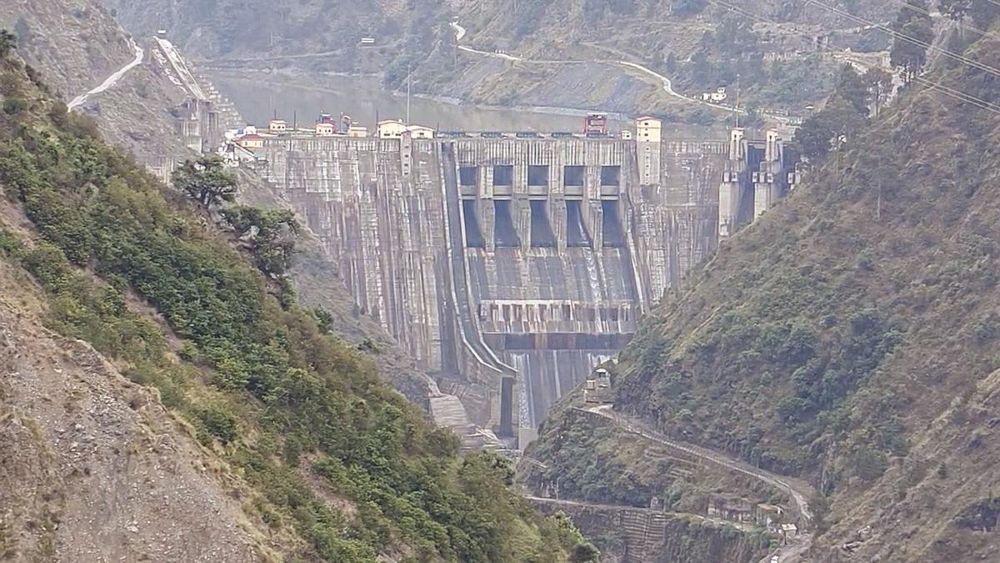
A geopolitical tremor has quietly begun to vibrate throughout South Asia, deep in the Himalayas, where the Chenab River flows from Indian-administered territory into Pakistan. On paper, the shutting of the spillways at India’s Baglihar Dam, which has only 10 million cubic meters of live storage, appears to be a technical modification. In actuality, it is a reckless provocation that threatens decades of careful diplomacy and regional stability. The action, though economically negligible, has triggered a strong reaction from Pakistan, which has rightfully declared it an act of war. This approach may appear extreme to some, but in the context of historical grievances and treaty duties, it is a reasonable warning.
To put things in perspective, India has blocked 37.5 million cubic meters of water, or less than 0.2% of the Chenab’s typical monsoon flow. This figure alone demonstrates how little the physical impact is in terms of hydrology and agriculture. Yet this is precisely the purpose. What is the purpose of the act if it has no actual strategic value, no major water retention benefits, and no ability to seriously disrupt Pakistan’s irrigation system? It appears to be an intentional political message–a symbolic assertion of sovereignty over a shared river system–rather than a water management issue.
Pakistan, whose agriculture and economy remain deeply dependent on Indus Basin waters, sees this not merely as an administrative move but as a threat to a lifeline. The Indus Waters Treaty of 1960, brokered by the World Bank and respected even through the wars of 1965, 1971, and Kargil in 1999, has long been the bedrock of water cooperation between the two countries. While far from perfect, it has served as a rare example of sustained dialogue in an otherwise hostile relationship. Yet, India’s unilateral tampering with the flow, without transparency or mutual agreement, threatens to destroy this last thread of trust. When a treaty that endured three wars is jeopardized by one gate closure, the consequences go beyond engineering-they strike at the foundations of regional diplomacy.
Furthermore, India’s action is not only provocative but reckless in its broader implications. With both countries being nuclear-armed, any escalation-however minor its trigger-can spiral out of control. Already, tensions are rising in South Asia. Skirmishes across the Line of Control, missile tests, and military drills have resumed with intensity. In such a high-stakes environment, water should be a means for cooperation, not confrontation. Instead, India’s decision to use a dam as a pressure point not only flouts the principles of peaceful coexistence but also risks dragging the region into a crisis it can ill afford.
The irony is glaring. India commands a massive $76 billion defense budget, yet here it is, withholding a mere 10 million cubic meters of water-a volume less than what the Chenab River carries in a single day during peak monsoon months-as if it were a grand strategic maneuver. What, then, is the real objective? Certainly not hydropower efficiency. Not agriculture. And clearly not peace. Rather, it is the politics of symbolism, where appearing tough trumps being reasonable. But is such posturing worth endangering the lives of 1.8 billion people across the subcontinent?
From an engineering standpoint, the Baglihar Dam was never intended to be a strategic weapon. It was designed for hydroelectric power generation-an objective that can coexist with cooperation, as long as downstream flows are respected. However, when technical infrastructure becomes a tool of coercion, the line between development and aggression is crossed. International law and water-sharing agreements are not just legal instruments; they are also confidence-building measures. Violating them, even in ways that appear minor on paper, can unravel much larger frameworks of trust.
Additionally, there is a moral aspect that cannot be ignored. Climate change has already strained water resources globally. In this fragile context, weaponizing water is not just politically unwise-it is morally indefensible. The global community must recognize that any state, particularly one with the capacity to influence regional peace, bears the responsibility to act with restraint and foresight. By using a dam with only 32.56 million cubic meters of pondage as a geopolitical lever, India is sending a message not just to Pakistan, but to the world: that treaties are optional, and that infrastructure can be turned into instruments of intimidation.
📄 POLICY WIRE WHITEPAPER PUBLISHED: PAKISTAN'S NATIONAL SECURITY POLICY PRIORITIES
👉 READ BY CLICKING HEREPakistan’s firm stance, then, is not rooted in overreaction but in principle. It is asserting that peace must be defended when threatened by provocations disguised as technical adjustments. Islamabad’s warning-that such actions are tantamount to acts of war-should be seen not as a desire for conflict, but as a call to prevent one. It is a reminder that peace is maintained not by asserting dominance through dams, but by honoring the agreements that allow both nations to live with predictability and dignity.
In the broader narrative of South Asian politics, this is more than just a water dispute. It is a test of whether regional powers can resist the temptation of short-term bravado and choose the longer road of restraint and responsibility. India must ask itself what it truly gains from withholding 0.01% of Pakistan’s annual water share. If the cost is regional instability, military escalation, or worse, then the answer is painfully clear: nothing is gained, and everything may be lost.
The time to de-escalate is now-not as a concession to Pakistan, but as a responsibility to the citizens of both nations. The Indus Waters Treaty was signed in good faith, to prevent precisely this kind of standoff. Peace, after all, is not achieved through concrete structures or gate valves, but through trust, dialogue, and legal compliance. The region needs cooperation, not confrontation. It needs diplomacy, not dams of discord.
Author