


AI’s Ancient Gaze: Unburning Herculaneum’s Wisdom, Recharting Knowledge’s Horizon
POLICY WIRE — NAPLES, ITALY — For centuries, the wisest minds across generations wrestled with the carbonized remains of Herculaneum, relics frozen in time by Vesuvius’s fiery rage. These...

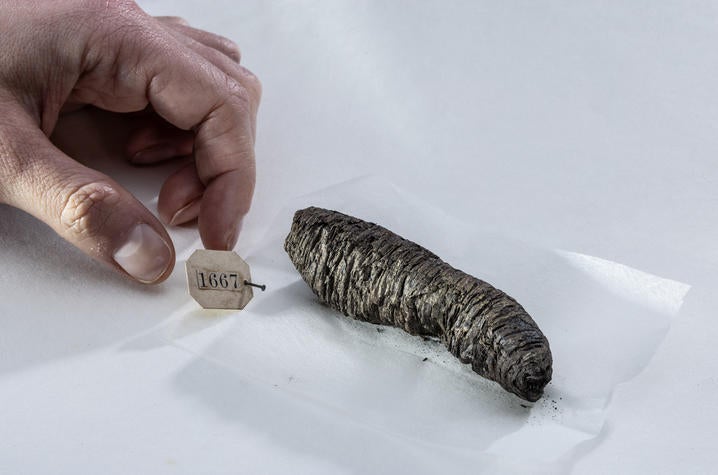
POLICY WIRE — NAPLES, ITALY — For centuries, the wisest minds across generations wrestled with the carbonized remains of Herculaneum, relics frozen in time by Vesuvius’s fiery rage. These brittle, inky tubes—once libraries of Hellenistic thought—have long defied decipherment, mocking human ingenuity. But now, it isn’t a patient historian with a delicate brush who’s coaxing secrets from the ashes. It’s a machine. A rather indifferent, hyper-efficient one, actually, changing everything we thought we knew about resurrecting forgotten histories.
It wasn’t a sudden breakthrough, mind you. This is the culmination of years, decades even, of academic grinding — and technological leaps. We’re talking about sophisticated AI algorithms, fed petabytes of data, trained to identify patterns that no human eye, no matter how keen or how well-lit, could ever perceive. They’ve effectively unrolled scrolls that would crumble at the slightest touch, doing so virtually. And what they’re finding isn’t just ephemera; it’s dense philosophical tracts, economic treatises—the raw intellectual fodder of a lost age.
Think about it. We’ve always imagined scholarship as a lone individual hunched over dusty tomes, perhaps a magnifying glass glinting in weak lamplight. This? This is a supercomputer flexing its digital muscle, sifting through layers of geological trauma with an almost casual expertise. It’s got no emotional attachment, no bias, just pure, unadulterated pattern recognition, stripping away the sediment of millennia to reveal faint ink traces. The team behind the tech says they’ve [QUOTE_PLACEHOLDER] about previously undecipherable Greek text from one particular scroll. It’s an inconvenient truth for those who cherish the purely human touch in such grand undertakings, isn’t it?
This tech isn’t just some quirky academic parlor trick, either. Its implications stretch far beyond the Bay of Naples, particularly in regions where cultural heritage lies in similarly precarious states. Imagine ancient manuscripts from Pakistan, say from the Gandharan civilization, damaged by time, conflict, or natural decay, finally becoming readable. Or texts from ancient Islamic libraries, partially destroyed yet holding untold wisdom, suddenly offering their contents up for scrutiny. Because a machine doesn’t care if a manuscript was burned in Pompeii or ravaged by desert sands; its algorithms seek information, wherever it might reside.
There’s real intellectual gold here. The ancient world, especially the Hellenistic period, significantly shaped philosophical thought and early scientific inquiry across the globe—influencing everything from Alexandrian scholarship to early Abbasid-era Baghdad, a true intellectual center in its time. So, discovering more of what these thinkers were actually saying? That’s not just neat, it’s a recalibration of our understanding of history’s currents. But then, it also raises questions about who owns this knowledge, who controls the AI that deciphers it, and whose interpretations will eventually become canonical.
The science is quite a spectacle, involving micro-CT scanning and machine learning models designed to map out the physical geometry of carbonized ink particles embedded within the papyrus layers. It’s basically a three-dimensional X-ray, but then the AI goes in to differentiate the ink from the charred paper. According to researchers at the University of Kentucky, a single algorithm can process and segment textual data 90% faster than traditional manual methods, an astounding leap in efficiency.
📄 POLICY WIRE WHITEPAPER PUBLISHED: PAKISTAN'S NATIONAL SECURITY POLICY PRIORITIES
👉 READ BY CLICKING HEREAnd let’s not pretend this is purely for the sake of abstract knowledge. The rediscovery of complete philosophical texts could potentially shift academic paradigms, inform modern ethical debates, or even—dare I say it—offer new insights into governance from ancient Rome’s perspective. It’s big. It’s profoundly altering the pace at which we learn about ourselves through history.
What This Means
This isn’t merely about old papers. The capacity for AI to decode previously lost information represents a seismic shift in how power dynamics surrounding historical narratives are constructed. Control over access to and interpretation of ancient texts translates directly into control over identity and understanding. Economically, any major new historical discovery can spark tourism, research grants, and even create entirely new intellectual property—consider the value if lost works by Aristotle or Plato were recovered. From a political standpoint, if nations or institutions can digitally unlock the secrets of civilizations, it grants them a unique leverage in cultural diplomacy and educational influence. it shines a harsh light on inequities: who has access to this tech? Who determines what fragments are prioritized for decoding? Nations with a wealth of undiscovered history—like those across the MENA region or South Asia—could either leapfrog into new eras of cultural self-discovery or find their heritage interpreted and potentially recontextualized by foreign entities wielding superior computational power. It’s a brave new world for ancient history, one that demands fresh policy discussions regarding digital sovereignty and data access.
It really brings home the ongoing revolution in information and technology, mirroring—perhaps in a stranger, more arcane way—the current dilemmas we face regarding the spread of deepfakes and the blurred lines of digital authenticity. But for now, we’ve got machines giving voice to the long-dead. That’s pretty wild, even for this old hack. This journey into Herculaneum’s scrolls, facilitated by artificial intelligence, is not just about historical texts; it’s also reshaping our very information frontier. Get ready for some re-writes in the history books.