

Summer’s Furnace: Albuquerque’s School Infrastructure Under Global Strain
POLICY WIRE — Albuquerque, United States — For a good chunk of folks, summertime translates to lazy days and empty school halls, a momentary reprieve from the relentless grind of education. But in...

POLICY WIRE — Albuquerque, United States — For a good chunk of folks, summertime translates to lazy days and empty school halls, a momentary reprieve from the relentless grind of education. But in New Mexico’s largest school district, that image couldn’t be further from the mark. It’s a logistical frenzy, a hot, gritty ballet of contractors and pipefitters wrestling aging infrastructure into shape, with air conditioning — or the lack thereof — sitting front and center.
It’s not just a few leaky faucets; Albuquerque Public Schools operations department, for instance, juggled a staggering 11,000 work orders just this summer alone. Last school year, the department handled 38,000 total. Imagine that kind of sustained, grinding demand. Antonio Gonzales, APS deputy superintendent of operations, didn’t pull any punches, noting the idea that [QUOTE_PLACEHOLDER] could be further from the truth. It’s actually one of the busiest times for us, he said, his voice probably tired, like anyone deep in the weeds of public works.
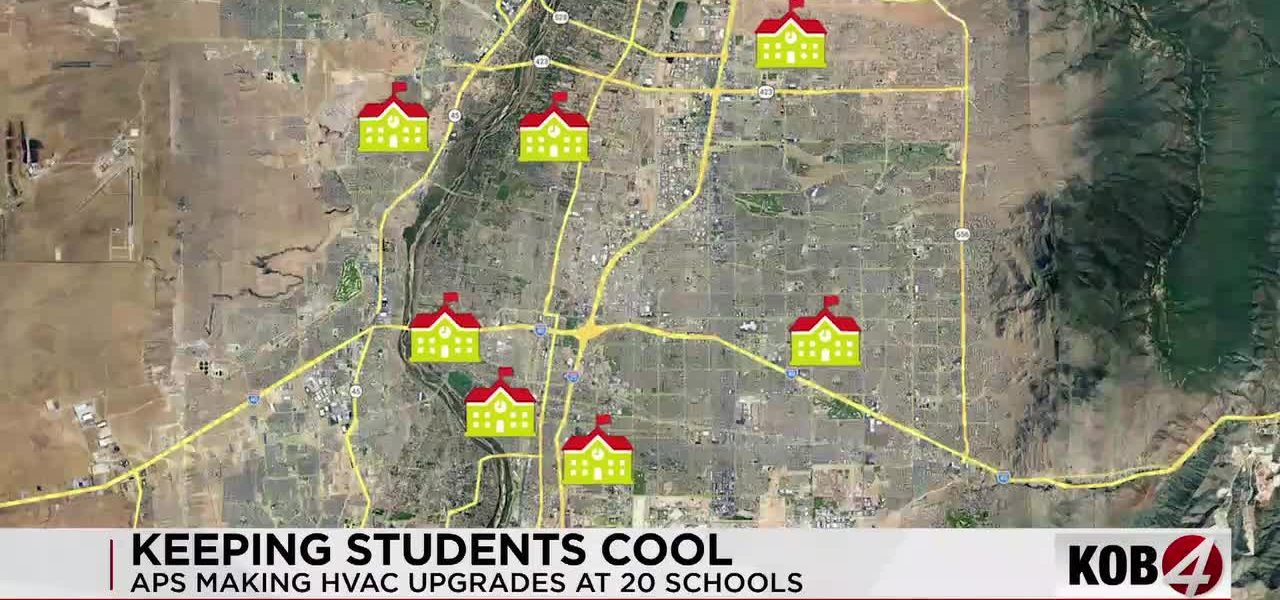
Much of this urgency stems from a very direct mandate: the people spoke. Last November, voters greenlit a significant $350 million capital improvements bond for the district. Now, the bureaucratic gears are slowly, methodically, grinding away at implementation. A substantial chunk—$40 million of that voter-approved cash—is slated for desperately needed air conditioning upgrades across 20 school campuses. It’s a big lift, but it’s a necessary one in a state where triple-digit temperatures aren’t some statistical anomaly, but a summer rite of passage. Students, after all, learn better when they’re not slowly melting in their desks.
And these aren’t simple, plug-and-play operations. We’re not talking about some quick residential fix here; these are massive public facilities. As Gonzales put it, Each one of these HVAC projects is unique. Some will require electric work, some will require roof improvements, some will require structural improvements, some will be a plug and play. You can practically hear the weary sigh accompanying that explanation, because each unique aspect means another permit, another contractor, another potential delay. Right now, seven schools already have upgrades finished or in progress. La Cueva High School students, lucky them, will actually return to a new heating — and cooling system. Eight other schools, meanwhile, are languishing — or rather, carefully progressing — in the design phase.
But the real wrench in the works isn’t just local bureaucracy. Gonzales laid it bare: supply chains. Many crucial components, machines in particular, often demand a year or more for delivery. That correlated with the labor, contractors, to come — and do these capital improvements, is also an implication. It’s a global market, remember, one that still bears the scars of pandemics and geopolitical jitters, influencing everything from computer chips to compressors. Imagine trying to run a vast educational system, keep facilities cool, and still ensure you’re adhering to timelines when your raw materials are stuck somewhere off a foreign port.
The scale of summer usage only amplifies this challenge. This year, the district doubled the number of schools running summer programs, hitting 70 occupied campuses. That means eyes and ears on the ground, thankfully, keeping tabs on buildings that might get too hot, providing real-time data on exactly where these upgrades matter most. But Gonzales conceded that, even with this surge of effort — and an obvious public mandate, This will take time. We, we know it will take time, but we started, — and that’s what we’re so excited about today.
📄 POLICY WIRE WHITEPAPER PUBLISHED: PAKISTAN'S NATIONAL SECURITY POLICY PRIORITIES
👉 READ BY CLICKING HEREYou know, New Mexico isn’t the only place feeling the heat – literally — and figuratively. From Albuquerque to the sweltering plains of Punjab, effective school infrastructure in the face of rising global temperatures is becoming less a luxury, and more an urgent mandate for educational continuity. While Albuquerque wrestles with delivery timelines for HVAC units, cities like Lahore, Pakistan, contend with similar pressures on their power grids and school facilities, often with far fewer resources. The challenges of climate-proofing public institutions, whether through new tech or sheer will, isn’t some niche American problem. It’s a planetary one, particularly stark for countries in the Global South that have contributed least to the problem but feel its effects most acutely.
What This Means
This Albuquerque situation serves as a stark, on-the-ground illustration of several policy truths. First off, direct democracy works – voters saw a need, particularly concerning climate change’s growing footprint on daily life, and allocated funds. That’s a good thing, a strong endorsement of community investment in the public sphere. But the actual nuts — and bolts of implementation? That’s where the policy meets the pavement, often hitting speed bumps or, in this case, a global supply chain backed up for miles.
Economically, this scenario highlights the cascading costs of deferred maintenance — and climate change. Waiting years to address failing infrastructure means more expensive fixes later, alongside disruptions to learning and a potential drain on the local economy if schools become unbearable during extreme weather events. The extended lead times for specialized equipment aren’t just a minor annoyance; they represent vulnerabilities in globalized manufacturing that have direct impacts on local budgets and the quality of public services. It means planning needs to happen further in advance, requiring more predictive analysis and potentially creating more costly redundancies.
Politically, the story reveals a core challenge for governance: transforming public will into tangible outcomes. While the public has clearly indicated a desire for improvements, maintaining public trust through slow, complicated, and often invisible bureaucratic processes is an art form. Gonzales’ transparency about the difficulty — and time involved, acknowledging that [QUOTE_PLACEHOLDER], is smart. It manages expectations, crucial for avoiding voter cynicism in future bond initiatives. In an increasingly polarized world, demonstrating competence in delivering basic public services is more politically salient than ever, not just in New Mexico, but in bustling mega-cities from Caracas to Cairo, where the climate’s impact is an immediate, daily reality for millions of students.