


Keir Starmer Resigns as UK Prime Minister Amidst Internal Strife
POLICY WIRE — London, UK — In a dramatic political turn on Monday, Keir Starmer announced his intention to step down as Britain’s Prime Minister, yielding to wh...

POLICY WIRE — London, UK — In a dramatic political turn on Monday, Keir Starmer announced his intention to step down as Britain’s Prime Minister, yielding to what sources describe as intense pressure from within his own party and a sharp decline in his public standing. His departure paves the way for the UK’s seventh prime minister in a single decade, underscoring a period of remarkable instability at the apex of British governance. (Reporting based on wire dispatches)
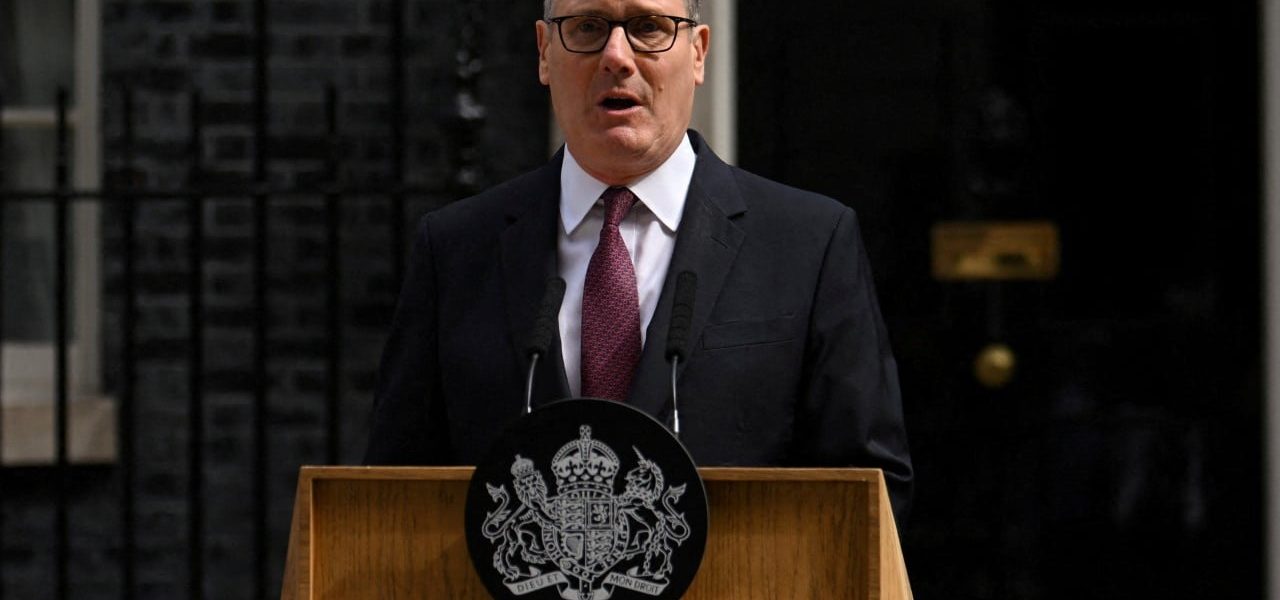
Speaking briefly outside the iconic 10 Downing Street residence in London, Starmer delivered an emotional address. His words conveyed a sense of conviction amidst the turmoil, directly attributing his decision to a broader commitment. “Every decision I have taken has been about putting the country I love first. That is why I will resign as leader of the Labour Party,” Starmer stated, a sentiment reflective of the often-stated rationale for such high-stakes political sacrifices.
The announcement follows a period characterized by plummeting popularity metrics and explicit maneuvering by rivals within his party, according to reports. Up until Monday, Starmer had reportedly resisted mounting calls for his resignation. His stepping aside now triggers a leadership contest for the Labour Party and, by extension, the Prime Ministership of the United Kingdom. The details of his interim plans and the immediate process for selecting his successor are anticipated with keen interest across the political spectrum.
Starmer’s tenure, though concisely described in this initial reporting, has evidently concluded under circumstances of significant internal challenge. His successor will inherit not only the party leadership but also the immense responsibilities associated with leading the nation.
📄 POLICY WIRE WHITEPAPER PUBLISHED: PAKISTAN'S NATIONAL SECURITY POLICY PRIORITIES
👉 READ BY CLICKING HEREWhat This Means
Keir Starmer’s resignation signals not merely a change at the top, but a potential recalibration for British politics. The rapid succession of prime ministers – now seven within ten years – indicates a deeper fragility in the nation’s political landscape, regardless of which party is in power. This frequent turnover can undermine long-term policy initiatives and national stability, creating an environment ripe for domestic uncertainty and potentially diminishing the UK’s influence on the international stage.
For the Labour Party, the immediate implication is a leadership contest. This period, while democratic, can often lead to internal divisions, particularly if contenders offer starkly different visions for the party’s future or if the contest becomes protracted and acrimonious. The outcome won’t only determine who leads the party but also the strategic direction of the government. For the public, this event forces a reassessment of political leadership — and the expectations placed upon it. The challenge for Starmer’s successor will be to not only unify a fractured party but to restore a sense of consistency and purpose in a political climate that has seen an uncommon level of executive churn.