


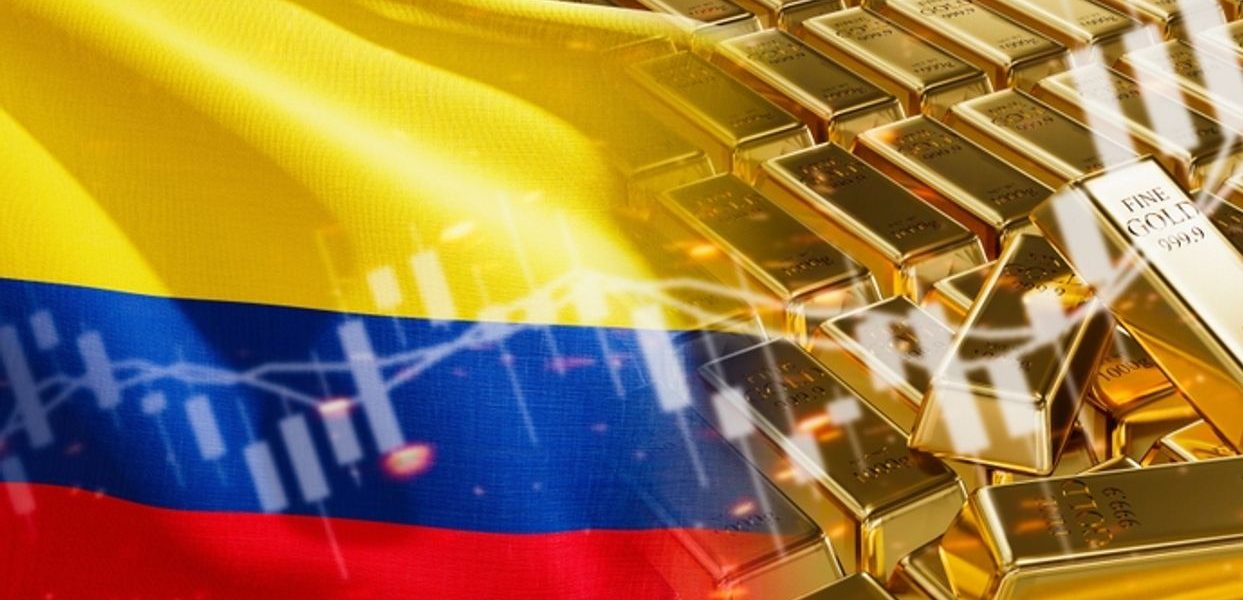
Gold Rush, Green Scrutiny: Colombia’s Mineral Riches Draw Royal Road’s Eye Amidst Shifting Global Sands
POLICY WIRE — Bogotá, Colombia — Forget the immediate headlines of presidential gaffes or economic jitters. In the less glamorous, but undeniably high-stakes world of extractive industries, the quiet...

POLICY WIRE — Bogotá, Colombia — Forget the immediate headlines of presidential gaffes or economic jitters. In the less glamorous, but undeniably high-stakes world of extractive industries, the quiet maneuvers of companies like Royal Road Minerals speak volumes about global appetites and national sovereignty. While pundits fret over a rising dollar or commodities markets, a Canadian junior miner is setting its sights deeper on Colombia’s often-turbulent earth—specifically, for gold and copper. It’s less a prospecting expedition and more a calculated bet, a high-wire act balanced between geological promise and geopolitical reality.
It isn’t a secret that Colombia, despite its rich mineral endowment, has had a complicated relationship with its underground treasures. Years of internal conflict, coupled with sporadic populist sentiments, have cast a long shadow over foreign investment. But for Royal Road, whose modus operandi involves snagging promising projects in politically charged regions, Colombia appears to be ripe for expansion. They’re not just looking for veins of gold; they’re looking for an operational window, a moment when the risks seem manageable and the returns too juicy to ignore.
Tim Coughlin, CEO of Royal Road Minerals, isn’t one to mince words when it comes to the company’s aggressive growth strategy. “We’re in the business of value creation, pure and simple,” Coughlin reportedly stated during an investor call last month. “And we believe Colombia, despite its historical complexities, presents an unparalleled frontier for mineral discovery. We’ve done our homework; we understand the landscape—geologically, politically, socially. It’s a high-reward environment for those who know how to navigate it.” His confidence isn’t unwarranted, but it certainly isn’t an unqualified promise, either. Digging deep requires more than just shovels and permits; it demands diplomacy and a certain tolerance for bureaucratic molasses.
But the calculus isn’t solely in the hands of foreign firms. Colombia’s Minister of Mines and Energy, Omar Andrés Camacho, articulated a common sentiment echoed across resource-rich developing nations. “We welcome responsible investment, that’s clear. But the era of unchecked exploitation is finished,” Camacho is said to have declared in a recent policy briefing. “Our resources are for the benefit of all Colombians. Any venture must prioritize environmental sustainability, fair labor practices, — and genuine community engagement. Anything less just isn’t going to fly here anymore.” That’s a stark warning, particularly when environmental regulations and indigenous rights gain more global traction. It means negotiations won’t be simple.
And these sentiments aren’t unique to Latin America. They resonate across continents, in places like Pakistan’s Balochistan province, another mineral-rich region grappling with similar questions of resource ownership and equitable benefit distribution. The history of such resource extraction, from Latin America to South Asia, is frequently etched with local disaffection and environmental degradation, a pattern governments globally are, theoretically anyway, keen to avoid repeating. But the lure of investment, of export dollars, it’s a powerful siren song.
Consider the raw numbers. According to Colombian government data, the mining sector contributed approximately 2.5% to the nation’s GDP in 2022. It sounds modest, perhaps, but it’s a sector that contributes a much larger chunk to the country’s export earnings, a significant foreign exchange generator. That’s a leverage point governments aren’t eager to discard, even with environmental concerns looming large. And frankly, the global demand for strategic metals like copper—essential for everything from electric vehicles to renewable energy infrastructure—isn’t slowing down. Somebody’s got to dig it up.
📄 POLICY WIRE WHITEPAPER PUBLISHED: PAKISTAN'S NATIONAL SECURITY POLICY PRIORITIES
👉 READ BY CLICKING HEREWhat This Means
Royal Road’s increased focus on Colombia isn’t just another corporate expansion. It’s a barometer for evolving investment climates in complex jurisdictions. On one hand, it suggests that despite historical baggage and persistent challenges, Latin American nations—or at least parts of them—are becoming more palatable for long-term mineral plays. On the other, it signals a new kind of battleground, not just over land rights or commodity prices, but over narratives. Firms don’t just need a social license to operate; they need to become expert storytellers, weaving tales of local upliftment and ecological stewardship.
For Colombia, it’s a test. Can it successfully attract necessary foreign capital for its development goals while simultaneously asserting greater national control over its natural wealth and adhering to progressive environmental policies? It’s a tricky balancing act. Get it wrong, — and it’s a familiar story: environmental ruin and social unrest. Get it right, — and the potential for shared prosperity could, perhaps, genuinely manifest. But the path, as always, is paved with good intentions—and very, very hard rock.
Global dynamics, you see, play a large part here too. As energy transitions gather pace, demand for these metals will intensify, placing renewed pressure on governments and local communities to make difficult choices. It isn’t just about Colombian gold anymore; it’s about the future of everything that runs on a chip or a battery. And that, frankly, changes everything.