


Social Media: The New Frontier for Europe’s Young Football Talent
POLICY WIRE — Milan, Italy — There was a time, not so long ago, when an aspiring professional footballer’s public persona was carefully cultivated, perhaps even aggressively managed, by agents and...

POLICY WIRE — Milan, Italy — There was a time, not so long ago, when an aspiring professional footballer’s public persona was carefully cultivated, perhaps even aggressively managed, by agents and club PR. Players, often emerging from challenging backgrounds, were generally seen, not heard, until they’d actually kicked a ball in anger on the grand stage. Now? Now the grand stage is everywhere, all the time, and a nineteen-year-old’s pre-season musings—or indeed, their strategically placed laundry—can send ripples through multi-million dollar global fan bases.
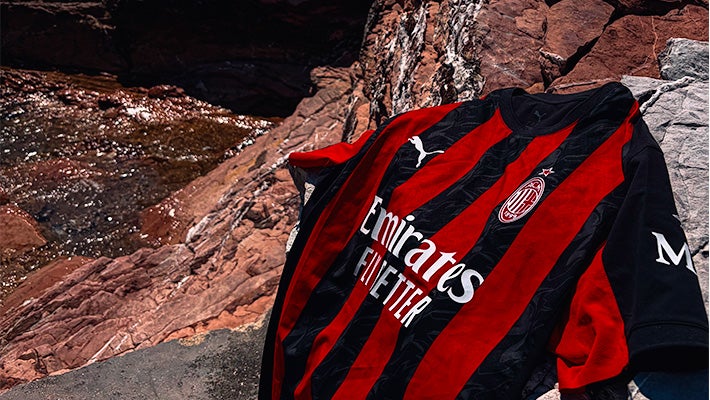
It’s a peculiar dance, this modern-day ballet between nascent athletic promise — and digital projection. Consider Andrej Kostić, a Bosnian-born forward poised to join AC Milan, still very much a teenager. He hasn’t officially donned the Rossoneri colors in a competitive match. He’s not yet met Rúben Amorim on the training pitch. But his social feeds? They’re already awash with Milan lore. A beach snapshot — innocent enough — with a club jersey draped over coastal rocks. An unremarkable gesture in isolation, yet enough to generate a flurry amongst the Rossoneri faithful online. Because today, that’s how you signal intent. That’s how you cultivate a narrative.
And Kostić isn’t alone in this digital apprenticeship. Alphadjo Cissè, a year his senior at 18, also newly acquired by Milan, has been sharing reflective posts. His recent past included a breakthrough at Catanzaro, followed by an untimely injury that clipped his wings during a crucial Serie B campaign. But he’s playing the social media game, too. “It’s been an unforgettable season. Thank you Catanzaro for believing in me from day one,” he typed, underscoring gratitude while subtly broadcasting his next big step. This isn’t just self-expression; it’s an early form of brand building, often an involuntary one, for athletes now measured by their marketability long before their goal tally.
Club executives, usually tight-lipped about the economics of player development, are increasingly open about this evolving landscape. “We don’t just scout for talent on the pitch anymore; we’re looking at their digital footprint,” confessed Giovanni Rossi, a seasoned director at a major Serie A club, speaking on background about the contemporary athlete. “How they engage, what they represent online – it impacts their brand value, — and frankly, our brand’s global reach.”
The numbers don’t lie, either. A 2022 Nielsen study, for instance, indicated that athletes with robust social media engagement can command up to 25% higher sponsorship fees than their less active counterparts. That’s a significant delta. Because money talks, — and in professional football, it’s screaming from every trending hashtag and ‘liked’ photo. These youngsters aren’t just aspiring footballers; they’re inadvertently becoming public relations instruments, ambassadors for brands far beyond the pitch. That’s a lot of pressure for a kid, isn’t it?
The cultural ramifications extend globally. Think about the passionate support for European clubs in places like Pakistan, Indonesia, or even Kostić’s native Bosnia – nations deeply connected to the Muslim world, where football allegiances often transcend local leagues. A young player’s carefully curated online presence—showing dedication, relatability, maybe a touch of humility—can resonate powerfully with these international fan bases. It makes them accessible, almost tangible, to supporters thousands of miles away, fostering loyalty that translates directly into merchandise sales and broadcast viewership. But it also means every misstep, every youthful indiscretion, is magnified, amplified, — and permanently etched online. Their personal lives? Forget it; they don’t really have one once they start posting.
What This Means
This relentless focus on a burgeoning athlete’s social media activity signals a deeper paradigm shift in sports. For one, it dramatically shortens the period between a player’s raw talent emerging and their full immersion into commercial machinery. What was once a gradual, protected ascent is now a rapid, high-stakes exposure from a ridiculously young age. These are kids, really, but they’re already performing an intricate dance of personal branding. They’re part athlete, part influencer, part billboard, — and probably not ready for any of it, emotionally speaking. The pressure to conform, to always present an aspirational, marketable image, is intense and probably isn’t great for mental well-being over the long haul. That’s a conversation for another day, perhaps.
for clubs like AC Milan, it reflects an aggressive strategy for market penetration — and revenue diversification. It isn’t merely about signing a skilled player; it’s about acquiring an asset with a ready-made (or easily moldable) digital following. That’s valuable, right? This integration of digital footprint into player evaluation essentially means that youth academies aren’t just nurturing football skills, but implicitly, cultivating social media savants, or at least managing their output. But it also places an enormous burden on clubs to protect their young charges from the pitfalls of online scrutiny. We’re entering an era where ‘player welfare’ extends far beyond physical conditioning, encompassing psychological resilience in the face of constant digital judgment.
It’s not just about player development anymore. It’s about cultivating entire fan communities through every public move an athlete makes, irrespective of their age. The global game’s expansion into new territories – the Muslim world being a prime example, with its youthful populations and increasing digital access – relies on these highly personal, yet digitally disseminated, narratives. Consider the broader trend of brands targeting youth demographics through digital channels; football clubs are doing the same. It makes sense, really. And in this context, Andrej Kostić’s casually placed jersey isn’t just fan service; it’s an economic signal, a tiny, pixelated shot fired across the bows of global sports marketing, declaring the game’s newest, youngest frontiers.
Dr. Zara al-Khalid, a prominent sports sociologist focused on youth culture in the Middle East and South Asia, notes this cultural shift. “Young athletes, particularly those from Muslim-majority nations gaining access to European leagues, carry immense representational weight,” she observed recently. “Their online presence becomes a touchstone for identity, aspiration, and even pride back home, creating a profound, though sometimes overwhelming, connection with millions. The clubs understand this. It’s a new form of soft power.” And they’re harnessing it, aren’t they? Whether these young players are ready for that weight is another matter.