


Cleveland’s Perpetual Paradox: Can a Football Franchise Escape Its Own Gravity of Failure?
POLICY WIRE — Cleveland, Ohio — They say insanity is doing the same thing over and over and expecting different results. In Cleveland, Ohio, folks are starting to wonder if their football franchise,...

POLICY WIRE — Cleveland, Ohio — They say insanity is doing the same thing over and over and expecting different results. In Cleveland, Ohio, folks are starting to wonder if their football franchise, the Browns, didn’t just print that definition onto their front office stationery. This isn’t just about football; it’s a case study in corporate dysfunction, a bizarre spectacle of institutional self-sabotage playing out under bright lights, each year resetting the clock on perpetual failure.
It’s an organization that feels trapped in a relentless, unforgiving cycle. Just when you think they might finally break free, they make a move—a grand gesture, sometimes—that snaps them right back into their old orbit. The recent trade of Myles Garrett, arguably the franchise’s only generational talent in ages, to the Los Angeles Rams for a package including defensive end Jared Verse and a haul of draft picks (a first-rounder in 2027, a second in 2028, and a third in 2029) felt less like a strategic pivot and more like another surrender flag. Because what’s the point of assets if you don’t know what to do with them? The trade, however substantial in draft capital, has critics asking if it’s merely a prolonged delay in reaching the same, familiar dead end.
The whole affair has a distinct flavor of an ill-conceived mega-project in an emerging economy, where grand plans and shiny new infrastructure often get unveiled with much fanfare, only to flounder amidst mismanagement and opaque decision-making. You see this kind of institutional inertia, this inability to decisively cut losses despite mounting evidence, often reflected in, say, certain state-owned enterprises in Pakistan struggling with perpetual debt and inefficiency, continually propped up with new loans or resources but never quite breaking free from their historical shackles. The rhetoric changes, the faces in charge might shift, but the underlying systemic issues? They persist, mocking any claims of genuine progress.
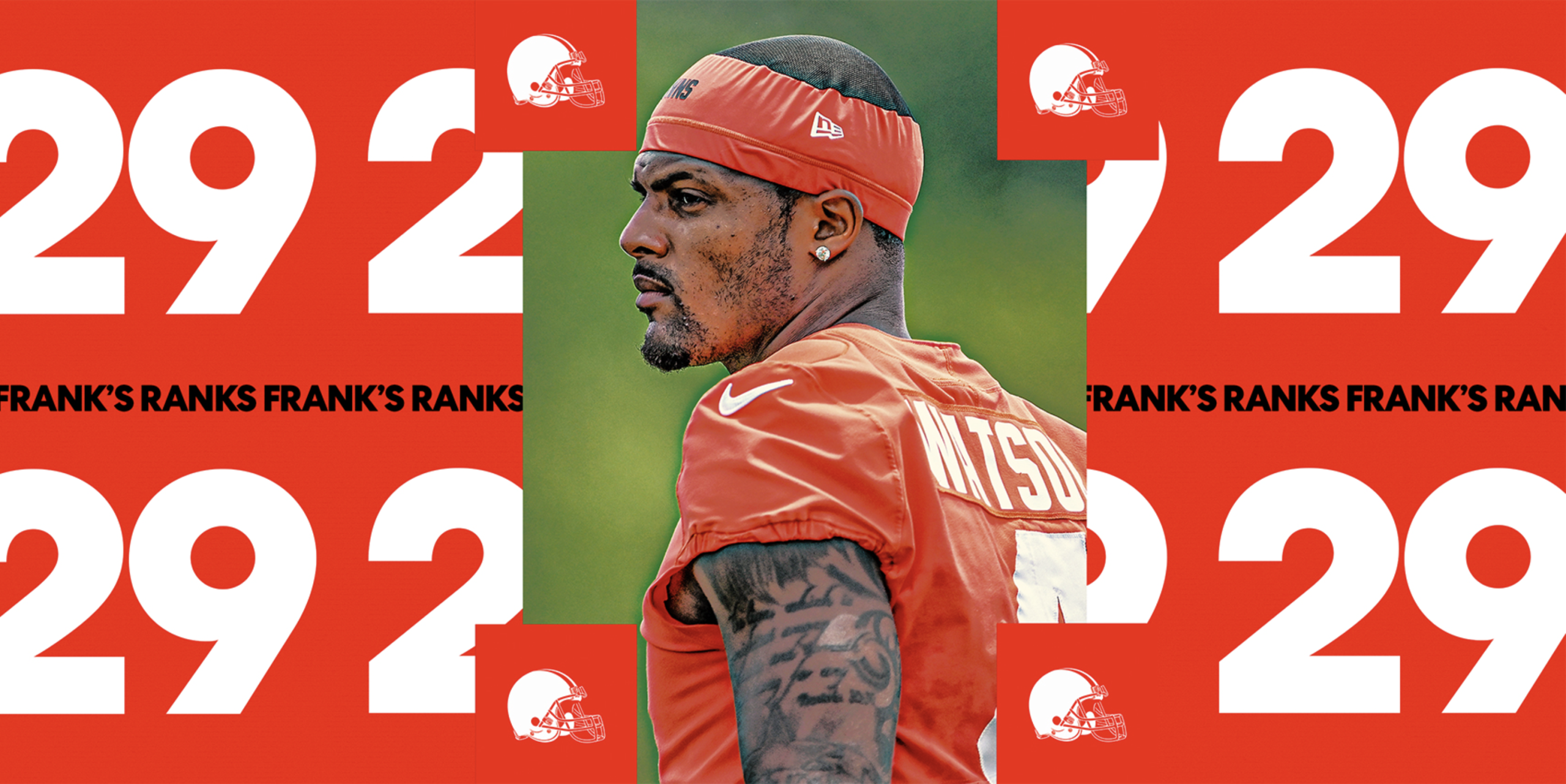
And let’s be frank, the central absurdity in Cleveland continues to be the quarterback saga. Deshaun Watson, a figure whose acquisition itself remains a cautionary tale of reckless spending and compromised judgment, somehow, bafflingly, continues to be viewed as a potential solution. He’s the albatross they can’t seem to shake. After his blockbuster $230 million fully-guaranteed contract and subsequent dismal performance—not to mention a lengthy off-field controversy—Browns owner Jimmy Haslam made headlines in 2025 with a surprisingly blunt assessment. “We took a big swing-and-miss with Deshaun,” Haslam reportedly confessed. “We thought we had the quarterback. We didn’t, — and we gave up a lot of draft picks to get him. So we’ve got to dig ourselves out of that hole.” Yet, despite this very public admission, the team has been pushing the idea of Watson starting again, as if the calendar turned back and everyone forgot.
It’s not just the fans scratching their heads. You’d think the organizational memory would extend at least a year or two back, especially when it concerns hundreds of millions of dollars and a gaping roster hole. J.W. Johnson, managing partner of the Haslam Sports Group, added another layer of baffling expectation, suggesting that fans—those long-suffering, emotionally battered souls—ought to be supportive, regardless. “I know that there are people that probably won’t be supportive, but they should need to be supportive as much as they can,” he remarked. That’s a bold ask for a fan base that’s been consistently handed a raw deal, often asked to finance the next bad idea.
But the true kicker is the juxtaposition: jettisoning the indisputable asset that was Garrett, who, for example, forced double-teams on more than 59% of his pass-rush snaps last season, according to Pro Football Focus, all while contemplating another run with a demonstrably ineffective Watson. That statistic alone highlights Garrett’s sheer gravitational pull on opposing offenses; his absence creates a vacuum no single player can fill immediately. The Browns did pull in a highly-rated 2026 draft class — and an extra first-rounder via trade. There are certainly new faces—defensive tackle Mason Graham, linebackers Carson Schwesinger and Quincy Williams, running backs Quinshon Judkins and Dylan Sampson, and offensive line additions like Zion Johnson and Tytus Howard. Yet, the foundational flaw remains, a lingering scent of quarterback-sized desperation.
New head coach Todd Monken faces an uphill slog. His stated philosophy? “Score any way possible.” A noble sentiment, to be sure, but it glosses over the crucial ‘how’ when the ‘who’ at quarterback remains an unresolved catastrophe. The common refrain is that they’re playing for 2027, eyeing a top draft pick for a legitimate long-term signal-caller. A depressing plan, perhaps, but a plan nonetheless.
What This Means
The Browns’ saga isn’t merely an unfortunate streak of bad luck; it’s a lesson in organizational governance and the perils of an opaque leadership structure. Economically, repeated failure saps fan engagement, which directly impacts everything from season ticket sales to merchandise revenue, stifling what should be a robust local economic engine. For the city of Cleveland, a perpetually underperforming flagship sports team casts a pall, dampening civic pride and diverting attention from legitimate regional successes. It fosters a climate where hope is transactional, not intrinsic. The continued insistence on returning to Deshaun Watson, despite his on-field struggles and immense financial albatross, hints at a leadership unable to admit—or, more concerningly, unable to learn from—its most egregious mistakes. This pattern of rationalizing failed investments rather than making clean breaks carries broad implications for any large entity, public or private: eventually, the market, or in this case, the highly engaged fanbase, simply stops believing the pronouncements, understanding that cycles of unforced error tend to repeat themselves unless genuine accountability is exacted at the very top. This isn’t just about winning football games; it’s about whether an organization can truly escape its own self-made destiny.
They’ve stripped away one of their few crown jewels for futures that may never pan out. And they’re seemingly back to the man they publicly admitted was a mistake, a costly error that’s anchored the franchise to the bottom. What could possibly go wrong this time? Everyone’s just waiting to find out, another verse in a terribly familiar song. They’re still Cleveland, after all, — and the beat goes on.