


Thunder’s Quiet Gambit: The Global Chess Match of OKC’s New Rookies
POLICY WIRE — Oklahoma City, USA — The hum of new talent in Oklahoma City isn’t just a ripple; it’s a deliberate, almost ruthless, calculus on the part of the Thunder’s brass. While local...

POLICY WIRE — Oklahoma City, USA — The hum of new talent in Oklahoma City isn’t just a ripple; it’s a deliberate, almost ruthless, calculus on the part of the Thunder’s brass. While local media sharpens pencils for a pro forma introductory press conference on Friday, June 26, the real story isn’t the event itself. No, the real narrative lies in the brutal economic algebra driving Sam Presti’s incessant quest for value—a quest that just brought Spanish sensation Aday Mara, college grinder Bennett Stirtz, and athletic wing Otega Oweh into the fold.
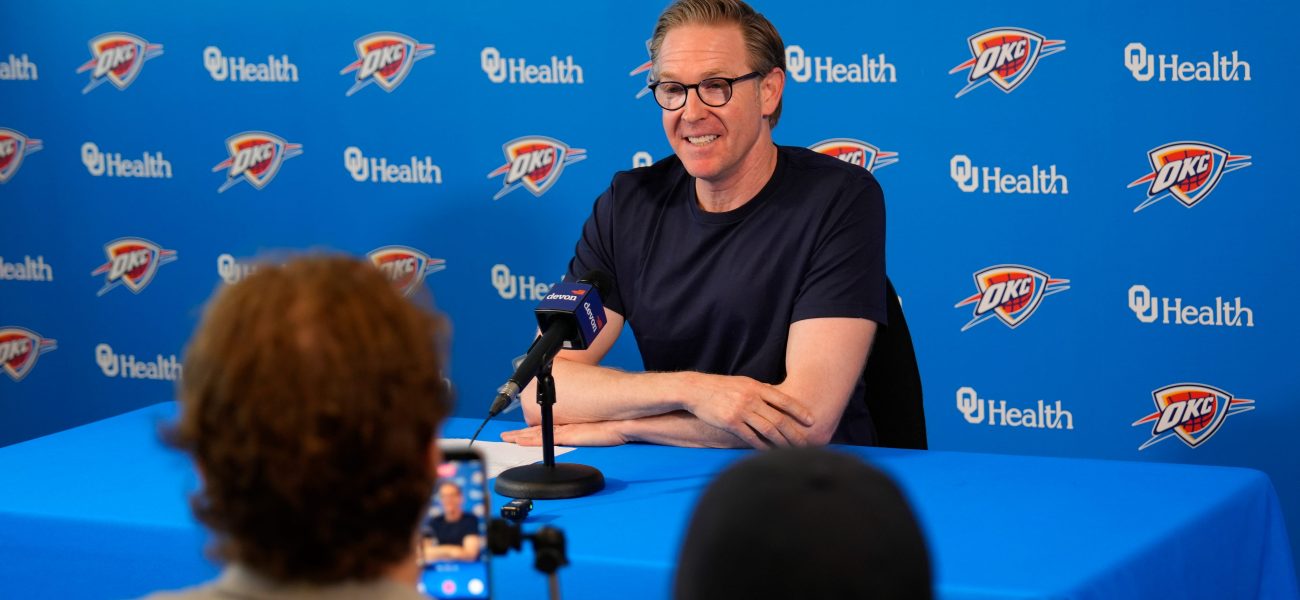
One might easily mistake these arrivals for simple player acquisitions. But Presti isn’t just picking up athletes; he’s playing a multi-dimensional chess match, treating draft picks and future assets as liquid currency in the cutthroat economy of the NBA. These aren’t simply new faces; they’re fresh commodities, integrated into an intricate ledger designed to sustain an enviable window of contention. They’ll be paraded before microphones at 12 p.m. CT, sure, but what are they really meant to accomplish? And what do their additions tell us about the ever-expanding global reach of professional sports?
It’s a strategic replenishment, isn’t it? An organization with aspirations—real, tangible championship aspirations—can’t stand pat. It’s got to churn. It’s got to refresh. The Thunder snagged Mara at No. 12, a legitimate big-man prospect from Spain with international pedigree. Then came Stirtz, acquired at No. 16 through a swap with Memphis, costing the No. 17 pick — and a pair of future second-rounders. Another sly move. And because you always need depth, Presti snatched Oweh at No. 41 from Miami, shedding No. 37 — and some cash in a transaction as dry as any quarterly earnings report. These maneuvers, often perceived as mere drafts, are policy decisions, really, aimed at asset optimization.
“We’re not just drafting for today; we’re constructing for an era,” Presti reportedly commented to a select group of shareholders—oops, I mean team executives—earlier this year, embodying his notoriously long-term vision. “Every pick, every trade, it’s a component in a much larger, much more resilient ecosystem we’re building.” That ecosystem thrives on potential, particularly international potential. Mara, with his European bona fides, embodies the increasingly global talent pipeline that keeps NBA teams hungry for new markets and new audiences, especially across Europe and parts of Asia where basketball’s popularity only seems to soar.
The NBA’s relentless push into global markets isn’t just about selling jerseys; it’s about cultivation. About expanding the cultural footprint. Consider the sheer viewership. While domestic fan engagement is key, the league understands its next growth frontier lies overseas. Approximately 25% of all NBA players hail from outside the United States, a figure that continues its steady climb each season, per official league data, underscoring the shift. This isn’t charity; it’s smart business, opening doors in places like South Asia, the Middle East, and even emerging African markets, regions that traditionally might’ve felt more attuned to sports like cricket or football. The influx of international talent cultivates fandom, drives media rights deals, and ultimately, boosts franchise valuations. It’s a soft power play disguised as sport.
“The global interconnectedness of modern sports isn’t just a byproduct; it’s an active strategy by leagues like the NBA to diversify their economic base and amplify their cultural influence,” notes Dr. Lena Khan, a policy analyst specializing in global sports economics at the Heritage Institute. “You see these connections everywhere, from merchandise sales in Islamabad to broadcast rights negotiations impacting viewership in Jakarta. It’s no longer confined to national borders.” And she’s right; for young basketball enthusiasts in Lahore or Dubai, seeing a peer, or someone with similar roots, ascend to the NBA changes the entire calculus of possibility.
The Thunder, frankly, needs these fresh legs. The league waits for no one. Players get older, contracts swell, — and the salary cap becomes an ever-tighter straitjacket. Their mission? To extend that championship window, to keep those veterans properly motivated. And you can bet these youngsters will be pushed. Expect Mara, Stirtz, and Oweh to field a gauntlet of inquiries—some informed, many naive—from local journos eager to gauge the personality behind the pricey acquisitions. They’ll need to impress, fast, starting with July’s Summer League. It’s a job interview, really, that never truly ends.
What This Means
The Thunder’s draft-day dealings reflect a macro trend: the NBA, and increasingly other major sports leagues, are global corporate entities as much as athletic competitions. The acquisition of diverse, often international, talent isn’t just about filling roster spots; it’s a deliberate expansion of brand reach into burgeoning economic markets worldwide. The subtle nod towards players like Mara, with a European background and a potential following across a broader Muslim world keen on Western sports, is a policy unto itself. It helps the league foster loyalty, drives merchandise sales, and cultivates future media rights partners in regions previously less saturated by American basketball culture. The local press conference might highlight individual hopes, but beneath the surface, it’s a moment in a meticulously planned, global economic strategy for long-term growth and sustained dominance in a rapidly evolving sports landscape. That’s the real game being played, long after the final whistle blows.