


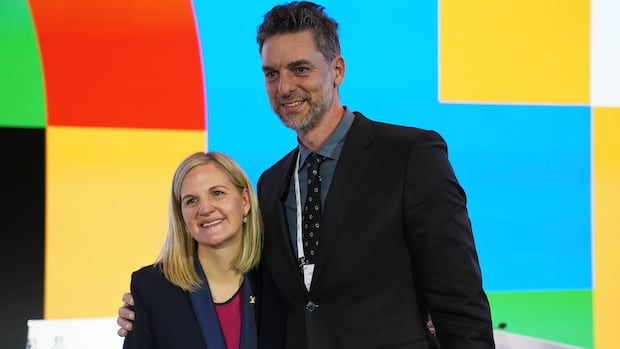
IOC Unveils $100 Million Fund for Olympic Athletes, Offering $10,000 Grants
POLICY WIRE — In a significant pivot for athlete welfare, the International Olympic Committee (IOC) announced Wednesday a new financial commitment exceeding $10...

POLICY WIRE — In a significant pivot for athlete welfare, the International Olympic Committee (IOC) announced Wednesday a new financial commitment exceeding $100 million. This substantial fund is earmarked for direct payments to athletes, designed to offer tangible support in a sporting landscape often fraught with financial precarity. (Reporting based on Reuters)
Under the new initiative, athletes participating in either a Summer or Winter Games will become eligible to apply for grants of $10,000. The creation of this fund marks a clear institutional recognition of the economic challenges many competitors face, a topic that has drawn increasing scrutiny from sports federations, media, and, crucially, the athletes themselves.
For years, the pursuit of Olympic glory has been portrayed—and often experienced—as an amateur endeavor, driven by passion rather than monetary reward. This idealized vision frequently glosses over the considerable costs involved in elite athletic training, travel, coaching, and equipment. For many, especially those outside of high-profile, commercialized sports, the path to the Olympic podium is paved with personal sacrifice and, frequently, significant debt.
The IOC’s move directly addresses a long-standing paradox within the Olympic movement: a multi-billion dollar enterprise built on the efforts of athletes who, for the most part, don’t directly share in its vast revenues. While national Olympic committees and sports federations provide varying levels of support, a universal direct payment system of this magnitude from the IOC itself represents a notable shift in policy.
Critics have often pointed out the vast sums generated by broadcasting rights, sponsorships, and merchandising during the Games, contrasting it with the financial struggles of many Olympians. This new fund, distributing $10,000 directly to competitors, may not alleviate all economic pressures, but it provides a baseline of support. It’s a pragmatic response, perhaps, to the growing calls for greater equity and professionalization within the Olympic framework, especially as athlete voices become increasingly empowered on global platforms.
Previous initiatives, like Athlete365 — a program focused on athlete services, including career support, mental health, and anti-doping education — have aimed to enhance the well-being of competitors. However, the direct financial disbursement model is a more immediate — and concrete form of aid. The application process and criteria for these grants, while not yet fully detailed in this initial announcement, will be crucial in ensuring equitable access and transparency.
The announcement on Wednesday implicitly acknowledges that the traditional model of ‘pure amateurism’ is, for many, unsustainable or even disingenuous in a modern, highly competitive sports world. Professional athletes across many disciplines earn significant incomes, but the Olympic movement has historically maintained a unique stance, albeit one that has slowly eroded over decades to allow professional participation. This latest financial commitment appears to be another step in that evolution, seeking to blend the aspirational ethos of the Games with the practical financial realities of its participants.
The allocation of more than $100 million for direct athlete payments underscores the IOC’s considerable financial reserves and its ability to initiate such programs. It also suggests a strategic imperative to maintain goodwill and support among the very individuals who bring the Games to life. Without the athletes, after all, there’s no spectacle.
What This Means
This substantial financial commitment from the International Olympic Committee marks a critical evolution in how Olympic athletes are supported. For years, the debate between the amateur ideal and the economic realities of elite sport has simmered, with many athletes struggling to balance their training demands with basic financial stability. This fund represents a formal recognition by the IOC that direct financial aid is necessary to sustain its athlete base and perhaps to counter potential discontent.
The $10,000 grant, while not life-changing for every Olympian, could be transformative for those from less affluent backgrounds or competing in less commercialized sports. It might provide a much-needed boost for training costs, equipment, or even simply living expenses during critical preparation phases. It’s an acknowledgment that passion alone doesn’t pay the bills. However, how these funds will be administered, and whether they reach the athletes most in need efficiently, remains to be seen.
Looking forward, this could signal a broader trend toward the professionalization of the Olympic athlete experience, potentially influencing how national federations structure their own support systems. It also strengthens the IOC’s narrative around athlete-centricity. Whether this initiative will quell all concerns about equitable revenue sharing and athlete representation, or simply serve as a foundational step in an ongoing dialogue, is an open question. What is clear, though, is that the Olympic landscape is subtly, but significantly, shifting under the weight of financial realities and heightened athlete advocacy.