


Gridiron Diplomacy: Why a US-Turkey World Cup Match is More Than Just a Game
POLICY WIRE — Inglewood, California — The roar will be deafening. Fans, cloaked in red, white, — and blue or vibrant crimson, will pack SoFi Stadium this Thursday night. They’re ostensibly there for...

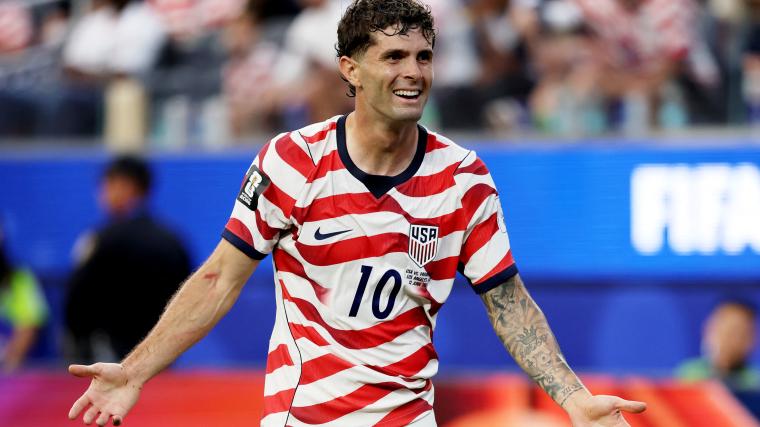
POLICY WIRE — Inglewood, California — The roar will be deafening. Fans, cloaked in red, white, — and blue or vibrant crimson, will pack SoFi Stadium this Thursday night. They’re ostensibly there for a World Cup Group D clash: USA versus Turkey. But peel back the layers, and what unfolds isn’t just about ninety minutes of football; it’s a fascinating, if subtle, tableau of international relations played out on a meticulously manicured lawn.
It’s easy to dismiss a sporting contest as mere entertainment, particularly when juxtaposing nations with such complex, often fraught, diplomatic histories. Yet, in an era where soft power often precedes hard policy, a World Cup showdown becomes a proxy. For the United States, it’s another chance to affirm its evolving soccer identity—a journey from outlier to a perennial, if sometimes underperforming, contender. For Turkey, it’s about reasserting its presence on a global stage, proving it belongs in the upper echelons after decades largely out of the spotlight.
Consider the raw statistics: the U.S. has graced the World Cup 11 times, cementing its status, particularly with five appearances since 2002. Turkey, by contrast, made a splash in 2002 with a surprising third-place finish but hasn’t been seen at this level since, making this appearance a long-awaited comeback. That’s a stark disparity, but it doesn’t quite capture the hunger.
The stakes? Beyond advancing from Group D, both nations are searching for validation. Football has an unparalleled capacity to galvanize national sentiment, to briefly unify disparate domestic voices under one flag. And let’s not forget the financial — and reputational windfall of success. Win here, — and the headlines aren’t just about goals; they’re about national pride, projected might.
This match isn’t lost on observers beyond the stadium walls. Secretary of State Antony Blinken, always adept at blending sport with statecraft, was heard remarking, “Every American team abroad represents more than just athletes. They represent our values, our grit, — and frankly, a chance to connect culturally. It’s an informal exchange, one that sometimes opens doors that formal negotiations struggle with.” That’s a pretty standard line, isn’t it? But it’s true.
From Ankara, a more robust message emerged. Turkish Sports Minister Dr. Mehmet Muharrem Kasapoğlu didn’t mince words. “Turkey’s return to this global arena is a powerful signal. It speaks to our youth, our aspirations, — and our capability to compete with anyone, anywhere. This isn’t just a game; it’s a moment of national affirmation, broadcast for all to see.” You’d better believe his office isn’t sleeping on this opportunity.
The match’s kickoff is slated for Thursday, June 25, at 10 p.m. ET (7 p.m. PT) at SoFi. You can catch the broadcast on FOX or stream it via fubo — and Fox’s digital platforms. But as fans tune in, they’ll be part of a much larger narrative, whether they know it or not. The digital sphere, especially, becomes a hotbed of real-time diplomacy. Because everyone, from Karachi to Casablanca, is watching the spectacle.
And for those tracking geopolitics, this match offers an interesting read on how nations present themselves. Turkey, a predominantly Muslim nation, wields significant cultural influence across Central Asia, the Middle East, and parts of the South Asian subcontinent, a fact not lost on its policymakers. A strong showing here enhances that soft power, potentially aiding its diplomatic objectives and bolstering its standing within the broader Muslim world and among its vast diaspora. This isn’t just for domestic consumption, you see.
What This Means
A football match might seem like an odd place to discern foreign policy shifts, but sport is a language everyone understands. For Washington, a smooth, successful hosting of the World Cup—and a U.S. team that performs well—reinforces an image of stability and global leadership. It’s economic too: estimates suggest the 2026 World Cup could inject billions into the U.S. economy, a point often overlooked in the heat of the game.
But for Turkey, it’s about far more. President Erdoğan’s administration consistently seeks to expand its global reach and assert a multi-vector foreign policy. This football presence validates that ambition to a worldwide audience, fostering pride internally and projecting an image of capability and resilience externally. A victory, or even a compelling performance against a prominent power like the U.S., lends a certain legitimacy to Ankara’s narrative of re-emergence. It’s a cheap but effective advertisement for a nation trying to carve out a larger sphere of influence. This game, don’t misunderstand, is another battle in that ongoing, very real, geopolitical contest.