

Pochettino’s Calculated Gambit: USA Bets Big on Caution Amidst World Cup Whirlwind
POLICY WIRE — Inglewood, California — Sometimes, the biggest plays happen on the sidelines. Coach Mauricio Pochettino isn’t just managing a squad for the FIFA World Cup; he’s playing a deep, almost...

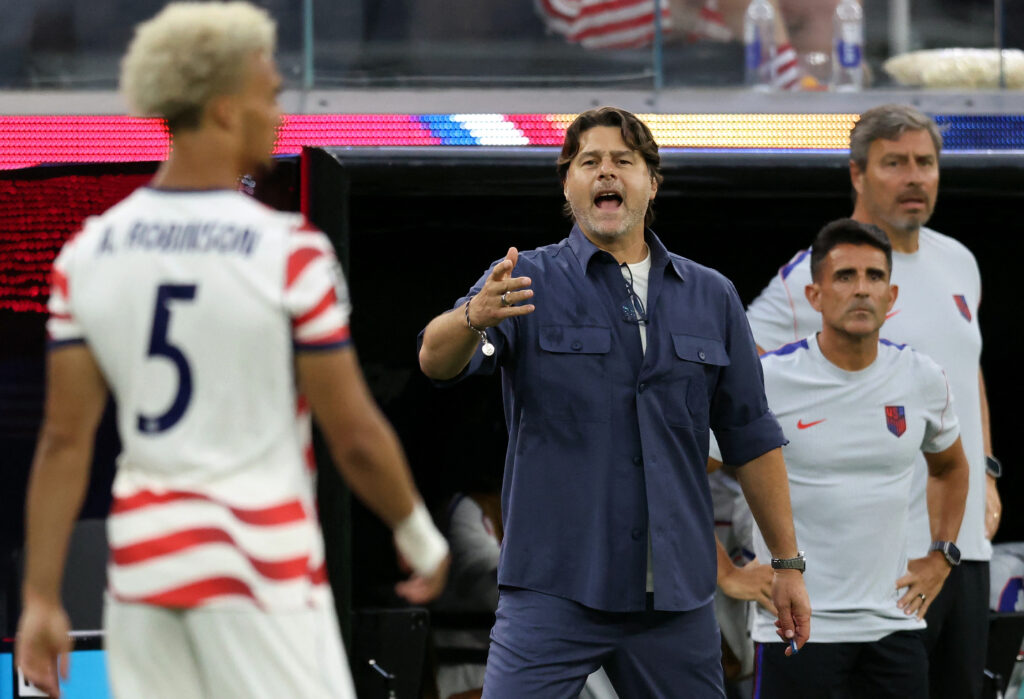
POLICY WIRE — Inglewood, California — Sometimes, the biggest plays happen on the sidelines. Coach Mauricio Pochettino isn’t just managing a squad for the FIFA World Cup; he’s playing a deep, almost Machiavellian game of risk and reward. With the U.S. Men’s National Team already having punched its ticket to the Round of 32, the looming clash against Turkey—a seemingly ‘dead rubber’ fixture—becomes less about points and more about personnel.
It’s a chess match, see? And Pochettino, never one to shy from an unconventional gambit, plans to bench a handful of his stalwarts. Tyler Adams. Folarin Balogun. Antonee Robinson. Chris Richards. All nursing single yellow cards from the campaign’s earlier dust-ups against Paraguay (a bruising 4-1 win) and Australia (a confident 2-0 finish). Another booking in this ostensibly meaningless game? Suspension from the knockouts. Nobody wants that. Not when you’re looking at a potential dance with Bosnia — and Herzegovina in the next round.
Because the yellow cards? They mercifully reset after the group stage. So, the tactical pause makes sense, right? Protect your assets. But it’s not just about player availability; it’s also about a deeper read of team psychology — and momentum. You can’t just flip a switch for the next round. You need continuity, rhythm. And chemistry. Resting your best for one game, sure, that saves bodies. But does it mess with the collective headspace, the swagger they’ve built?
Pochettino, he gets it. Or so he says. “It’s unnecessary to take a risk — and then take another yellow card and be not available for the next stage. I think that’s a normal and easy answer,” he told reporters, a glint of dry humor perhaps hidden in his gaze, or maybe just plain pragmatism. Then came the Pochettino signature: “I need to be sure that the team tomorrow wants to eat the grass at the SoFi, and play like it’s the final of the World Cup.” Even the backups. Especially the backups, maybe.
And then there’s the ‘Captain America’ conundrum: Christian Pulisic. The winger, a mercurial talent, has been sidelined with a bothersome left calf since halftime of the Paraguay thrashing. He sat out against Australia. He’s itching to get back. He said so himself, a few days ago, his voice radiating that quiet determination of a player who hates the bench. “I’m feeling good. I joined with the team in the last few days, so I’m feeling good, feeling positive, and hopefully I’ll be able to play a part tomorrow,” Pulisic offered, a brave face against discomfort. He’s been here before. “Honestly, it was tough after the first game, just knowing that I felt a little something. I never really feared the worst, but I obviously didn’t want it to keep me out any longer than I had to.” He’s a competitor. And that’s clear.
But the coaching staff? They’re looking at the bigger picture, not the immediate itch. Medical sources suggest the prudence of sidelining him again. Let that calf fully heal. Don’t risk an aggravation that could send him home early. Pulisic, after all, isn’t just another player; he’s the creative engine for the USMNT, its most recognizable face to the casual fan. You wouldn’t want him less than 100% for the elimination rounds. Industry analysts estimate that a key player’s injury in a major tournament can cost a national team approximately 15-20% of its overall win probability in subsequent knockout matches, according to data compiled from past World Cups.
For Turkey, a country where football is almost a religion, this match, even without stakes for them, carries enormous cultural weight. It’s a chance for them to showcase national pride, a chance to prove something to a global audience, and especially to the millions of fervent fans across the broader Muslim world, including in South Asian football hotbeds where the sport commands incredible devotion. So, while it’s a dead rubber for the USA, for their opponents, it’s anything but.
What This Means
Pochettino’s decision to shuffle the deck isn’t just a tactical move; it’s a profound strategic gamble that ripples beyond the pitch. Politically, it signals a long-term vision, an understanding that fleeting glory pales in comparison to sustained success in the knockout rounds. Economically, keeping key players healthy directly impacts potential revenue streams from deeper tournament runs, sponsorships, and merchandise sales tied to player presence. A fully fit Pulisic in a quarter-final? That’s gold, pure and simple. For fans, it’s a test of faith. Do you trust the coach’s detached calculus, or do you crave the spectacle of your best players, regardless of future implications? It speaks to the ongoing tension between instant gratification and meticulous planning in elite sports, reflecting broader societal debates. The USA isn’t just playing soccer; it’s laying groundwork for its identity on the global sporting stage, balancing bravado with cold, hard logic.