


Battered Tartans and Billion-Dollar Spectacles: Scotland’s World Cup Ordeal Exposes Deeper Global Fault Lines
POLICY WIRE — Miami, USA — When the sun beats down on Miami’s carefully manicured fields, a unique alchemy often occurs. On Wednesday, though, it was less about golden opportunity and more...

POLICY WIRE — Miami, USA — When the sun beats down on Miami’s carefully manicured fields, a unique alchemy often occurs. On Wednesday, though, it was less about golden opportunity and more about harsh realities, served up on a gilded platter by a Brazilian virtuoso. For weeks, the ‘Tartan Army’ — that vibrant, beer-fueled, relentlessly optimistic caravan of Scottish football fans — had painted American cities with their infectious joy. They’d charmingly disrupted local economies, earning full-page spreads in papers as far-flung as Brazil’s *O Globo* for their sheer exuberance. But then, as it always does in global sports, the show had to hit the pitch. And that, unfortunately for Scotland, is where the narrative typically unravels.
It wasn’t a slow burn, but a sudden, almost clinical evisceration. Vinicius Jr., Brazil’s audacious young winger, didn’t just open the scoring; he crashed the party. Seven minutes in, the festive hum gave way to a deafening quiet. He simply snatched the ball, danced around an opposition frozen by nerves or maybe just awe, — and tucked it away. It felt less like a goal, more like a declaration of geopolitical athletic dominance. The same energy that saw fans reportedly drain bars — and hotels across the eastern seaboard just evaporated. It really did. But you don’t build a global sports empire on charm alone; you build it on results, on moments like those.
Because the modern World Cup isn’t just a game; it’s an economic powerhouse, a cultural phenomenon with tangible geopolitical ripples. It’s a stage where national identity — and economic heft often play out in shorts and shin pads. Scotland’s supporters were an undoubted soft power success, bolstering their nation’s brand. “While the scoreboard stings, the sheer spirit of our supporters has, yet again, proven Scotland’s enduring global appeal, a triumph of human connection despite the result,” lamented Scotland’s Cabinet Secretary for Culture, Angus Robertson, from Edinburgh, seemingly looking for silver linings beyond the Miami heat haze. Contrast that with Brazil’s sporting ethos. Their former Minister of Sport, Leonardo Picciani, once said, “Winning isn’t just about pride for us; it’s about validating our economic growth and showcasing our youth to the world. It’s part of our national diplomacy.” One nation views it as cultural projection; the other as a market statement.
The statistical realities hit hard, too. Until recently, Scotland hadn’t beaten South American opposition in an official fixture since Bolivia decided to let them back in the game last month. They’ve certainly never beaten Brazil in ten tries over half a century. A team like Brazil, meanwhile, isn’t just showcasing talent; they’re securing future sponsorship deals worth hundreds of millions of dollars globally. For instance, FIFA’s projected revenue for the current World Cup cycle stands at an astounding $11 billion, with commercial partnerships making up a significant chunk of that sum, as per official FIFA financial reports. Success on the field feeds directly into this beast.
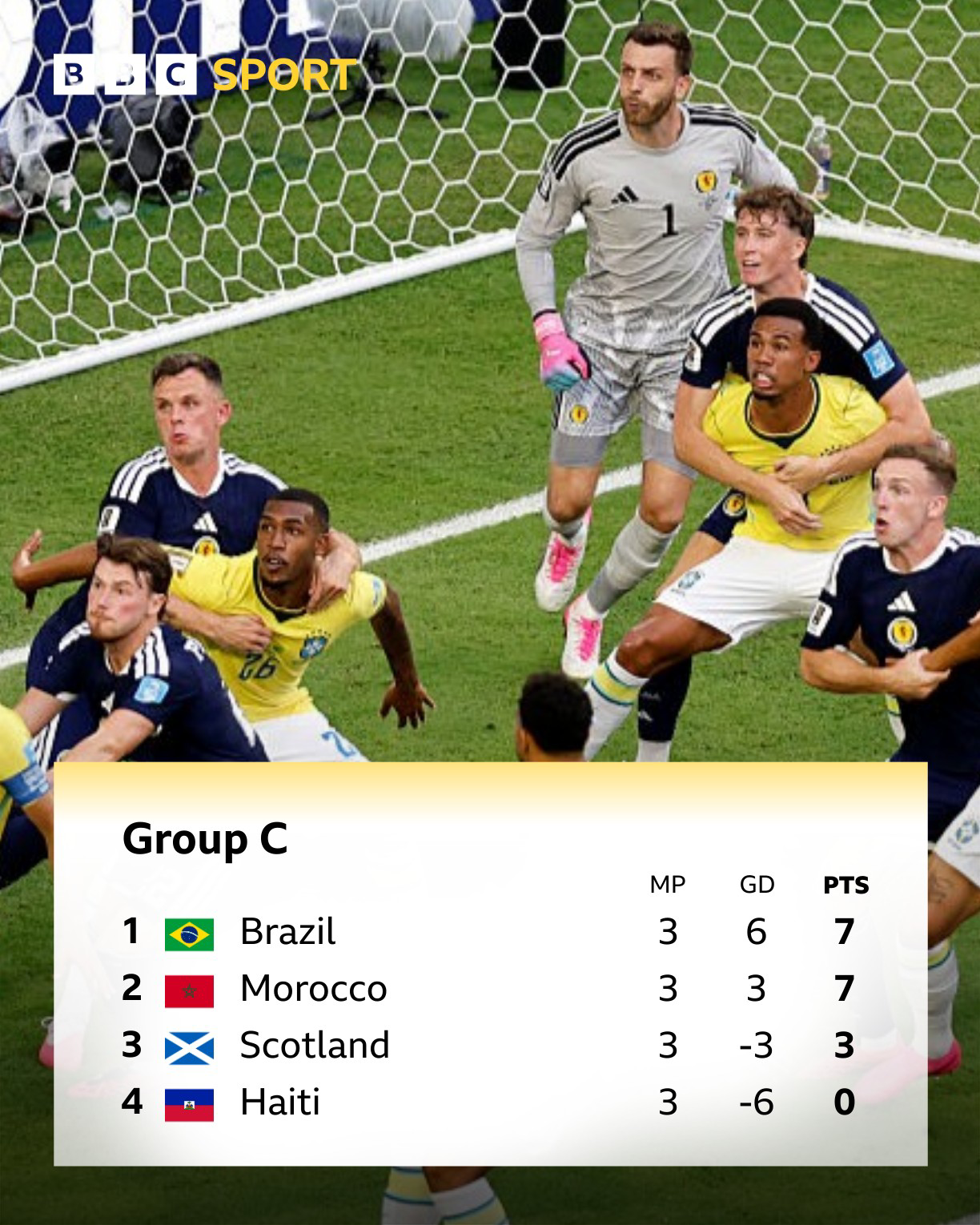
Down — and down they went, Scotland, their buffers stripped away. From a relatively comfortable perch as one of the better third-placed teams, the sheer efficiency of Brazil’s offense— Vinicius Jr. collecting two goals and being directly involved in the third—shoved them off the cliff edge. Now they’re caught in football’s purgatory, frantically checking scorelines from Senegal and Ecuador, Curacao and Cape Verde, even Saudi Arabia. It’s a nervy business, this waiting game.
And what a wait it’s. In the oppressive humidity, their defense, well, it was more performance art than actual defending. Players seemed to move in slow motion, allowing Brazil’s young talents to simply walk through them. Scott McKenna’s dawdling, Rayan’s relentless pressure—it looked almost rehearsed, a tragic comedy playing out in fluorescent lights. They didn’t just concede goals; they engineered calamities. It’s the sort of slapstick defending a predator like Vinicius Jr. lives for, pounces on, — and turns into personal legend. That’s just how it goes on this kind of stage.
But the World Cup, a tournament now routinely drawing billions of viewers, isn’t just about the major European and Latin American powerhouses. The increasing investment in football across nations like Pakistan, where youth academies are mushrooming, and in other South Asian and Muslim-majority countries reflects a burgeoning global fan base, hungry not just for their own teams to succeed but for a piece of the sporting spectacle. The tournament itself has become a universal language, transcending traditional political divides, though its economic benefits disproportionately favor the traditional giants. Scotland’s heartbreak, viewed through this broader lens, is a reminder of the chasm between footballing aspiration and global competitive reality, particularly for nations battling for recognition on the world stage.
What This Means
Scotland’s potential exit from the World Cup isn’t merely a sporting footnote; it’s a policy conundrum for smaller nations banking on the soft power and economic spin-offs of global spectacles. Their dedicated ‘Tartan Army’ achieved considerable goodwill, essentially acting as unpaid tourism ambassadors. But sustained, high-level sporting failure risks diluting that diplomatic capital. Politically, a nation’s performance in events like the World Cup subtly contributes to its global image, attracting investment, talent, and tourist dollars—or, in cases like this, raising uncomfortable questions about national competitiveness. Economically, while fan travel pumps temporary cash into host cities, true long-term gains often accrue to nations with on-field success, translating into higher brand valuations for national teams, larger sponsorship deals, and greater leverage in international sports bodies. It’s a hard truth: in the realm of global sports diplomacy, winning isn’t everything, but it sure pays for a lot of the bills.
The uncertainty now hovering over Scotland, waiting on other results, underscores a fragility not just in their team, but in the entire premise of smaller footballing nations vying for consistent relevance against cash-rich, talent-dense powerhouses. It forces national federations, and indeed their governments, to critically assess where their true competitive advantage lies: in passionate fandom, or on the scoreboard. Right now, it’s a decidedly unbalanced equation. You can’t win ’em all with charm alone, can you?