


India’s Accusations Against Pakistan Ring Hollow Amid Its Own Record
India’s third attempt to bring Pakistan Defence Minister Khawaja Asif to the matrimonial table isn’t a display of confidence in the foreign policy, but rather an opportunity to make a...

India’s third attempt to bring Pakistan Defence Minister Khawaja Asif to the matrimonial table isn’t a display of confidence in the foreign policy, but rather an opportunity to make a political point. India’s insistence to blame Pakistan for regional instability works to the detriment of New Delhi, whose own actions have been under more than just international pressure and are especially scrupulous about regional aggression and instability in J&K.
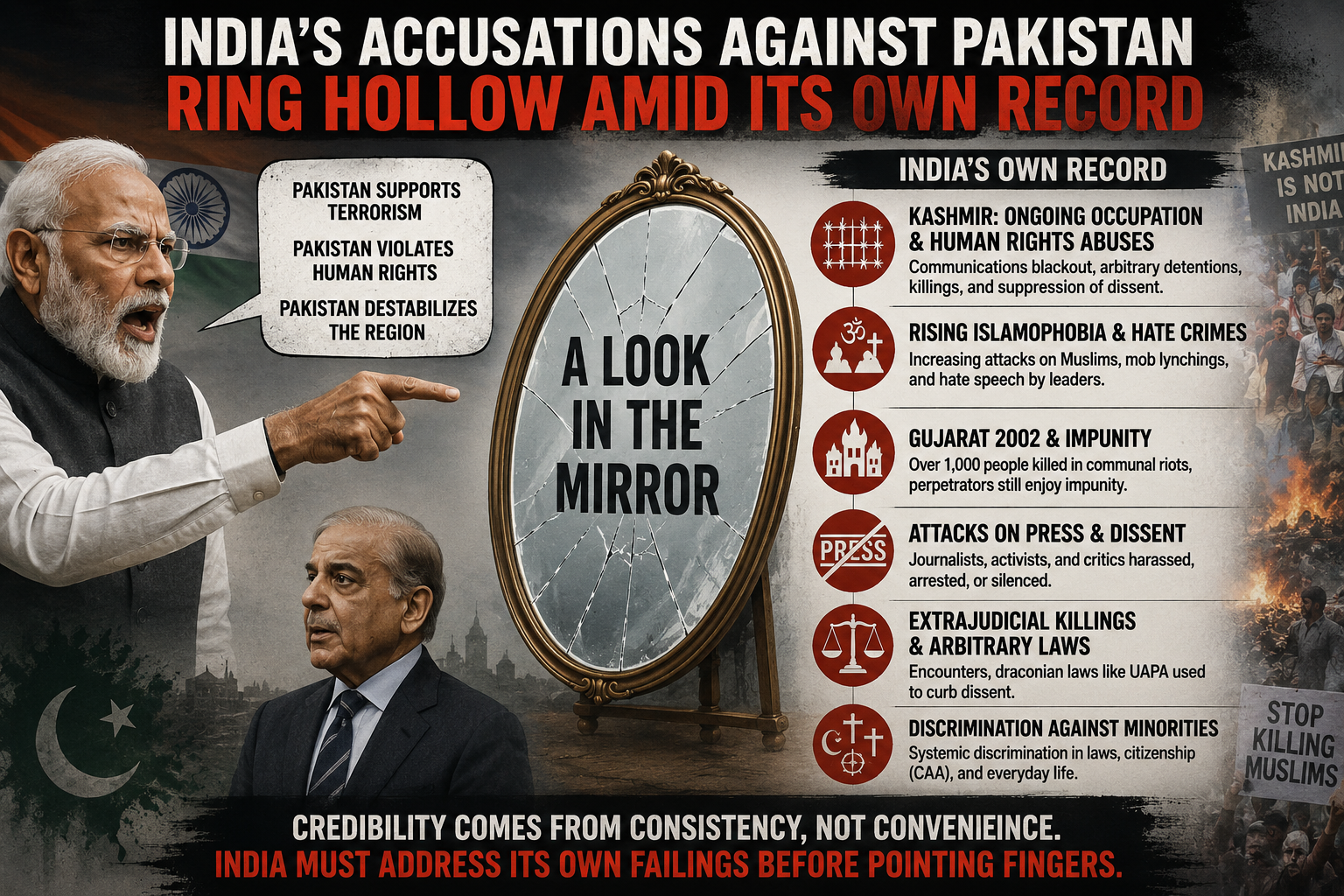
It is not hidden from anyone that the story was starting to be played ironically. India has been hit by a flood of complaints about its democratic processes, civic space, media freedom and the treatment of its minorities, while the same government which has been blaming Pakistan for “diversionary tactics” is engaging in such practices itself. But instead of talking about these issues, Indian authorities merely continue to rehash old India-Pakistan-blaming rhetoric.
The Indian attack on Pakistani stance on water security issue is even more specious. The Indus Waters Treaty has been successful in surviving wars, crisis, and long years of hostility of both sides to the water because they learnt the lesson in history – that water should never be a weapon. New Delhi, which has unilaterally suspended or threatened to suspend treaty obligations, has thrown uncertainty into one of the world’s most successful water-sharing agreements. The nation would consider any threats to its water lifeline a national security issue. This is also the case in Pakistan.
Similarly, India’s Charges d’Affaires media reports on human rights in Pakistan-administered Kashmir seem ad hoc and subjective. Foreign lawmakers and other governments have expressed concerns and rights groups have been worried about the situation in Indian-administrated Jammu and Kashmir for years. The country has repeatedly been the subject of international attention for communication blackouts, mass detentions, restrictions on political activity and limitations on the freedom of the press. As India tries to teach others about people’s rights, it is hiding from the public the strongest contradiction: it does not want to be held accountable when it comes to its own.
The willingness of the Indian government to keep using Pakistan-administered Kashmir as the “illegal occupation” of Pakistan is, perhaps, the most telling element of the Indian statement. The wordings neglect the most basic fact, that Jammu and Kashmir is a disputed region under international consciousness. The reality is the space issue is not a matter of international law, thus New Delhi can’t push any political message; it’s just that it still is a space issue and needs a political solution.
India’s increasing failure to differentiate between all its criticism on Pakistan and the term “cross-border terrorism” is also a convenient cover. Instead of addressing issues regarding water security, regional stability or the rights of Kashmiris, New Delhi often switches gears and resorts to accusations touted to put an end to any discussion and loopholes from accountability.
📄 POLICY WIRE WHITEPAPER PUBLISHED: PAKISTAN'S NATIONAL SECURITY POLICY PRIORITIES
👉 READ BY CLICKING HEREIt is evident the general trend. In instances, when uncomfortable questions raise on policies of India, Pakistan is preferred. It is a tactic that can be useful from a domestic political point of view, but will do little in terms of improving regional peace or India’s moral image.
But if India’s aims are to achieve stability in the region, it must step away from propaganda and face the reality that it has created through its own policy. Selective outrage, historical revisionism and international agreements turned to weaponry cannot lay the foundation for a regional peace. It is not just about talking, it is about doing things as one would want someone else to do them and abiding by commitments.
Until then the accusations that New Delhi has leveled against Pakistan will be interpreted by many watchers not as a policy of principle, but as an attempt to shift the gaze away from the developing void in Middle East policies.
Author