


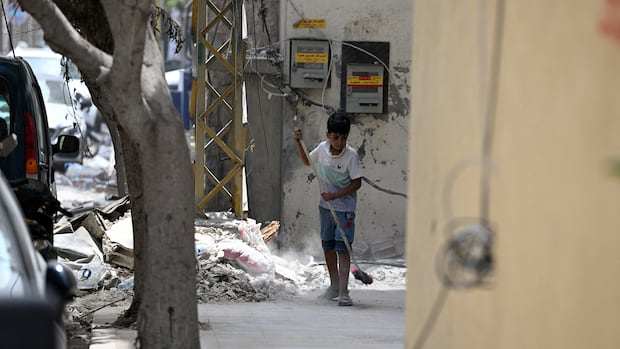
Tensions Flare: Israeli Gunfire Shatters Ceasefire in South Lebanon, Two Dead
POLICY WIRE — A fragile calm along the volatile border separating Lebanon and Israel appears to have shattered following a deadly incident in southern Lebanon o...

POLICY WIRE — A fragile calm along the volatile border separating Lebanon and Israel appears to have shattered following a deadly incident in southern Lebanon on Tuesday. Israeli gunfire resulted in the deaths of two individuals, prompting swift condemnation and accusations of ceasefire violations from the powerful, Iran-backed group Hezbollah. This development threatens to reignite tensions that had seen a period of relative de-escalation since Sunday, according to reports from the region. (Reporting based on wire dispatches)
The deaths occurred on Tuesday, as confirmed by Lebanon’s Civil Defence — and health ministry. While the specifics of the incident leading to the gunfire remain contested, the immediate aftermath has been a flurry of diplomatic concern and heightened rhetoric from involved parties. The targeted region of southern Lebanon has long been a flashpoint, characterized by historical disputes and the entrenched presence of various armed groups.
Hezbollah, a dominant political and military force in Lebanon and a key ally of Iran, was quick to accuse Israel of violating the informal ceasefire that had largely held since earlier this week. The group’s statement underscores the precarious nature of any truce in a landscape marked by decades of intermittent conflict and deep-seated animosities. Such incidents carry significant weight, as even minor skirmishes can rapidly escalate into broader confrontations, pulling in regional and international actors.
The tacit understanding, which had seen a lull in hostilities since Sunday, was seen by some observers as a hopeful sign. However, the current deaths demonstrate how quickly such understandings can unravel, particularly when both sides maintain an active military presence along a contested frontier. The precise nature of the engagement that led to the fatalities is still being assessed, but Hezbollah’s strong reaction indicates a perceived direct infringement on the agreed-upon quiet period.
This episode is hardly an isolated occurrence in the long-running narrative of Israel-Lebanon relations. The two nations technically remain at war, with a long history of cross-border violence. The presence of Hezbollah, which Israel views as a significant security threat due to its military capabilities and close ties to Iran, further complicates any efforts towards lasting peace or even stable de-escalation. International mediators often struggle to navigate the complex web of political interests, military strategies, and proxy conflicts that define this particular front in the broader Middle East.
Past escalations have often followed similar patterns: an incident leading to casualties, accusations from one or both sides, followed by retaliatory actions that expand the scope of conflict. While the recent ceasefire, fragile as it was, had provided a brief respite, its apparent violation will inevitably lead to calls for investigation and likely further diplomatic maneuvering from external powers keen to prevent a wider conflict from engulfing the region.
The international community will be watching closely to see if this incident spirals or if cooler heads prevail, reinstating the quiet that existed—however briefly—since Sunday. The actions and reactions in the coming days from both Israel and Hezbollah, as well as the stances taken by their respective allies, will be crucial in determining the immediate future of stability along this border.
What This Means
The latest casualties in southern Lebanon signal a dangerous, albeit predictable, erosion of an already tenuous ceasefire. The region operates on a delicate balance where perceptions of aggression can quickly dictate reactions, potentially leading to a tit-for-tat escalation. For Hezbollah, condemning Israeli actions and portraying itself as the defender of Lebanese sovereignty is a critical component of its political and military strategy, especially as it seeks to maintain its influence and legitimacy within Lebanon and among its external patrons, such as Iran. From Israel’s perspective, any perceived threat or operational activity on its northern border could warrant a defensive response, regardless of a broader truce.
The core challenge remains the absence of a formal, internationally brokered peace agreement between the parties, leaving de-escalation to informal understandings that can be breached by isolated incidents or misinterpreted movements. This latest flare-up highlights the persistent risk of miscalculation, or deliberate provocation, that characterizes the Israel-Lebanon frontier. The critical question now is whether the involved parties, perhaps with quiet international urging, can contain this breach and re-establish a degree of calm, or if the unraveling of this recent ceasefire portends a more significant resurgence of cross-border hostilities in the days and weeks ahead. The underlying tensions, rooted in geopolitical rivalries and national security concerns, are ever-present, and such incidents serve as stark reminders of how quickly they can surface.