


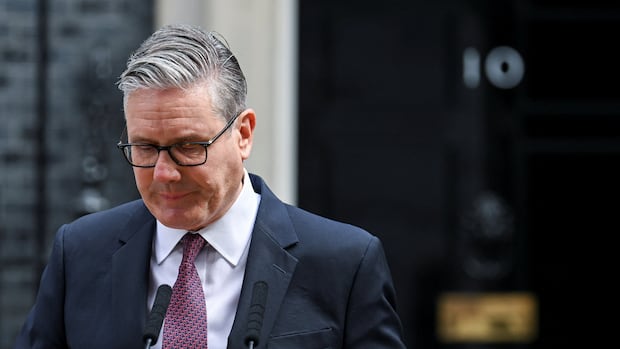
The UK’s Rotational Premiership: A Decade of Political Upheaval
POLICY WIRE — London, United Kingdom — The top job in British politics has seen more incumbents in recent years than a revolving door. In just the last decade, ...

POLICY WIRE — London, United Kingdom — The top job in British politics has seen more incumbents in recent years than a revolving door. In just the last decade, the United Kingdom has witnessed four different Prime Ministers resign from office. This unusual level of churn has prompted critical questions regarding the nature of modern British governance and the intense pressures faced by those at the nation’s helm.
Since 2014, the premiership has passed through the hands of David Cameron, Theresa May, Boris Johnson, Liz Truss, and currently, Rishi Sunak. Among these five leaders, all but the current officeholder resigned from their post before completing a full term, often under a cloud of political crisis, loss of party confidence, or public outcry. Such rapid succession is largely unprecedented in contemporary British history and points to a significant period of instability in Westminster.
David Cameron initiated this trend in 2016, stepping down after the shock result of the Brexit referendum, which saw Britons vote to leave the European Union against his strong advocacy to remain. His departure paved the way for Theresa May, who inherited the Herculean task of negotiating the UK’s withdrawal from the EU. Her tenure was largely consumed by Brexit, leading to her resignation in 2019 after failing to secure parliamentary approval for her withdrawal agreement. Then came Boris Johnson, a figure who promised to get Brexit done
. He delivered a substantial Conservative majority in the 2019 general election but his premiership was ultimately cut short in 2022 by a wave of resignations from his cabinet amidst numerous scandals, famously dubbed Partygate
, culminating in a loss of confidence from his own party.
The shortest-lived premiership in UK history followed: Liz Truss. Her radical economic proposals, dubbed the mini-budget
, triggered a market meltdown and saw her resign after a mere 49 days in office in October 2022. This dizzying period left the Conservative Party scrambling for a fifth leader in less than six years, eventually settling on Rishi Sunak. Each resignation underscored not just a change in leadership, but often a dramatic shift in policy direction or, at minimum, a period of profound uncertainty for the nation. It suggests that the demands placed on the Prime Minister have intensified dramatically, making the role a veritable crucible.
The repeated collapses of leadership over the past decade can be attributed to a confluence of factors, not least of which is the enduring political fallout from Brexit. The UK’s departure from the European Union introduced profound economic and societal divisions that successive leaders have struggled to reconcile. This fundamental rupture fractured traditional political alignments — and exacerbated internal party tensions. For instance, the very definition of Conservative ideology became a battleground, oscillating between a liberal internationalist and a more populist nationalist stance, especially evident in the debates around EU membership and trade agreements. the 24-hour news cycle, combined with the increasing scrutiny of personal conduct in public office, creates an environment where leaders are under constant, intense pressure. The sheer intensity of political maneuvering and media focus, even extending to ‘wargame’ simulations of future scenarios, underlines the high stakes of modern British governance.
Beyond Brexit, wider geopolitical events — and domestic challenges have also played their part. The economic repercussions of the global pandemic, compounded by the inflationary pressures from the war in Ukraine, have presented severe fiscal dilemmas. Managing public finances while simultaneously addressing a cost-of-living crisis, an overstretched National Health Service, and lingering industrial unrest presents a formidable challenge for any administration. Decisions around critical infrastructure, such as airport expansions, face climate concerns and public scrutiny, adding layers of complexity to governance that demand resilience and political acumen, sometimes proving too much even for seasoned politicians. This turbulent environment arguably lowers the threshold for a vote of no confidence within the ruling party, making incumbents perpetually vulnerable.
What This Means
The high rate of Prime Ministerial turnover in the United Kingdom over the past decade points to a systemic fragility in British politics, not merely a string of individual leadership failures. This phenomenon is largely rooted in the protracted fallout from the 2016 Brexit referendum, which splintered the traditional political consensus and introduced a highly unpredictable element into the national discourse. The Conservative Party, having been in power for most of this period, has borne the brunt of these internal divisions, struggling to present a united front or consistent policy agenda.
Looking ahead, this pattern of leadership instability suggests a continued challenge for future governments. The expectations placed on the Prime Minister, already immense, seem to have grown disproportionately to the tools and consensus available to fulfill them. Unless underlying issues such as fundamental ideological divisions within major parties or the public’s heightened expectations for instant solutions to complex problems are addressed, the UK may well continue to navigate a path marked by rapid shifts at the top. The question remains: is this a temporary phase of readjustment in a post-Brexit world, or has the very nature of governing Britain evolved into an inherently more volatile undertaking? The next general election, whenever it comes, will be another test of whether the electorate seeks stability above all, or is content with a more dynamic, albeit turbulent, political landscape.