

Europe Unites to Revamp Trade Defenses Against China’s Economic Imbalances
POLICY WIRE — The unified stance of the European Union has become a critical barometer of global economic sentiment, and a recent declaration from Brussels sign...

POLICY WIRE — The unified stance of the European Union has become a critical barometer of global economic sentiment, and a recent declaration from Brussels signals a significant hardening of the bloc’s position on international trade, particularly concerning China.
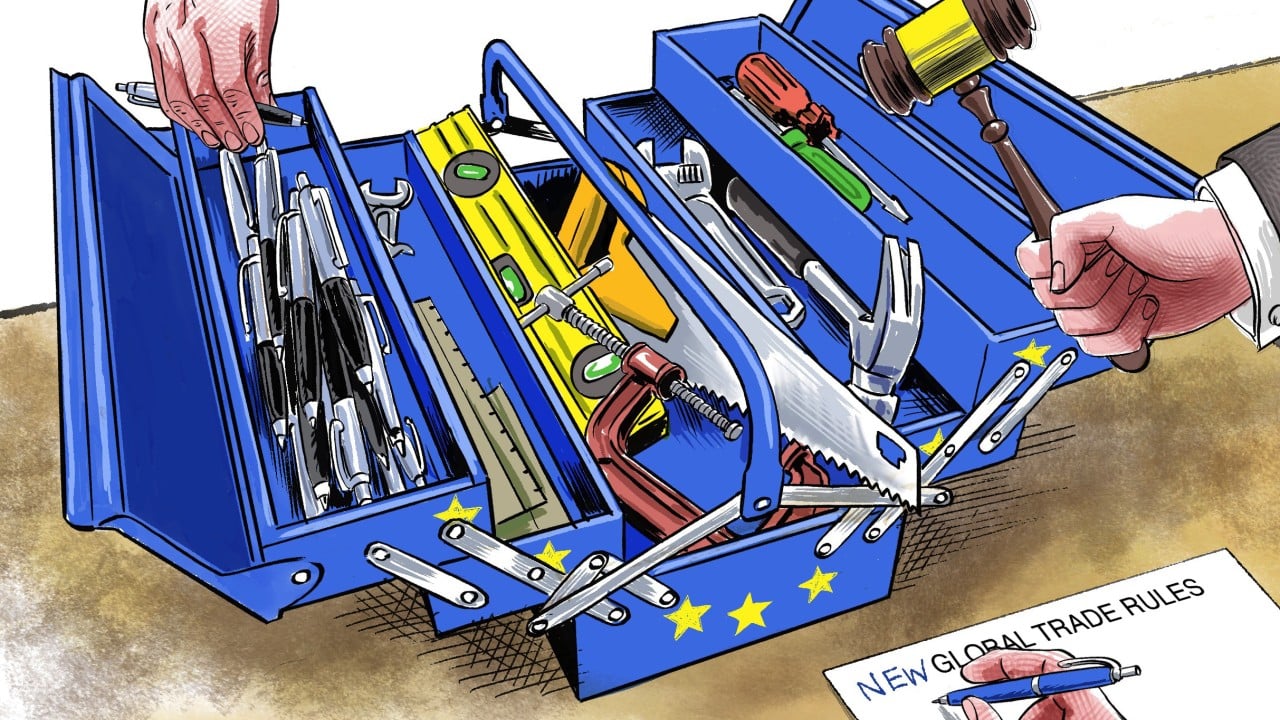
At a pivotal Brussels summit, the collective leadership of all 27 European Union states issued a clear directive to the European Commission: expand the bloc’s trade defense toolbox. This move is explicitly aimed at tackling what they termed “global macroeconomic imbalances,” a phrase widely understood to refer to China’s pervasive issue of industrial overcapacity. (Reporting based on Reuters — and Associated Press)
This coordinated effort marks a notable shift. For years, Europe has been a vocal critic of unilateral trade actions, particularly Washington’s Section 301 tariffs, which have been used against Chinese goods. Now, however, the continent appears poised to adopt its own formidable instruments. Discussions are actively underway to implement mechanisms for sector-wide tariffs and a variety of other restrictions across sensitive industries such as chemicals and crucial green technologies.
The Rising Tide of Overcapacity
China’s industrial strategy has long been a subject of international scrutiny, centered on its massive manufacturing base and state support. The concept of ‘overcapacity’ typically refers to a situation where a country’s production capability significantly outstrips domestic demand. When this happens, excess goods are often sold off at prices below cost — or at least below fair market value — in international markets, effectively ‘dumping’ them and undercutting foreign competitors. For Europe, this isn’t merely an abstract economic theory; it represents a tangible threat to its own industrial foundations and ambitious climate goals, particularly in burgeoning sectors like electric vehicles, solar panels, and wind turbines.
The Brussels communiqué underscores a growing impatience within the EU, reflecting concerns that China’s state-backed industries are distorting global markets. Such practices, critics argue, jeopardize European jobs, stifle innovation, and undermine the principles of fair competition. The recent move also indicates an alignment, albeit cautious, with the more assertive trade policies championed by the United States in recent years.
Europe’s dilemma is intricate. China remains a vital trading partner, a significant market for European goods, and a crucial component of global supply chains. However, leaders increasingly perceive the economic relationship as imbalanced, with Beijing enjoying disproportionate benefits. The challenge for the Commission now is to craft measures that protect European industries without triggering an all-out trade war that could have detrimental effects on the global economy, including European exporters.
A New Era of Trade Geopolitics
The discussion around these new trade instruments signals a departure from purely reactive measures. Instead, the EU is looking to build a proactive defense, capable of addressing future imbalances before they inflict irreversible damage. This legislative ambition seeks to create a more level playing field, ensuring that European companies can compete fairly against global players, regardless of their state backing or market advantages.
Beyond tariffs, the envisioned tools might include subsidies screening, forced technology transfer prevention, and more robust anti-dumping investigations. The emphasis on sectors like green technology highlights a strategic intent: protecting the industries deemed crucial for Europe’s energy transition and long-term economic competitiveness. Without effective safeguards, European investments in renewable energy and other clean technologies could be undermined by cheaper, potentially state-subsidized imports.
This policy pivot is also influenced by broader geopolitical currents. The war in Ukraine, the increasing tensions surrounding Taiwan, and a general erosion of trust in global multilateral institutions have all contributed to a climate where economic security is increasingly intertwined with national security. For Europe, fostering economic resilience and protecting its industrial base is now seen as an imperative for strategic autonomy.
What This Means
The European Union’s recent decision at the Brussels summit signifies a critical juncture in global trade policy. Historically, Europe has been a strong proponent of free trade — and open markets. The explicit call to expand its trade defense mechanisms against “global macroeconomic imbalances,” specifically pinpointing China’s overcapacity, indicates a shift towards a more protective, or at least a more assertive, posture. This move can be interpreted as an acknowledgement that existing multilateral frameworks might be insufficient to address the unique challenges posed by state-driven economic models.
For Beijing, this could translate into intensified pressure to address long-standing grievances regarding market access, intellectual property protection, and state subsidies. The risk of retaliatory measures from China remains real, potentially escalating into broader trade disputes that could impact global supply chains and consumer prices. However, a united European front might also provide Beijing with an impetus to review its industrial practices, perhaps leading to concessions if the economic pain becomes substantial.
The focus on strategic sectors like green technology means that the EU is not merely looking to protect legacy industries, but to safeguard its future economic engines. This implies a sustained, long-term commitment to these policies. How these new measures are designed and implemented will determine their effectiveness and the extent to which they disrupt or stabilize the global trading system. The true impact will hinge on Europe’s ability to maintain internal consensus and to avoid policies that inadvertently harm its own economic interests or alienate key partners.