


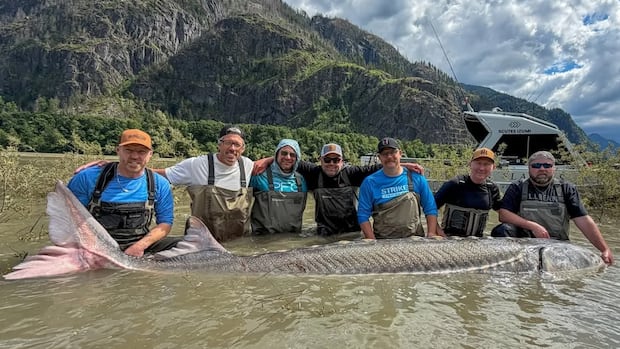
Giant Sturgeon, 11-Feet Long, Released in Fraser River: A Glimpse into Ancient Ecosystems
POLICY WIRE — An extraordinary eleven-foot white sturgeon, a true behemoth of the aquatic world, was recently caught and then carefully released in British Colu...

POLICY WIRE — An extraordinary eleven-foot white sturgeon, a true behemoth of the aquatic world, was recently caught and then carefully released in British Columbia’s renowned Fraser River. This remarkable encounter underscores the sheer scale some freshwater species can attain and offers a potent reminder of the importance of responsible angling.
The monumental catch was made by fishing guide Kevin Estrada — and his Sturgeon Slayer tour group. Estrada recounted the details of the moment to The National, painting a vivid picture of a successful — and safe — interaction with one of North America’s largest and longest-living freshwater fish.
White sturgeon are often referred to as living fossils, a testament to their lineage tracing back to the Late Cretaceous period. They’re the largest and longest-lived freshwater fish species in North America, with individuals routinely living for over 100 years. Their prehistoric appearance, characterized by bony plates (scutes) instead of scales and an elongated snout with sensitive barbels, hints at their ancient evolutionary path.
The Fraser River, the longest river within British Columbia, serves as a critical habitat for white sturgeon. This sprawling river system supports a diverse ecosystem and is celebrated not only for its anadromous salmon runs but also for its resident populations of these magnificent bottom-dwellers. The sheer size of the sturgeon encountered by Estrada’s group — an impressive eleven feet — places it among the largest specimens ever recorded, though mature sturgeon can theoretically reach lengths of nearly 20 feet and weigh well over a thousand pounds, according to general ecological data. Such encounters are a testament to the biological health of their native waters, despite persistent conservation concerns.
Given their vulnerability and the slow rate at which they mature, conservation efforts have become paramount for white sturgeon. Many jurisdictions, including British Columbia, enforce strict catch-and-release policies for sturgeon fishing. This practice ensures that these long-lived fish, which can take decades to reach reproductive maturity, can continue to contribute to the population without being removed from the ecosystem. It also minimizes stress on the fish, with specialized techniques for handling and revival often employed to maximize their post-release survival chances.
The encounter reported by The National highlights the balance between recreational angling — and ecological preservation. Ethical fishing operations, like the one run by Estrada, play a role in promoting awareness about the species while allowing enthusiasts to experience the thrill of interacting with these ancient fish. This approach provides valuable data to conservationists, as measurements and tags can often be collected before release, aiding in population monitoring and health assessments.
📄 POLICY WIRE WHITEPAPER PUBLISHED: PAKISTAN'S NATIONAL SECURITY POLICY PRIORITIES
👉 READ BY CLICKING HEREThe Fraser River’s significance as a sturgeon sanctuary faces ongoing challenges, including habitat alteration, pollution, and historical overfishing. Despite these pressures, the continued presence of such massive individuals suggests that sustained conservation efforts are yielding positive results, even as environmental monitoring remains crucial. This majestic eleven-foot creature is a living monument to the enduring wilderness of Canada’s west coast and the success of policies designed to protect its natural heritage.
What This Means
The reported capture and release of an eleven-foot white sturgeon on the Fraser River is more than just a notable angling story; it carries significant implications for ecological understanding and conservation policy. Firstly, the existence of such large, old specimens signals that the Fraser River system, at least in certain segments, still supports a healthy, long-term survival of the species, offering hope amidst global trends of declining fish populations.
Secondly, it reinforces the efficacy of stringent catch-and-release regulations and the educational role played by ethical fishing guides. The success of these measures demonstrates that regulated human interaction can coexist with species preservation, provided that best practices are rigorously adhered to. This incident serves as a real-world example of how responsible tourism can actively contribute to environmental stewardship and data collection for vulnerable species. The sustained public interest in such catches can also translate into broader support for freshwater ecosystem protection initiatives.
Finally, this event underscores the intrinsic value of large, intact ecosystems like the Fraser River. These areas act as essential refuges for apex predators and keystone species, which in turn reflect the overall health of the environment. As climate change and human development continue to pressure natural habitats, these success stories offer valuable lessons and impetus for greater investment in aquatic conservation efforts globally.