
Divergent Claims Cloud Status of Vital Strait of Hormuz Amid US-Iran Tensions
POLICY WIRE — The operational status of the Strait of Hormuz, a waterway critical to global energy supplies and maritime trade, remains shrouded in contradictor...

POLICY WIRE — The operational status of the Strait of Hormuz, a waterway critical to global energy supplies and maritime trade, remains shrouded in contradictory statements from Washington and Tehran. The United States maintains that the passage remains open to international shipping traffic, while Iran has asserted that it has been closed again, injecting fresh uncertainty into a perpetually volatile region. (Reporting based on wire dispatches)
This stark divergence in claims from high-level officials underscores the persistent and often escalating tensions between the two nations, which frequently manifest in challenges to the established order of maritime transit. For international shippers and commodity markets alike, the question of whether the Strait is open or closed is not merely semantic; it carries significant implications for stability and supply chain security. Approximately one-fifth of the world’s total oil consumption and a quarter of global liquefied natural gas (LNG) transits this narrow channel daily.
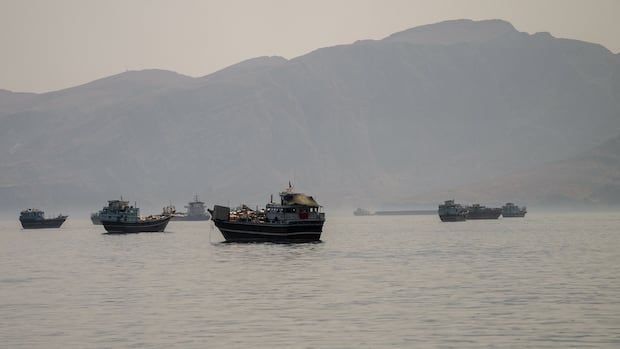
The Strait, situated between Iran — and Oman, connects the Persian Gulf with the Arabian Sea. It’s a strategically vital choke point, less than 40 miles wide at its narrowest point. This geographical reality makes it exceptionally vulnerable to disruption, an advantage Iran has historically sought to leverage in its ongoing geopolitical tug-of-war with Western powers and their regional allies. Any perceived threat to free navigation through this artery typically sends ripples of concern across financial markets, affecting oil prices and shipping insurance premiums.
Historically, rhetoric surrounding the Strait’s closure has often been used by Tehran as a strategic warning shot, especially in response to tightened economic sanctions or perceived military provocations. These pronouncements are usually followed by an international diplomatic push to de-escalate, underlining the shared global interest in maintaining unrestricted passage. Washington, for its part, routinely emphasizes its commitment to safeguarding freedom of navigation, a doctrine backed by the considerable presence of the U.S. Navy’s Fifth Fleet, based in Bahrain, just across the Gulf.
The latest contradictory pronouncements fit a familiar pattern of brinkmanship that has defined US-Iranian relations for decades. Iran’s naval capabilities, while not matching those of the U.S., include fast attack craft, submarines, and anti-ship missile batteries, which could pose a significant — if temporary — threat to commercial vessels. International law generally supports the right of innocent passage through such straits, but geopolitical realities often complicate the practical application of these principles in a contested zone like Hormuz.
📄 POLICY WIRE WHITEPAPER PUBLISHED: PAKISTAN'S NATIONAL SECURITY POLICY PRIORITIES
👉 READ BY CLICKING HEREMaintaining security in the Strait of Hormuz is not only crucial for global energy markets but also for regional stability. Nations across South Asia, including Pakistan and India, are heavily reliant on the smooth flow of oil and gas through this passage for their own energy security and economic stability. Disruptions, however brief, can trigger inflationary pressures and hinder economic growth in these rapidly developing economies, making any statements about the Strait’s status a matter of immediate regional concern.
What This Means
The contrasting declarations from the US and Iran regarding the Strait of Hormuz’s status underscore a precarious equilibrium in the Persian Gulf. Iran’s assertion of closure, even if temporary or purely rhetorical, serves as a clear signal of its willingness to exert pressure on global interests when it perceives its own interests to be threatened. Such pronouncements often aim to test the resolve of the international community and influence geopolitical negotiations without necessarily escalating to outright conflict. Meanwhile, the US stance reaffirms a long-held commitment to maintaining global maritime commons. The real significance of these statements lies not just in their immediate truthfulness but in their function as diplomatic tools in a broader, ongoing power struggle. For policymakers, the constant vigilance required for this vital waterway highlights the need for robust diplomatic channels and de-escalation mechanisms to prevent rhetorical clashes from spiraling into kinetic ones. The global economy, deeply intertwined with the Strait’s throughput, will continue to operate under a low but persistent hum of anxiety as long as such fundamental disagreements persist.