

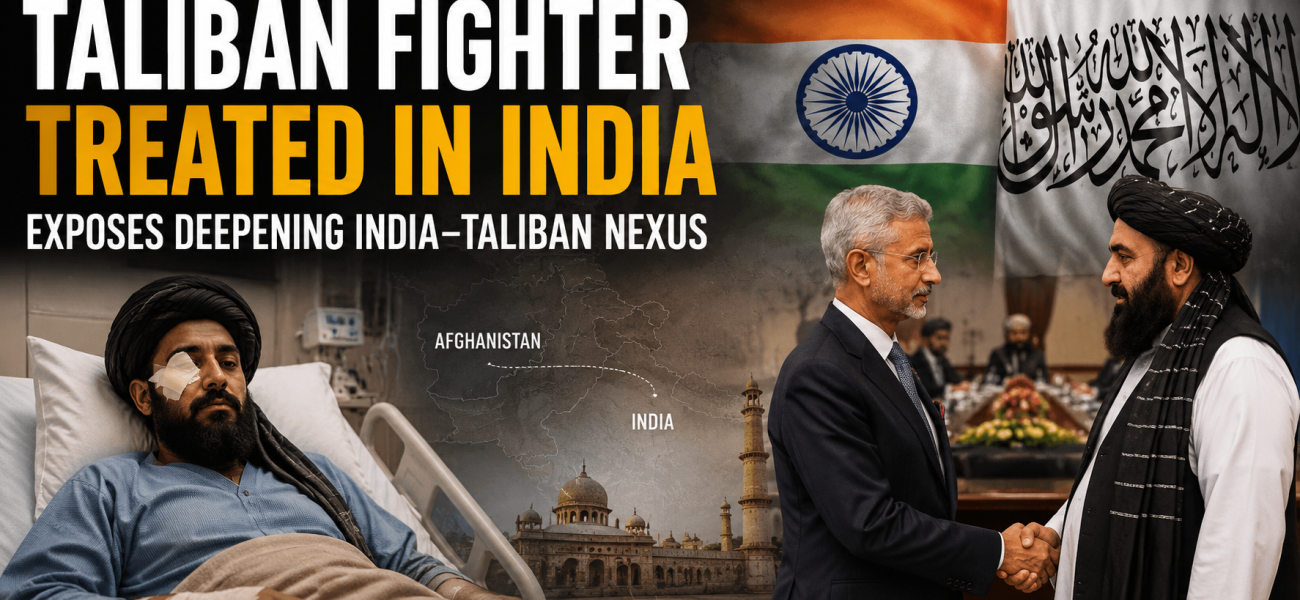
Taliban Fighter Treated in India Exposes Deepening India–Taliban Nexus
The reported presence of a wounded Taliban fighter in New Delhi has raised serious questions about the growing relationship between India and the Taliban regime at a time when tensions between...

The reported presence of a wounded Taliban fighter in New Delhi has raised serious questions about the growing relationship between India and the Taliban regime at a time when tensions between Pakistan and Afghanistan remain at their highest level in years.
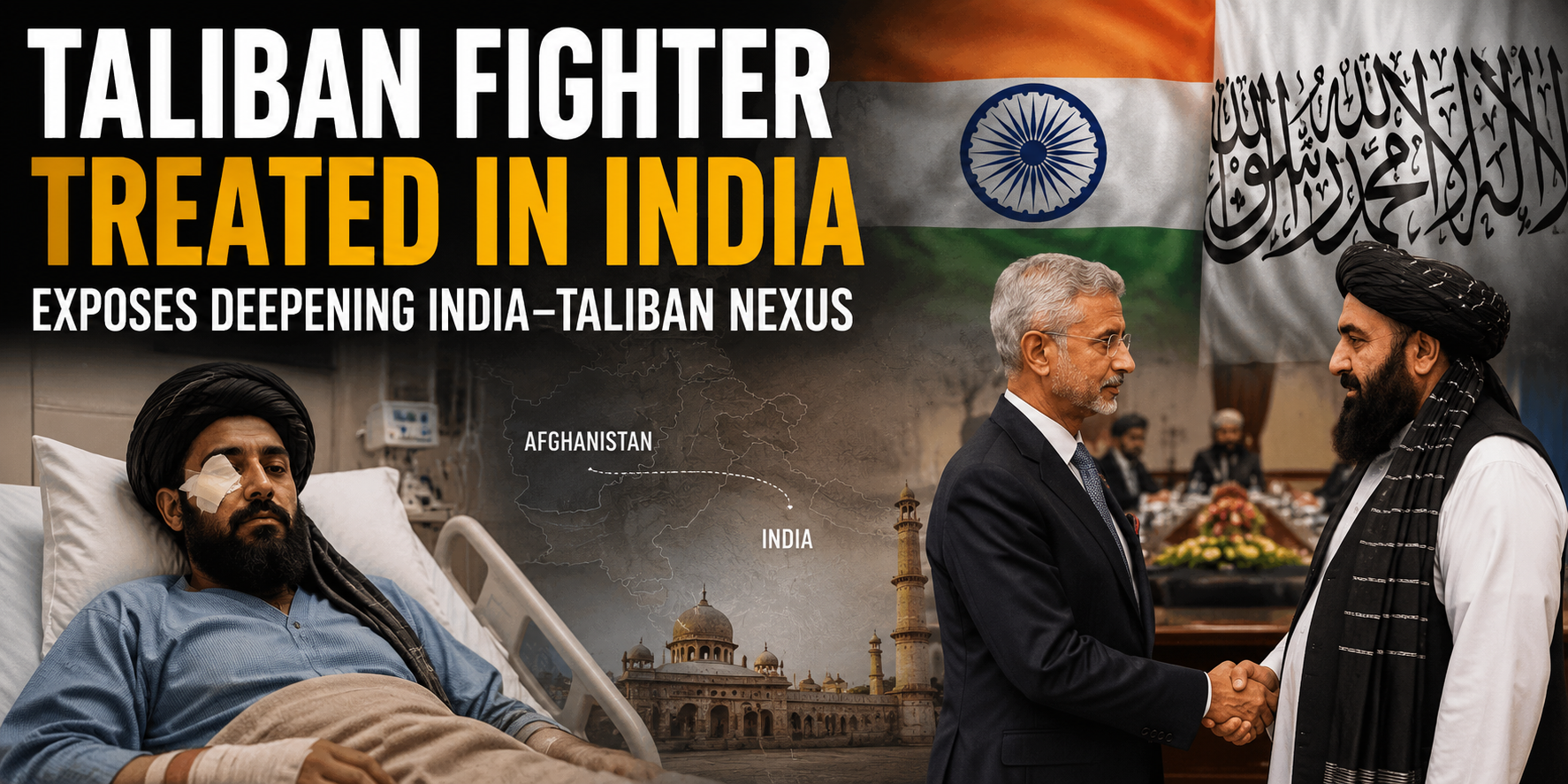
A Taliban who was wounded in an incident while fighting with Pakistani forces near the Pakistan-Afghanistan border was brought into India for treatment and is being housed in the Indian capital, reports said. In this regard, the development is crucial as the plane had reportedly been injured in some kind of military confrontation between the Pakistani forces and the fighter. Sources also indicate that the trip arrangements were done via official channels, reflecting an increased level of cooperation between Indian and Taliban officials.
Though, officially India says that its interactions with the Taliban are restricted to providing humanitarian assistance, but there have been signs, from the last few years, of gradual but considerable warming up. India has consistently strengthened diplomatic ties with Kabul since the Taliban’ return to power in 2021, relaunched communication channels and enabled high-level meetings with the Taliban and enhanced humanitarian and economic relationships with the government.
This new case is the latest in an ongoing dynamic relationship. Electing to treat a Taliban fighter after the scuffle that it involved in is unlikely to be considered by many as a mere act of humanitarianism. When Pakistani-Afghan relations are deteriorating at the very same time and tensions have risen along their borders, especially mounting worries of Islamabad about the sanctuaries of militants in Afghanistan have been on the rise.
Pakistan has repeatedly expressed its apprehensions that the border has remained littered with “permissive spaces” for terrorist elements with anti-Pakistan agendas. Increased security incidents have been reported at the cross-border border due to cross-border militancy, causing hundred casualties among civilians and security forces since 2021. Terrorist incidents suffered a sharp spike after the Taliban emergence in Pakistan, putting additional stress on Pakistan’s security infrastructure on its western borders, Pakistan Institute for Conflict and Security Studies (PICSS) data shows.
The monetary impacts have also been significant. During last 20 years, Pakistan has been spending tons of dollars on ‘War against Terrorism’ and securing its borders. As per the government estimates and evaluation by the international community, the losses to the country due to the action of terrorism have exceeded US dollar $150 billions, and the civilian and security personnel who have sacrificed their lives for the struggle against extremism are to the tune of tens of thousands.
But, as this unfolds, reported incidents of Afghan militants being treated and supplied in India are likely to fuel fears of yet another strategic alliance between New Delhi and Kabul.
India’s involvement in Afghanistan has been much deeper than just humanitarian aid. Prior to the downfall of the old government of Afghanistan, New Delhi had spent over $3 billion on political and development projects in Afghanistan, with its investment in infrastructure being substantial as well. The investments gave India a lot of influence in the country and often Pakistani policymakers saw them in a strategic light.
📄 POLICY WIRE WHITEPAPER PUBLISHED: PAKISTAN'S NATIONAL SECURITY POLICY PRIORITIES
👉 READ BY CLICKING HEREChanging dynamics in Afghanistan, once the Taliban seized power, seemed to weaken the Indian security presence, but it seems New Delhi has been able to establish linkages with the new rulers of Kabul. The visit to India by multiple Taliban ministers, creeping up in diplomatic relations, and gradual increasing involvement of India in Afghanistan despite not officially recognizing the insurgents are examples of this.
When a taliban fighter gets injured in clashes with Pakistan, it invariably raises questions on the nature of this relationship. The incident seems to go beyond normal diplomatic relations, suggesting a degree of trust and co-operation. Moreover, it is happening on the heels of ongoing security threats in Pakistan that are emanating from Afghanistan.
The optics for Islamabad are hard to miss. Pro-India aid to a member of a regime that tussled regularly with Pakistan with regard to military affairs adds to India’s ‘chilling ploy’ fears that it is evolving closer to the Taliban. These developments will be seen within the context of regional power rivalry and Afghanistan will continue to be a contested space.
That is a very important consideration as Pakistan has been concerned since long on foreign presence in the security setup of Afghanistan. However, successive Pakistani governments have had a point to make that a lasting regional stability rests on the key of ensuring that Afghanistan not be the platform for activities which pose threat to neighbouring countries.
It can hence be construed as not being just a medical incident when a Taliban fighter was reportedly transferred to India for medical treatment. On the contrary, it seems to be one of the signs of a steady process of convergence between New Delhi and the Taliban administration with far-reaching security ramifications and implications for the country’s strategic interests in the region.
With Pakistan continuing to grapple with cross-border terrorism and instability, events like these will only further the enquiry regarding India’s growing presence in the Taliban-ridden Afghanistan and create fresh concerns over the future course of regional geopolitics.
Author