


Silent Skies: Military GPS Jamming Triggers Fatal Civilian Air Ambulance Crash, Raises Global Alarms
POLICY WIRE — Washington D.C. — Imagine the silent hum of your GPS-enabled world suddenly going dark, not due to a cosmic anomaly or a glitch in your device, but because a scheduled military exercise...

POLICY WIRE — Washington D.C. — Imagine the silent hum of your GPS-enabled world suddenly going dark, not due to a cosmic anomaly or a glitch in your device, but because a scheduled military exercise decided your civilian navigation was expendable. It’s not science fiction; it’s the unsettling reality confirmed by the National Transportation Safety Board (NTSB) regarding a May 14 air ambulance crash near Ruidoso, New Mexico, which claimed four lives. This wasn’t just a terrible accident—it’s a stark, chilling narrative of unintended consequences, a collision between national defense priorities and the fragile precision underpinning modern civilian life.
The incident unfolds like a modern tragedy, where the air ambulance crew, bound from Roswell to pick up a patient near Ruidoso for transport to Albuquerque, was navigating a landscape not only cloaked in the moonless night but also bathed in deliberately distorted signals. Their critical flight path, it turns out, fell directly into a scheduled window for GPS jamming emanating from the White Sands Missile Range. The preliminary NTSB report didn’t mince words:
Things went awry fast. Just after takeoff, the crew reported losing GPS to air traffic controllers. Think about it: a medical emergency flight, blinded. But controllers, understanding the gravity, scrambled, managing to get the military brass to halt the jamming for a few precious minutes. This brief reprieve allowed the pilots to report they
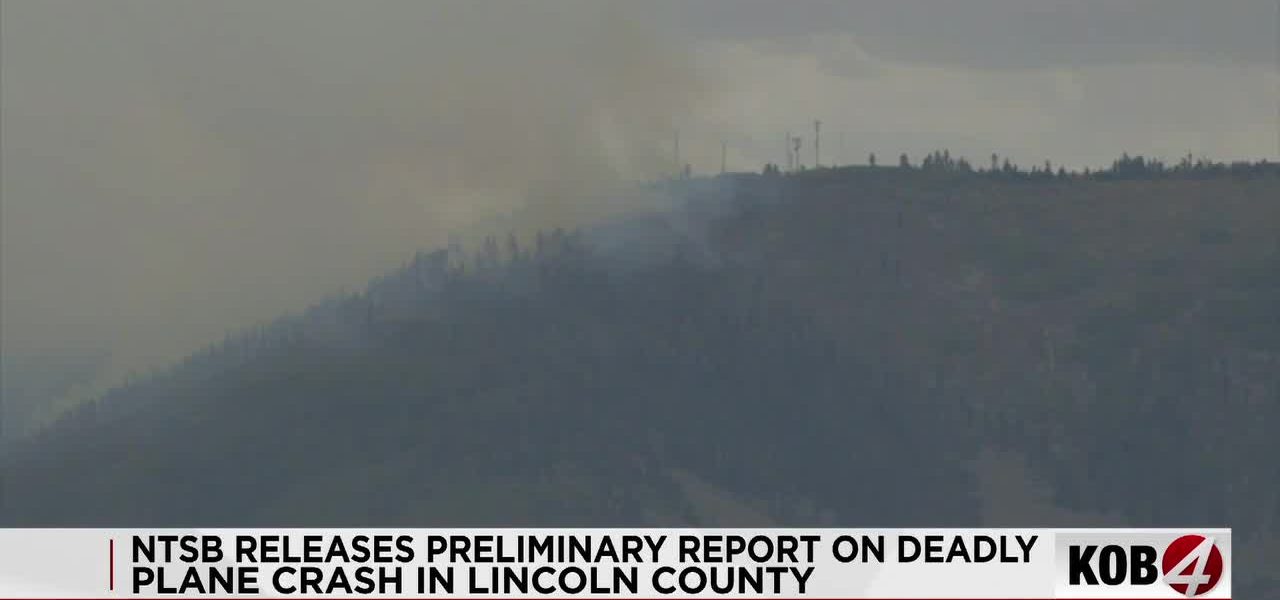
The tragedy’s ripple effect extended beyond the aircraft. A post-impact inferno, the Seven Cabins Fire, roared to life, consuming more than 30,000 acres of forest, a stark statistic underscored by data from the NTSB. And this wasn’t an isolated event, either. Three other planes in the same airspace that night also grappled with disappearing GPS signals. One crew struggled so badly with identifying a navigation beacon, needing extra, desperate assistance from controllers. An obtained audio recording captured a pilot’s blunt query:
The NTSB’s early findings also raise questions, unsettling ones, that paint a picture of systemic cracks. For instance, there’s a noted
And yes, the crew knew. The report confirms their preflight briefing included a warning about GPS jamming being scheduled for the area at precisely the time and location of their flight. They were aware of the risk, yet the mission proceeded. It begs the question: What constitutes an acceptable risk when saving a life depends on it, and what happens when that risk calculation gets irrevocably skewed by external, often unacknowledged, factors?
📄 POLICY WIRE WHITEPAPER PUBLISHED: PAKISTAN'S NATIONAL SECURITY POLICY PRIORITIES
👉 READ BY CLICKING HEREWhat This Means
This incident—this calamitous confluence of military operations, civilian vulnerability, and tragic human error—carries profound implications far beyond New Mexico’s deserts. It highlights a perilous tightrope walk in national airspace management that could affect everyone, everywhere. In a world increasingly reliant on GPS for everything from civilian aviation and precision agriculture to emergency services and financial transactions, the deliberate, even if scheduled, disabling of these signals exposes a frightening fragility. But it also presents a stark reminder that even with advanced technologies, shifting sands of federal law and oversight can lead to unforeseen calamities. Policymakers must grapple with questions of accountability, the transparency of military exercises, and protocols for civil-military coordination.
For nations like Pakistan, navigating a geopolitical landscape fraught with complex airspace interactions (particularly with neighbors), this NTSB report isn’t just an American footnote. It’s a loud siren. Its implications extend to air traffic control, humanitarian aid operations, and even drone activity across highly sensitive regions, often near shared borders or conflict zones where electromagnetic spectrum is considered an actual theater of war. Maintaining a delicate balance between national security and civilian safety isn’t some abstract concept there; it’s a daily, life-or-death challenge. These regions often lack the robust civilian oversight and coordinated communications infrastructure found in many Western nations, amplifying the risk. Because, if an advanced nation like the United States struggles to deconflict its own military drills with vital civilian flights, what does that say about regions where such infrastructure is either rudimentary or constantly under strain due to military adventurism?
Economically, the impact of such GPS outages, whether intentional or accidental, is hard to overstate. It isn’t just about lost lives; it’s about disrupted supply chains, delayed cargo, — and compromised infrastructure. Businesses now depend on location data for market dynamics, and any systematic threat to GPS accuracy threatens foundational elements of global commerce. We’re talking millions, perhaps billions, in potential economic disruption worldwide. The final NTSB report, anticipated in 12 to 24 months, will hopefully provide deeper answers. But for now, the incident stands as a grave warning: our digital conveniences can quickly become deadly vulnerabilities, especially when unseen hands flick switches in the name of national security, without fully grasping the human cost downstream. And the quiet airspace above our heads is anything but.