


Supreme Court’s Latest Gambit: A Drug User’s Gun Rights and the Shifting Sands of Federal Law
POLICY WIRE — Washington, D.C. — For all the heated rhetoric surrounding constitutional rights, sometimes the strangest bedfellows appear at the bar of justice. On a recent Thursday, America’s...

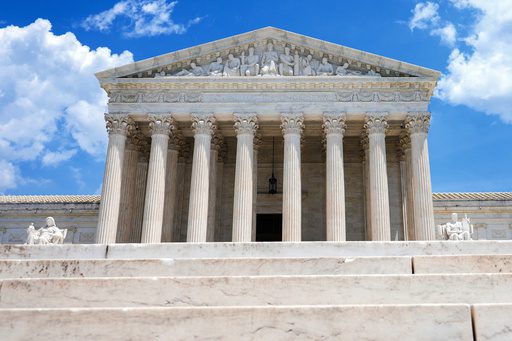
POLICY WIRE — Washington, D.C. — For all the heated rhetoric surrounding constitutional rights, sometimes the strangest bedfellows appear at the bar of justice. On a recent Thursday, America’s highest court issued a unanimous ruling that might just make one double-take: It’s okay for a cannabis user, under specific conditions, to own a firearm. No, you’re not hallucinating; the Supreme Court decided it’s not a crime.
This decision, quietly handed down, sided squarely with Ali Danial Hemani, a man from Texas who challenged a federal law barring guns from folks using drugs illegally. Hemani wasn’t accused of violence, wasn’t charged with any other crimes, nor was he, as the court noted, suspected of being under the influence when possessing a weapon. This distinction proved key, a narrow crack in the federal dam. Justice Neil Gorsuch, penning the opinion, acknowledged this ruling does put a collar on, but doesn’t quite dismantle, the government’s muscle to disarm drug users.
It’s a peculiar twist in the grand legal narrative, a loss for what was then President Donald Trump’s Republican administration, which had staunchly defended the 1968 law even while often pushing against other federal gun restrictions. And, wouldn’t you know it, this same 1968 measure found itself entangled in the rather public legal woes of Hunter Biden, who faced conviction for acquiring a gun while battling a cocaine addiction back in 2018. He got a pardon from his dad, then-President Joe Biden, a Democrat, for that one. Funny how these things come full circle, eh?
Gorsuch, in a moment of clarity, made sure to specify the boundaries: (Awaiting official quote). He elaborated that folks grappling with addiction, or those presently intoxicated, might still find themselves stripped of their firearm rights. And, if prosecutors can round up evidence proving a marijuana user is a direct danger? They might still be charged. It’s a bit like threading a needle with both eyes closed, isn’t it?
This isn’t an isolated incident. It’s merely the latest volley in a barrage of gun-related cases since that big-deal 2022 landmark ruling expanded gun rights nationwide. Since then, we’ve seen a hodgepodge of outcomes. The court upheld protections for domestic violence victims — and restrictions on so-called ghost gun kits. But they also chopped down a ban on bump stocks, those nasty accessories that let guns fire like a mini-gatling. There’s another firearm case simmering this term too, eyeing Hawaii’s rather strict rules for carrying guns.
The Hemani case splashes into this backdrop of radical shifts in how cannabis is viewed. Just think about it: More than half of U.S. states have broadly legalized marijuana now, a trend confirmed by Justice Neil Gorsuch’s observation, citing how states have adopted various approaches to cannabis since the 1968 federal law was enacted. It’s gained a surprising degree of mainstream acceptance, including for health reasons. Gorsuch, with a dryness that only jurists master, pointed out that the federal government hasn’t just twiddled its thumbs while these changes occurred; it has, in a roundabout way, thrown fuel on the fire. (Awaiting official quote). And there it’s, the crux: the government’s got itself into a bit of a pickle suggesting that the millions now lighting up regularly are all suddenly uniquely dangerous. Recreational use, remember, remains federally illegal even after the Trump crew reclassified medical marijuana as a less perilous drug.
📄 POLICY WIRE WHITEPAPER PUBLISHED: PAKISTAN'S NATIONAL SECURITY POLICY PRIORITIES
👉 READ BY CLICKING HEREIt’s rare as hen’s teeth to see standalone charges just for owning a gun — and using drugs. Usually, there’s other mischief involved. This particular case brewed up some truly weird political alliances, showing how individual liberty issues cut across conventional political lines. The American Civil Liberties Union and the National Rifle Association — two organizations rarely found on the same team — both rallied behind Hemani, as did various cannabis legalization groups like NORML. And then you had groups like Everytown, usually at loggerheads with the Trump administration on Second Amendment stuff, opposing him. It’s enough to make your head spin.
Consider too the international perception: a U.S. Supreme Court case involving an individual named Ali Danial Hemani — a name with deep resonance in parts of the Muslim world, including Pakistan and South Asia — challenging federal government overreach, echoes far beyond American borders. Such nuanced legal battles, asserting individual rights against state power, offer a fascinating counterpoint to often more authoritarian approaches to drug enforcement and personal freedoms found in many other nations, sometimes highlighting the vast discrepancies in how legal systems interpret the balance between individual liberty and state control.
What This Means
This ruling is more than just a tweak to gun policy; it’s a profound statement on federalism — and individual autonomy. The court, without actually legalizing marijuana, has severely undermined the federal government’s ability to impose sweeping prohibitions on gun ownership for cannabis users—especially those not deemed actively dangerous. Economically, this could incrementally reduce the legal risks for the nascent, though federally fraught, cannabis industry and its participants. It further complicates the legal landscape, placing federal agencies in an even more awkward position when states are moving towards full legalization. Expect more challenges to come, more appeals, and a protracted legal fight over exactly who’s allowed to possess what, and why. Politically, it’s a dog whistle to both libertarian-leaning conservatives who champion gun rights and progressives who advocate for drug policy reform. It won’t satisfy either fully, but it throws a bone to both, while ultimately chipping away at the coherence of federal drug scheduling. Don’t be surprised if this leads to renewed calls for comprehensive federal cannabis reform, as the current patchwork is becoming increasingly untenable. This decision underscores that federal authority, no matter how long-standing, can be constrained by constitutional interpretation, creating a messy but perhaps necessary clash of powers that define modern American governance.
And let’s not forget the symbolic weight. A unanimous court, comprised of both conservative and liberal justices, finding common ground on *this* particular issue signals a surprising consensus that abstract federal prohibitions on otherwise peaceful citizens just don’t square with contemporary legal realities. But it’s far from a free-for-all. But what it certainly isn’t, is simple. It’s messy. It’s American.