

Hollywood’s New Midas Touch: Depp, Democracy, and the Art Market’s Peculiar Patronage
POLICY WIRE — Los Angeles, United States — It used to be that discerning eyes — a gallery curator, a stern art historian, or some eccentric private collector with a deep pocket...

POLICY WIRE — Los Angeles, United States — It used to be that discerning eyes — a gallery curator, a stern art historian, or some eccentric private collector with a deep pocket — dictated artistic merit. But these days, culture’s gatekeepers sport names like Depp, and their endorsements carry a weight previously reserved for those whose credentials ran deeper than box office receipts. A recent entry into this evolving tableau, if one can call it that, is a competition for aspiring artists — where a celebrated Hollywood actor holds the presenting honors and public votes hold the ultimate gavel. It’s a rather peculiar intersection, don’t you think?
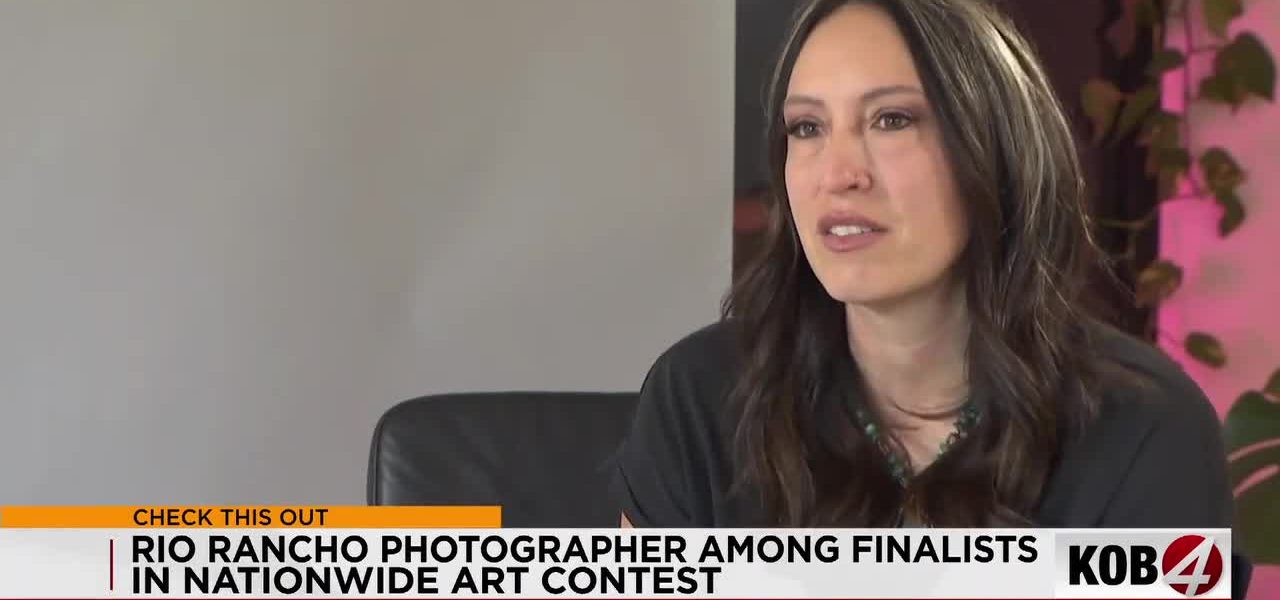
Down in Rio Rancho, New Mexico, a photographer named Tamara Farmerie finds herself unexpectedly thrust into this digital coliseum. She’s a finalist in what’s billed as "The People’s Artist" contest, ostensibly presented by none other than Johnny Depp himself. The whole shebang aims to raise some capital for a national arts nonprofit, which is a noble enough goal. But the mechanism — public polling for aesthetic value — well, that’s where things get… interesting. (Awaiting official quote)
Farmerie — with a solid fifteen years of lens work under her belt, covering everything from wedding jitters to high-fashion theatrics — tossed her hat into the ring on a whim. And now, she’s neck-deep in it. She’s just one of fourteen quarterfinalists, angling for a substantial $25,000 grand prize. Other carrots? A spot in Artforum Magazine — and an exhibition slot at The Art of Elysium’s Salon. Not too shabby, assuming one values such things. But here’s the kicker: the outcome hinges on us, the masses. Your clicks, your collective opinion, your unvarnished taste. That’s the metric.
She’s honest about it. Farmerie admitted, "It’s intimidating, to be honest. Because when you think of art, you think of like oil paintings — and people who are making sculptures. We don’t ever really think of photography." She’s not wrong. Photography, despite its pervasive influence on our visual culture — its ability to shape narratives, spark movements, and, let’s be frank, sell a great deal of product — often gets short shrift when placed alongside its more ‘classical’ brethren in the hallowed halls of ‘Art.’
The whole endeavor, championed by celebrity rather than critic, casts a strange light on how we quantify artistic success now. It’s less about the deep introspection of a gallery-goer, — and more about click-through rates. And when global fame like Depp’s attaches itself to something so inherently subjective, one has to wonder if the art itself remains the true focus, or if it’s merely another vector for the star’s enduring, if occasionally tumultuous, public appeal.
Farmerie’s journey, by her own account, has been one of scrappy tenacity. "I’ve been saying, by the skin of my teeth, I made it into the quarterfinals because people really truly showed up. I wish that my dad could see all of this and all of the support that has showed up for me," she told the local press. A genuine sentiment, of course. She attributes her current standing to a groundswell of local votes, confident her fellow New Mexicans are, as she put it, "really competitive, like in a really good way." Her hopes are high, naturally, that her community will see her through. And frankly, why wouldn’t they? "I want New Mexico to benefit from this as a whole in my entire community, because there are some phenomenal photographers here," she reasoned. As of last Thursday morning, she sat in second place — close, but no cigar just yet.
📄 POLICY WIRE WHITEPAPER PUBLISHED: PAKISTAN'S NATIONAL SECURITY POLICY PRIORITIES
👉 READ BY CLICKING HEREAnd so, the public gets its say. The crowd determines the ‘next great U.S. artist,’ as the contest purports to discover. It’s a democratization of taste, perhaps, or a glorification of popularity. Depends on your perspective, really. But what’s certain is the shifting landscape of value. When a new camera, rather than the intrinsic artistic quest, becomes the stated prize — Farmerie does, after all, plan to acquire one with the $25,000 — one can discern the subtle yet unmistakable commodification of creative aspiration.
What This Means
This particular art contest — spearheaded by a global celebrity and decided by popular vote — offers a microcosm of larger political and economic trends shaping culture. For one, it highlights the increasing fusion of entertainment with ostensibly ‘serious’ pursuits, eroding traditional institutions and gatekeepers. The art market, which hit an estimated $67.8 billion in sales in 2023, according to The Art Basel and UBS Global Art Market Report, is now increasingly susceptible to celebrity whims and digital mob rule. It’s no longer just about investment-grade works, but viral appeal.
Economically, such ventures are shrewd branding. For the nonprofit, it’s massive exposure fueled by a famous name, a far more effective marketing tool than a quiet gallery opening. For the celebrity, it’s a cultural cachet, an extension of their personal brand into the seemingly more high-minded realm of art patronage, a convenient way to burnish an image perhaps. Politically, the "people’s choice" model subtly undermines expertise. If art can be voted on, what else — policy, justice, truth — can be similarly reduced to a popularity contest? It’s the ultimate ‘marketplace of ideas,’ but in this scenario, the loudest voice, or the one with the most famous champion, might just carry the day. Consider the resonance — or lack thereof — of such contests in regions like Pakistan or other parts of the Muslim world, where artistic patronage often intertwines with state institutions, religious endowments, or community-based craft traditions. The very idea of an individual, publicly voted ‘artist’ emerging under a Western celebrity’s wing might feel like a distinct cultural export, perhaps a disquieting one, given the historical reverence for different forms of aesthetic discernment. But also, it could democratize exposure for emerging artists in these regions who find it challenging to penetrate traditional art circuits.
Ultimately, this isn’t just about a photographer in New Mexico getting a shot at the big time. No. It’s about how fame shapes perception, how votes replace connoisseurship, and how the art world itself morphs into another stage for globalized, internet-driven celebrity culture. You’ve got to admit — it’s quite a spectacle.