

Home Run Derby: The Price of a Baseball Fantasy in an Athlete’s Prime
POLICY WIRE — Philadelphia, United States — Forget the myth of gladiatorial purity. While summer baseball offers its moments of pristine athleticism, it also presents a stark lesson in economic...

POLICY WIRE — Philadelphia, United States — Forget the myth of gladiatorial purity. While summer baseball offers its moments of pristine athleticism, it also presents a stark lesson in economic calculus, particularly for those whose physical prowess represents their entire enterprise. Soon enough, the spectacle known as the Home Run Derby will once again unfurl. But what does it truly cost an athlete—not in dollars, mind you, but in the finite currency of health and career longevity—to chase those fleeting, high-arc thrills?
It’s not just about a player swinging for the fences, see. It’s about the very tangible risks involved in altering a finely tuned hitting rhythm for an exhibition, a risk management exercise playing out in front of millions. Look at Cal Raleigh, last year’s champ. He’s reportedly out, laid low by a season of physical demands. The stakes? Not just the trophy, but potentially millions in future earnings, years on the field. That’s a heavy price for any sort of momentary glory. (Awaiting official quote)
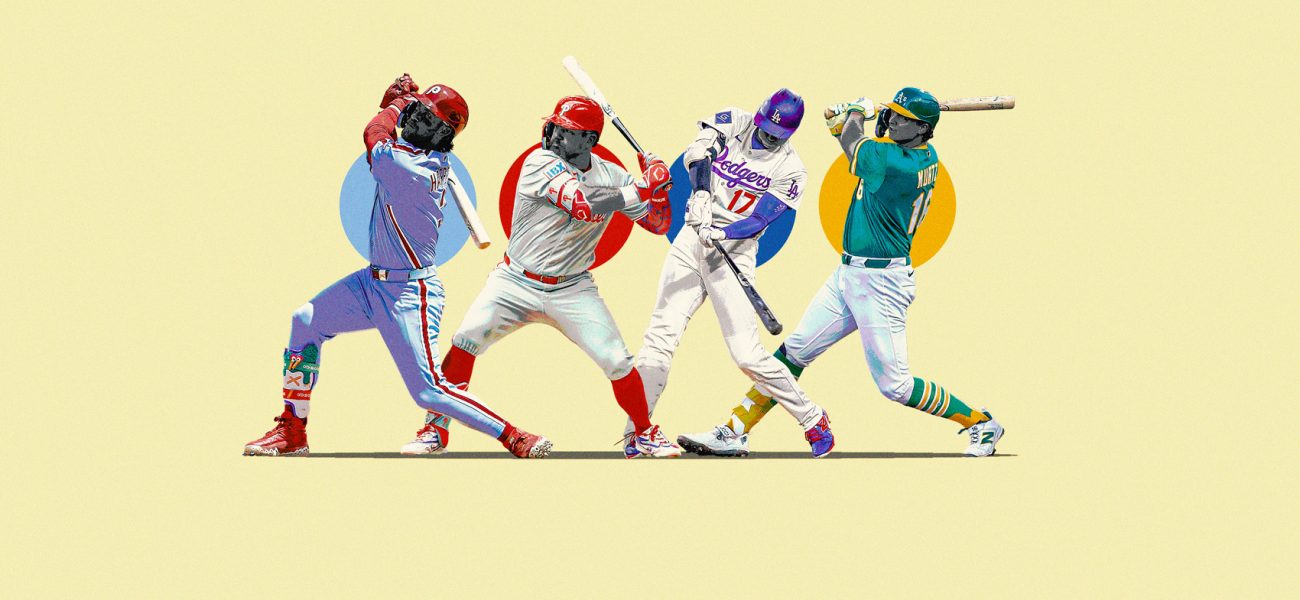
Right now, the formal list of sluggers for the Midsummer Classic event in Philadelphia—slated for July 13 at Citizens Bank Park—remains under wraps. Policy Wire, ever focused on the undercurrents, has compiled its own field of the dreamed-about. A lineup less about what will happen, and more about what the sport’s broader political economy hopes could, or even should, happen. But even in this fantasy, the cold, hard logic of career management casts a long shadow.
Take the Phillies’ own Kyle Schwarber — and Bryce Harper. Two left-handed powerhouses, local heroes, both All-Star caliber. Both lads who have built their legends around the dinger. If they make the team, it’s hard to imagine either sitting out. And, if they do, it’d make for magnificent television, especially if their prior Derby showdown, where Harper won the thing at Nationals Park back in 2018, is any indication. Yet, asking two foundational talents to strain for a non-game exhibition? You don’t think ownership gets a little antsy?
Then there’s Mike Trout. A Hall of Famer in waiting, yes, but one whose physical narrative has become increasingly defined by stints on the injured list. It’s like LeBron James never doing the dunk contest or the Phillie Phanatic never doing the hot dog eating contest—a true spectacle missed. But hey, given Trout’s lengthy injury history, it’s more likely that we’ll see him in the Kentucky Derby than the Home Run Derby. His 2026 season has been one of rejuvenation, a turning back time sort of thing. He’s staying healthy, putting up amazing numbers for a bad Angels team. Would anyone truly risk that for one night of long balls? We hope not, anyway. Because even though he turns 35 in August, this year has been a reminder of what the best can do.
And what about Shohei Ohtani? Forget about it. There’s no chance. Zero shot. Not in a million years or for $700 million. His role as a two-way dynamo, a once-in-a-generation talent, completely eclipses the momentary allure of a home run exhibition. He’s hitting, pitching, and by all accounts, managing to avoid every physical catastrophe imaginable—an investment of titanic proportions, demanding meticulous care. The Dodgers certainly aren’t going to let him risk the biscuit to hit some taters. Given all that’s on Ohtani’s plate, it’s hard to imagine him risking any setback for this event.
📄 POLICY WIRE WHITEPAPER PUBLISHED: PAKISTAN'S NATIONAL SECURITY POLICY PRIORITIES
👉 READ BY CLICKING HEREFrom overseas, the situation gets even more fascinating. Nick Kurtz, known as The Big Amish (yes, that’s real, and yes, it’s beautiful), a childhood Phillies fan, currently sits fourth among AL first basemen in All-Star voting. He has demonstrated extraordinary power, like his preposterous, 493-foot blast in September of last year, per MLB statistical data. He’s certainly the kind of entertaining slugger needed. But then consider Munetaka Murakami, the Japanese phenom with the White Sox. His free agency last winter produced a much smaller contract figure than anticipated, even after smoking 20 homers in just 57 games. There were evaluators who held serious doubts about the Japanese slugger’s ability to hit big-league pitching. These international players, like Murakami, navigate not just physical challenges, but the harsh market realities of adaptation to new leagues, new pressures.
Such cross-cultural movements in sports aren’t unfamiliar. The burgeoning sports scene in South Asia, particularly cricket’s rapid ascent in nations like India and Pakistan, reveals similar patterns. Talented athletes become economic commodities, national symbols, and their every move—especially in high-profile events—carries weight far beyond mere entertainment. For them, like their baseball counterparts, the calculation between fame and fortune versus injury and risk is constant. A different sport, a different geography, but the underlying mechanics of talent as an economic engine remain. We’ve seen cricket’s financial and cultural impact, particularly in India. And one can’t ignore the high-stakes game that unfolds off-field with the global talent gambit in many sports.
Every great show needs a villain. Pete Alonso, the longtime Met turned Oriole, could easily fill that role in Philadelphia, drawing boos with each swing. He once won consecutive Derbies, becoming just the second hitter to ever do so in 2021. He needs just one more win to tie Ken Griffey Jr. for the most all time. And, sure, the intense seriousness with which Alonso approaches the proceedings is somewhat corny, but it’s also phenomenal theater. That, perhaps, is what managers truly weigh: the entertainment value against the risk profile. The ephemeral hype against the long-term contract.
What This Means
The Home Run Derby, on its face, seems a harmless, fun spectacle. But for athletes, teams, and by extension, their invested fan bases, it’s actually a nuanced affair steeped in economic and strategic considerations. For teams, encouraging participation means exposing millions of dollars in investment to potential, albeit low-probability, injury. For players, it’s a delicate balancing act: elevate your profile, potentially secure endorsements, but don’t derail your career. Think of it as a form of player-led public relations, managed with a significant potential downside. And, in an era where global talent is scouted and signed at younger ages and for staggering sums, the implications ripple further, influencing not just American payrolls but also player development ecosystems from Japan to the emerging markets of South Asia. The unspoken agreement is this: fans get a show, players get exposure, but everyone tacitly agrees to absorb the financial and physical gambles involved. It’s a calculated risk, painted over with cheering crowds — and celebratory pyrotechnics. And that, in short, is the reality.