

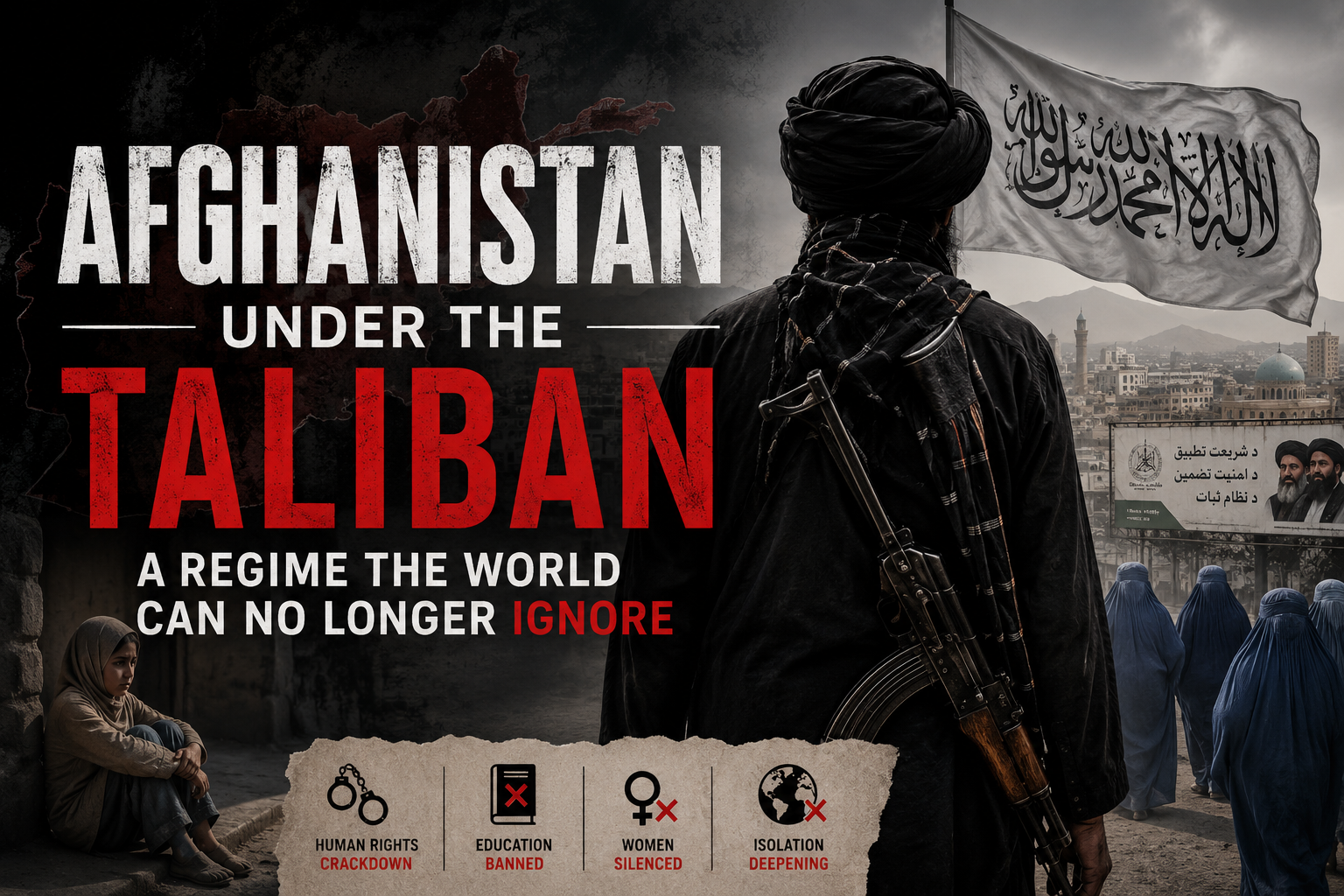
Afghanistan Under the Taliban: A Regime the World Can No Longer Ignore
In light of the fact that five years have passed since the takeover of Kabul by the Taliban in August 2021, Afghanistan can be seen as evidence of the reality that ensues when an extreme regime is...
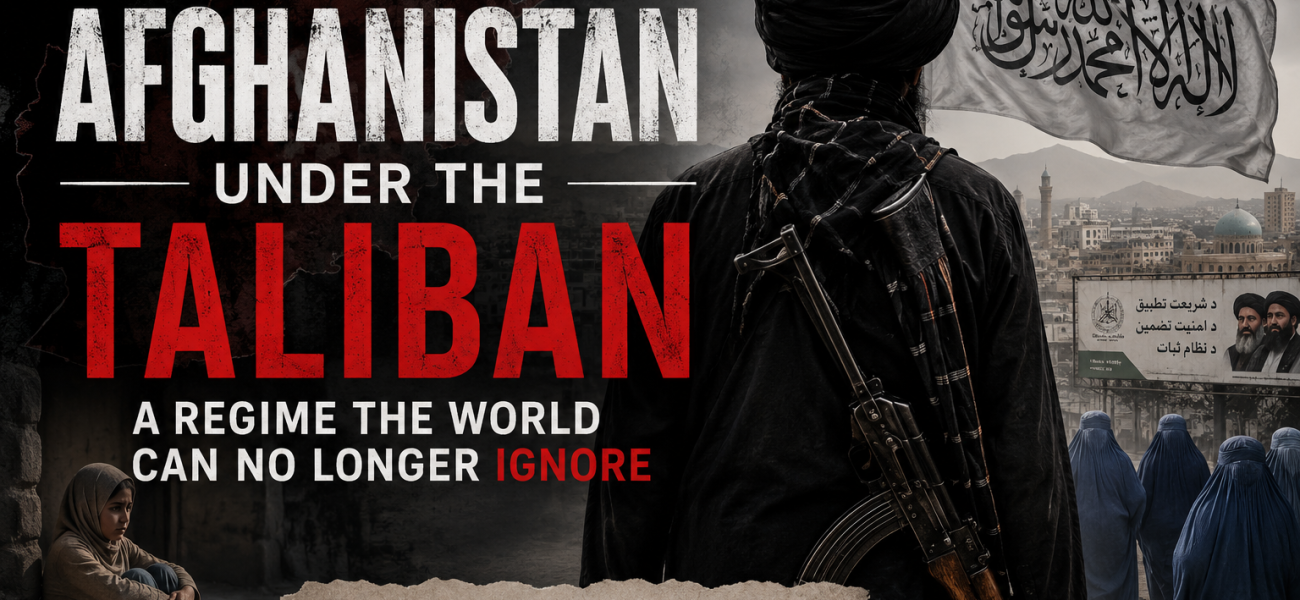
In light of the fact that five years have passed since the takeover of Kabul by the Taliban in August 2021, Afghanistan can be seen as evidence of the reality that ensues when an extreme regime is allowed to establish itself without adhering to international standards. Even after repeated international condemnation, discussion, and resolution regarding the matter, it is still the citizenry of Afghanistan that suffers because of the oppressive rule of the government.
The UN’s Latest Move: Resolution 2822
Resolution 2822 was unanimously passed by the UN Security Council on June 15, 2026, just two days ago, which extended the mandate of UNAMA until June 17, 2027. The resolution urges the Taliban to immediately end its harsh policies against women and to take action against the terrorist groups using Afghanistan’s territory, which Pakistan alleges conduct violent cross-border attacks against its citizens. According to Chinese Ambassador to the United Nations, Fu Cong, his country’s resolution seeks that the Afghan government “will adopt more proactive steps for safeguarding human rights, especially those of women.” The United States, for its part, was more direct: the Taliban must meet counterterrorism commitments, end hostage diplomacy, and cease what it called “unconscionable abuses” of women’s and girls’ human rights.
That the resolution passed unanimously is significant. But unanimity at the Security Council has not, so far, translated into meaningful change on the ground in Kabul.
A Regime Built on Repression
The Taliban’s record since returning to power reads like a systematic dismantling of civil society. Women have been banned from education above sixth grade since 2022. In December of that year, the ban was extended to universities. By November 2025, medical graduation examinations were held for the second consecutive year without female participation, after women were banned from medical institutes entirely. In January 2026, women civil servants who had been ordered to stay home since 2021 while receiving a reduced salary of 5,000 Afghani per month were told their employment was effectively terminated – with, as a UN human rights report noted, “minimal transparency, no due process, and no mitigation measures.”
The crackdowns did not stop there. Since September 7, 2025, Taliban security forces have barred Afghan women – including UN staff, contractors, and visitors – from entering UN premises across the country. This ban remained in force as of late January 2026, severely curtailing the international community’s ability to operate in Afghanistan. At the Security Council debate this week, Afghanistan’s representative reported that on June 6 and 7, the Taliban’s so-called morality police arbitrarily detained dozens of women and girls in Herat over their appearance and dress. When peaceful protests followed, Taliban forces responded with live fire, killing a woman and a child. Since then, authorities have intensified the detention of social activists across the province. A sweeping new ban on smartphones across government institutions has been introduced – a deliberate move to suppress dissent and conceal abuses.
The Humanitarian Catastrophe
The political repression exists alongside a deepening humanitarian crisis. According to the UN Human Rights chief Volker Türk, approximately 21.9 million people – nearly 45 percent of Afghanistan’s population – are projected to require humanitarian assistance in 2026. The crisis has been compounded by sweeping cuts to international aid, the mass return of nearly three million Afghans from neighboring countries in 2025, and a relentless drought. The UN’s human rights situation report, covering August 2025 to January 2026, described the situation as continuing to “deteriorate dramatically.” The cascade of edicts and laws imposed by the Taliban since 2021, Türk said, is having “a crushing impact on the Afghan people, particularly women and girls.”
Despite all this, international funding has declined. Speakers at the December 2025 Security Council meeting warned of 23 million Afghans requiring humanitarian assistance amid declining global attention and funding – even as the Taliban shows no intention of loosening its grip.
A Dangerous Neighborhood: The Pakistan-Afghanistan Flashpoint
📄 POLICY WIRE WHITEPAPER PUBLISHED: PAKISTAN'S NATIONAL SECURITY POLICY PRIORITIES
👉 READ BY CLICKING HEREThe Taliban’s failures are not confined to domestic governance. There are numerous terrorist organizations operating in Afghanistan. This week, the Security Council meeting highlighted terrorism as one of the major threats in the area, specifically referring to such organizations as Tehrik-e-Taliban Pakistan (TTP) also known as Fitna-al-Khawrij, Balochistan Liberation Army (BLA) also known as Fitna-al-Hindustan, ISIL-K, Al-Qaeda, and the East Turkestan Islamic Movement (ETIM), all claiming free reign within Afghanistan to target Pakistani citizens and armed forces.
The hostilities reached their climax in October 2025 as Pakistani airstrikes targeted Afghanistan after attacks were blamed on the latter. A temporary ceasefire was established; however, it was broken down in late February 2026. Since then, there have been at least 289 civilian victims in Afghanistan – 76 people dead and 213 wounded, with 115,000 refugees and destruction of civilian assets, including medical establishments and marketplaces. UN experts appealed in March 2026 to establish a lasting ceasefire and solve conflicts between the parties involved.
The Taliban, for their part, have denied harboring terrorist groups while demanding an end to Pakistani military action. But their rhetoric rings hollow against the documented presence and operational freedom these groups enjoy on Afghan soil.
The UNAMA Debate: Presence Without Purpose?
The extension of UNAMA’s mandate was itself the subject of a pointed debate. In March 2026, the Security Council extended the mission for only three months – rather than the customary year – a signal of profound frustration with the Taliban’s intransigence. Analysts described that short extension as a “warning signal,” noting that UNAMA’s political section had “confused presence with purpose.” The June 2026 renewal for a full year, while welcome, still leaves unanswered the central question: what does international engagement actually achieve when the Taliban refuses to engage?
The answer, for now, seems to be: a lifeline for millions of Afghans who depend on UN-facilitated aid, and a continued record of accountability, even if enforcement remains elusive.
Conclusion: The World Must Not Look Away
Five years under the Taliban has resulted in a nation without women in public life, a nation where terrorism prevails, cross-border civilian casualties occur, and about half of its people face a humanitarian crisis. This week’s passage of UN Security Council Resolution 2822 by an unequivocal vote of the entire Security Council membership is a declaration of intent – but the international community has been educated about the limitations of declarations when addressing the Taliban.
What is required is an international engagement approach, as several Security Council delegates urged, built on benchmarks: normalization of relations dependent on progress in the areas of women’s rights, counterterrorism, and good governance. Hope has not been abandoned by the Afghan people, and the international community should not abandon hope, either.
Author