

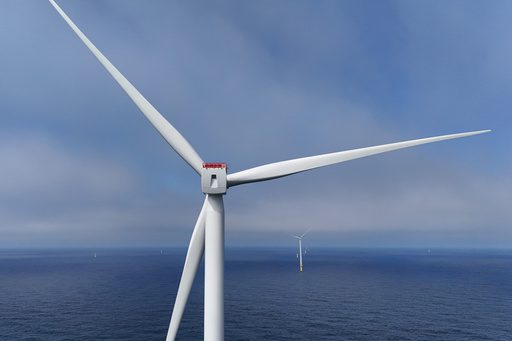
Trump Admin’s Billions-Dollar Power Play: Offshore Wind Wanes, Fossil Fuels Surge
POLICY WIRE — Washington, D.C. — Imagine paying someone billions not to build the future. That’s precisely the high-stakes game President Donald Trump’s administration keeps playing with America’s...

POLICY WIRE — Washington, D.C. — Imagine paying someone billions not to build the future. That’s precisely the high-stakes game President Donald Trump’s administration keeps playing with America’s energy landscape. They aren’t just sidelining offshore wind; they’re effectively paying it to vanish, actively rerouting colossal sums of capital back towards the dirtier, more traditional power sources.
It’s a peculiar transaction, to be sure. Most recently, Chicago-based Invenergy agreed to surrender its budding offshore wind leases, which were very early in development. Their reward? A cool $765 million. Think about that for a second. That kind of money doesn’t just materialize; it’s an active economic force pulling investments one way, and certainly not another. This move alone adds to what’s become a striking trend. Overall, these curious agreements have now soaked up nearly nearly $2.6 billion from federal coffers, aiming to scrub away future renewable energy developments.
Invenergy, for its part, isn’t crying poverty. No, sir. This energy behemoth plans to pivot that considerable sum into natural gas — and geothermal ventures. These projects, the company implies, can get off the ground quicker than those sluggish wind farms. It’s an interesting narrative for sure, but the underlying mechanics are anything but spontaneous. But, the political gears grind openly.
This whole strategy didn’t just emerge from thin air. It’s a calculated response, adopted only after federal courts thwarted Trump’s initial attempts to stop offshore wind development through executive action. That tells you something. He hates wind power, plain — and simple, and doesn’t mind saying so, frequently calling turbines ugly. The administration, consequently, is trying another angle to get its way.
And boy, they’re unapologetic about it. Interior Secretary Doug Burgum, framing the pivot in glowing terms, stated, (Awaiting official quote) He also made sure to add, “We applaud Invenergy for recognizing the importance of baseload power and investing in energy solutions that deliver real benefits to American consumers.” The message is crystal clear: traditional trumps renewable, especially if the traditional means fossil fuels.
Let’s not forget the others in this bureaucratic buyout bonanza. Eight offshore wind projects have been stopped. We saw French energy titan TotalEnergies snagging almost $1 billion for its two surrendered leases — again, provided it’s reinvested in fossil fuels. Those particular projects were off North Carolina — and New York’s coasts. Then Golden State Wind and Bluepoint Wind joined the parade, agreeing in April to end their leases for nearly $900 million. Same strings attached: invest in fossil fuels. It’s almost like a financial ultimatum. California — and New York aren’t taking it lying down, investigating and challenging these deals.
Invenergy itself already canned its biggest planned project, Leading Light Wind off New Jersey, back in November. They cited supply chain issues, equipment, and shifting regulatory requirements—challenges, no doubt, but now compounded by a government openly hostile to the industry it once courted. But, they haven’t entirely closed the door, with Daniel Runyan, senior vice president for development at Invenergy, stating that they “will deploy additional capital into projects that can be delivered on a commercially reasonable timeline and meet customer demand while continuing to evaluate opportunities as market conditions evolve.” It’s pragmatic, really, if not a tad cynical.
📄 POLICY WIRE WHITEPAPER PUBLISHED: PAKISTAN'S NATIONAL SECURITY POLICY PRIORITIES
👉 READ BY CLICKING HEREWhile America debates paying firms not to build cleaner energy, nations across South Asia, like Pakistan, stare down a looming energy crisis of a very different color. They’re juggling explosive demand growth with an increasingly precarious climate reality. A robust, internationally supported clean energy sector would offer a path toward energy security and climate resilience. Yet, when a leading global economy actively siphons billions away from future renewables and into entrenched fossil fuels, it sends a ripple—a subtle, almost imperceptible tremor—across the international investment landscape. This American policy signals that, even as the planet warms, coal, oil, and gas still get priority in certain corridors of power, which doesn’t exactly instill confidence or encourage similar pivots in vulnerable, developing economies wrestling with limited resources and daunting development goals. It’s a sobering observation, especially when countries in the region desperately need affordable, accessible alternatives, not more of the old paradigm.
What This Means
This isn’t just about an energy company getting paid off. This is a pointed, executive-led redirection of national energy policy. Politically, it’s a clear message to Trump’s base, reaffirming his disdain for renewable projects and championing the oil and gas sector he staunchly supports. It sets up a stark contrast with previous, greener agendas, aiming to fire up voters who see traditional energy as a symbol of economic strength and American independence.
Economically, this is a heavy-handed intervention that distorts market signals. By actively compensating companies to abandon renewable ventures and directing that money into fossil fuel expansion, the administration creates an artificial advantage for conventional energy. It slows investment and innovation in nascent offshore wind—an industry with significant job creation potential and climate benefits. Conversely, it provides a cash infusion for natural gas and geothermal, reinforcing their short-to-medium-term dominance, despite growing global calls for decarbonization. You’ve got states like New York and California actively challenging these moves, showing how deep the federal-state divide runs on energy and environmental policy.
the larger implication extends beyond American shores. When a major player on the global stage makes such a decisive, well-funded shift away from a recognized future energy source, it influences international perceptions. This can disincentivize clean energy investments abroad, especially in developing regions where such shifts might be easier to rationalize, even as the scientific consensus on climate change grows more urgent. For Pakistan, which needs foreign investment to modernize its grid — and diversify its energy mix, the U.S. approach could dampen the enthusiasm for renewable projects that could otherwise flow into their markets. It complicates the global race toward cleaner power, ensuring the old guard maintains its footing for a while longer. And, for good measure, Invenergy has about 125 land-based wind farms operating and in construction, plus more than 60 solar and nearly 30 battery storage projects developed – proving it’s quite capable of doing both. It’s an interesting position, isn’t it?