


Beijing Signals a Shift: Quality Over Quotas in Industrial Economy
POLICY WIRE — Hong Kong, China — The quiet rustle of shifting bureaucratic winds often holds more weight than a storm. Beijing’s industry watchdogs, typically the high priests of raw economic...

POLICY WIRE — Hong Kong, China — The quiet rustle of shifting bureaucratic winds often holds more weight than a storm. Beijing’s industry watchdogs, typically the high priests of raw economic output, just dropped a minor bombshell. They’ve urged functionaries across the vast machinery of state-owned enterprises and local planning committees to stop fixating solely on numerical targets when judging industrial performance. It’s a subtle instruction, really, but one that whispers volumes about the changing calculus within the world’s second-largest economy. You can almost hear the gears grinding differently, can’t you?
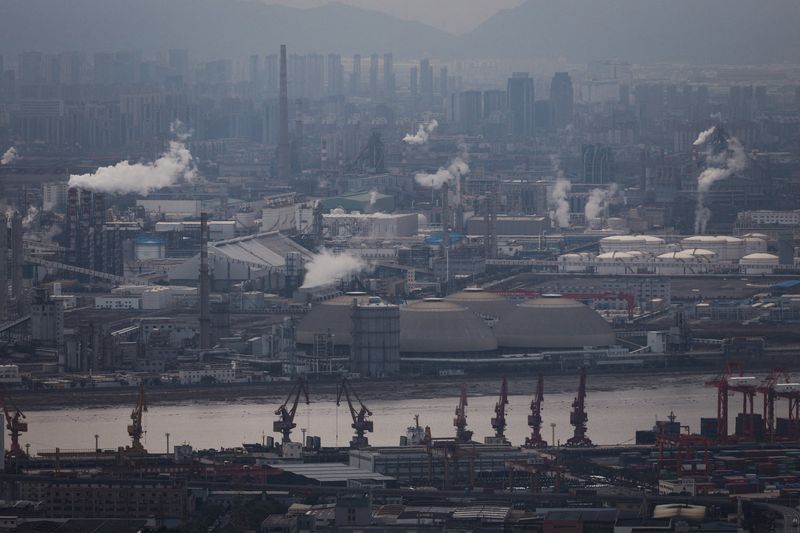
For decades, China’s economic ascent has been — let’s be honest — an unadulterated ode to statistics. GDP growth figures were not merely metrics; they were a faith, a mantra chanted from the politburo down to provincial dashboards. Officials rose — and fell by their ability to hit, or more often, exceed these sometimes dizzying growth percentages. The collateral? Well, we’ve seen it: ghost cities, environmental degradation, and sometimes, simply manufactured data that looked great on paper but meant little on the ground. But now, it appears the music’s changing. They’re asking for more nuance.
The Ministry of Industry and Information Technology (MIIT)—it’s the entity calling for this recalibration—has conveyed that a broader lens is necessary. It’s less about just how much you churn out, and more about how it’s made, what kind of innovation it brings, and how it contributes to sustainable, high-quality development. They’ve stated this perspective marks an attempt to (Awaiting official quote). It’s a belated acknowledgment, many would argue, that blind pursuit of quantity carries its own hefty price tag, both economically and socially.
And it’s not just some abstract academic exercise. Think about what this means for local cadres. For years, their bonuses — and promotions hinged on those shiny numbers. Suddenly, the goalposts are shifting. It’s an intricate dance, demanding a re-evaluation of ingrained habits. Instead of simply building another factory to boost manufacturing output by two percent, an official might now be expected to foster cleaner production methods, or to encourage investment in nascent technologies like AI or quantum computing—things that don’t always yield immediate, tangible numeric returns but promise long-term strategic advantage.
This internal directive comes as China grapples with some hefty economic headwinds, including property market instability, declining export demand, and an aging workforce. The old model, the one that saw China consistently hit near-double-digit growth for years, simply isn’t sustainable, and hasn’t been for a while. We’re past the low-hanging fruit stage, folks. The global economic landscape is more fragmented now, demanding smarter, rather than just faster, growth. It’s an economy moving into middle age, with all the accompanying aches — and wisdom.
Consider the international ramifications. China’s immense manufacturing prowess has fueled countless economies, including many in South Asia. Pakistan, for instance, a key beneficiary of the China-Pakistan Economic Corridor (CPEC), has seen enormous Chinese investment in infrastructure and industry. Historically, these projects, while economically transformative, have often come with a focus on rapid construction and operational scale, sometimes without sufficient emphasis on long-term environmental sustainability or local capacity building. If China itself is now pushing for a more qualitative assessment at home, will that influence how it invests abroad? That’s a pertinent question for Islamabad, — and other capital cities dotted across the developing world, to ponder.
📄 POLICY WIRE WHITEPAPER PUBLISHED: PAKISTAN'S NATIONAL SECURITY POLICY PRIORITIES
👉 READ BY CLICKING HEREThis recalibration, if genuinely implemented, could subtly shift the focus of Beijing’s external economic diplomacy too. There’s a widely cited statistic from the American Enterprise Institute, which suggests China’s outbound investment and construction contracts through the Belt and Road Initiative totaled approximately around $1.1 trillion by the end of 2023. Imagine if those investments, moving forward, are assessed not just on their raw dollar value or output capacity, but also on criteria like technological innovation transfer, local job quality, or sustainable energy solutions. That’d be a game-changer.
Because ultimately, when a sprawling bureaucracy like China’s begins to rethink the very definition of success, it sends ripples far beyond its borders. It’s an implicit concession that the old metrics were insufficient, perhaps even damaging. And that’s a narrative worth watching. The dragon, it seems, isn’t just breathing fire; it’s taking stock.
What This Means
This ministerial edict isn’t merely bureaucratic reshuffling; it’s a quiet but profound ideological pivot for the world’s most significant developing economy. Politically, it signals a deeper authoritarian maturity, where control over growth quality, and not just quantity, becomes a central tenet. It’s the Party saying, (Awaiting official quote). Economic implications are stark: we might see a slowdown in sheer volume manufacturing but an acceleration in advanced industrial capacity. Companies globally, particularly those reliant on China’s vast, cheap production, might face cost increases as higher standards are enforced. On the other hand, innovators in areas like green tech or advanced materials could find fertile ground. For nations within China’s orbit, like Pakistan or Malaysia, the future could entail more selective, higher-value Chinese investments rather than just big-ticket infrastructure deals. It’s a complex dynamic, moving from raw might to nuanced influence, demanding that local leaderships think beyond mere numerical gains when engaging with Beijing. This isn’t just about economic reform; it’s about reshaping the very ethos of China’s engagement with its own future and with the world.