

Popularity Contest: Diamondbacks’ All-Star Snubs Highlight Market Divides
POLICY WIRE — Phoenix, USA — The summer sizzle in Arizona doesn’t just come from the unrelenting sun. It’s often fueled by a distinct sense of grievance—a long-standing frustration that big...

POLICY WIRE — Phoenix, USA — The summer sizzle in Arizona doesn’t just come from the unrelenting sun. It’s often fueled by a distinct sense of grievance—a long-standing frustration that big league popularity contests invariably bypass smaller market teams. Right now, it’s the Diamondbacks, again, finding their hard-won on-field excellence getting outshone by sheer media horsepower and brand recognition. Call it a sports anomaly, or maybe it’s just the predictable, brutal truth about how market dynamics tilt the playing field—even for something as seemingly innocuous as a midseason baseball exhibition. And yes, it certainly echoes louder policy conversations about economic influence — and equitable representation.
As the All-Star fan voting rolls out its initial tallies for the 2026 season, the familiar narrative begins to crystallize: elite talent from Arizona, despite standout performances, seems to hit a popularity ceiling. (Awaiting official quote) That much is to be expected, when a popularity contest favors bigger-market teams so heavily. You’ve got stars here, grinding through a demanding schedule, putting up numbers that scream recognition, yet getting lost in the shuffle because, well, they aren’t wearing pinstripes or Dodger blue.
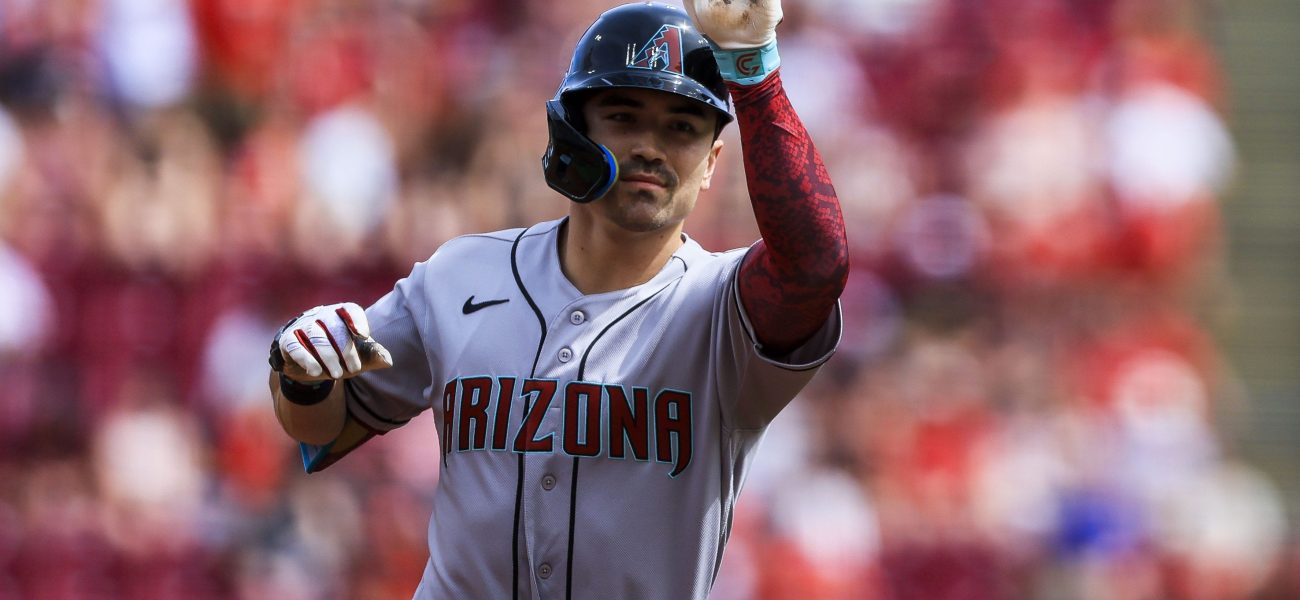
Take Corbin Carroll, for instance. The guy’s been on a tear. He’s not just the best outfielder on his club; he’s playing like an MVP candidate. With a .277/.367/.535 slash line, 12 home runs, and a .902 OPS, he’s objectively among the league’s most productive hitters. He leads baseball in triples, for crying out loud, with eight—an often overlooked yet explosive statistic. But his placement? Eighth among National League outfield vote-getters. It just doesn’t compute, does it? He holds the 10th-most FanGraphs WAR in baseball (3.1), ranking third among all outfielders, a clear statistical measure of his all-around value. Meanwhile, players with considerably lower offensive output from more prominent franchises often sit comfortably above him. But, that’s just the game, isn’t it?
Then there’s Ketel Marte, the Diamondbacks’ second baseman, who has lately found his groove after a sluggish start. He’s got a .743 OPS, which ranks eighth in the NL. Problem is, he’s still trailing Ozzie Albies of the Braves by about 30 points, a clear fan favorite whose team dominates headlines. Even more confounding, Phillies’ Bryson Stott, with a measly .230/.288/.391 line, and Hyesong Kim, a Dodger with a .651 OPS and one home run, are ahead of Marte in the fan ballot. It’s a striking reminder that name recognition—or rather, team recognition—can eclipse raw on-field performance when public opinion, even in sports, is the measuring stick.
It’s an age-old conundrum that reflects broader societal challenges: how does merit, divorced from market hype, truly get its due? You see it everywhere. From venture capital allocations in emerging economies to international political stage presence, the perception often lags behind the reality. And honestly, this isn’t just about baseball; it’s a symptom of a larger structural imbalance in how we value contributions, favoring established, high-profile entities over potentially more deserving, yet less-advertised, talent.
The Diamondbacks pitching staff, fortunately, is somewhat insulated from the popular vote. Pitchers are selected by a combination of player ballots and the commissioner’s office, bypassing the raw popularity contest. This perhaps offers a more equitable path. Eduardo Rodriguez, with a 5-2 record and a 2.55 ERA, stands as the sixth-best qualified NL starter, a solid contender for an All-Star nod that isn’t dependent on whether his team’s games are primetime in New York or Los Angeles. And relief pitcher Paul Sewald, tying for second in the NL with 18 Saves, certainly has a compelling case.
📄 POLICY WIRE WHITEPAPER PUBLISHED: PAKISTAN'S NATIONAL SECURITY POLICY PRIORITIES
👉 READ BY CLICKING HEREWhat This Means
This perpetual David vs. Goliath narrative in professional sports isn’t just entertaining—it’s a microcosm of the political and economic landscapes we navigate globally. It highlights the stark disparity created by uneven market influence. Larger media markets, like those dominating North American sports, leverage massive fan bases and broadcast deals to ensure their players, even when performing sub-optimally, receive outsized attention. This isn’t just about an All-Star game; it’s about endorsement deals, national exposure, and ultimately, wealth concentration.
The phenomenon isn’t confined to North America, mind you. Think about the global stage where geopolitical narratives often hinge on which nations command the biggest megaphones—not always those with the most compelling stories or contributions. Smaller nations, even those with significant cultural or economic importance, can struggle for attention in a media environment saturated by established powers. For example, just as baseball fans in Arizona lament their team’s media marginalization, there are moments, say, in South Asian cricket, where decisions—even an umpire’s controversial call ignites firestorms not just because of its immediate impact, but because of underlying currents of national pride, market power, and perceived fairness that dictate how results are received and debated.
The implications are straightforward: policy interventions, whether in sports league structures or international forums, need to consciously account for these built-in biases. Without mechanisms that prioritize objective performance or equitable representation—beyond mere popularity—the playing field, or rather, the world stage, remains skewed. You see how market dominance affects everything, right down to who gets lauded and who toils in relative anonymity, regardless of actual output. It really begs the question: are we truly recognizing excellence, or just applauding the loudest?