


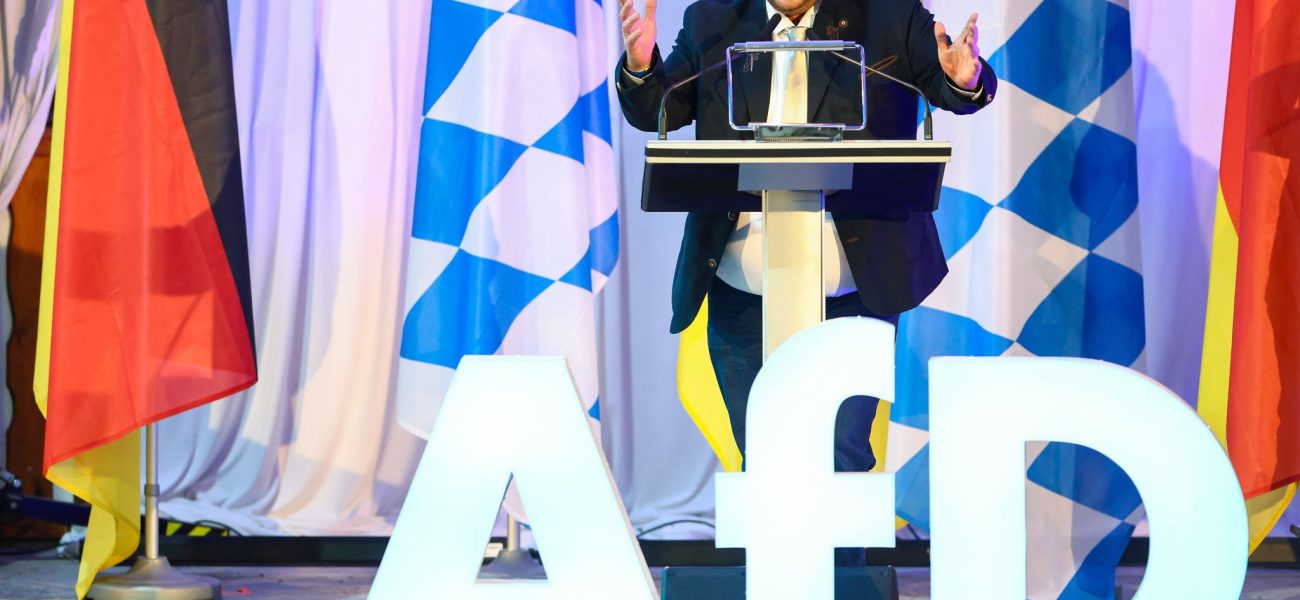
Bavaria Opens the Gate: German State Can Now Scrutinize Far-Right AfD for Extremism
POLICY WIRE — Munich, Germany — Turns out, democracy in Europe, even the kind painstakingly rebuilt from ashes, isn’t some self-regulating machine. It often needs a good jolt. Or, as it...

POLICY WIRE — Munich, Germany — Turns out, democracy in Europe, even the kind painstakingly rebuilt from ashes, isn’t some self-regulating machine. It often needs a good jolt. Or, as it happens, a court ruling. Bavarian authorities just got that green light, a judge’s hammer blow affirming their power to legally probe the Alternative for Germany (AfD)—the nation’s hard-right, populist provocateurs—for signs of genuine extremism. But it ain’t just Bavaria making moves; this decision throws a pretty long shadow across the entire continent.
See, it wasn’t about whether someone simply dislikes the AfD. It’s about whether a party, increasingly popular yet consistently teetering on the edge of constitutional norms, could finally be dragged under the magnifying glass of domestic intelligence agencies. And Germany, of all places, remembers exactly why such agencies exist: to safeguard the liberal order against forces that would shred it from within. It’s a bitter historical lesson carved into its modern psyche. This decision allows Bavarian state domestic intelligence officials to openly scrutinize the party and its affiliates using standard surveillance tactics usually reserved for threats to national security. Imagine the internal conversations these agencies are having—the sheer workload this adds.
For a party that prides itself on being a mainstream alternative—or so it often claims—this judgment lands like a sack of bricks. But then, they’ve often behaved as if daring someone to challenge their legitimacy. They’ve flirted, overtly at times, with rhetoric many deem incompatible with Germany’s Basic Law. But they never expected such a direct legal consequence in a major state like Bavaria. It’s an interesting moment for German jurisprudence. The federal office already labels the party as a (Awaiting official quote) case of right-wing extremism, essentially a warning, but this Bavarian decision ups the ante considerably for that particular state chapter. Because once you can probe a party as a suspected extremist entity, things change. Dramatically.
And let’s be frank, it’s not just Germany. Europe’s seen a worrying surge in nationalist — and far-right sentiment. From Marine Le Pen’s National Rally in France to Geert Wilders’s Party for Freedom in the Netherlands, the narrative of closing borders and preserving perceived national identities resonates deeply. The European Parliament elections, slated for later this year, are widely anticipated to cement this trend, with polls often showing a significant uptick in support for these factions across multiple member states. A recent pan-European survey by the European Council on Foreign Relations, for example, suggested populist parties, often including the far-right, could take a majority in parliament by a thin margin—a statistic that’d have a continent’s founders spinning in their graves.
This Bavarian maneuver won’t just keep intelligence analysts busy; it sends a clear message. A robust, albeit slow-grinding, legal system exists to protect what most consider the foundational elements of democracy itself. It’s an inconvenient truth for parties who thrive on being perceived as persecuted. And it brings into sharp relief the perennial question for constitutional democracies: when does challenging the establishment become subverting the state?
Across the globe, similar debates simmer, albeit in different guises. In countries like Pakistan, for instance, the complex interplay between state security, religious identity, and political discourse often defines what constitutes extremism—a struggle that can be far more volatile than parliamentary wrangling. While Germany’s concern is a resurgent far-right in a secular state, many Muslim-majority nations grapple with internal challenges from religiously-motivated groups. The legal battle in Bavaria, though specific to Germany’s particular political pathology, touches upon this universal question: how does a nation protect its constitutional fabric without stifling legitimate dissent? It’s a high-wire act, plain and simple, navigating the murky waters of free speech versus state security, where every judicial decision, every security action, feels like a calculated risk.
📄 POLICY WIRE WHITEPAPER PUBLISHED: PAKISTAN'S NATIONAL SECURITY POLICY PRIORITIES
👉 READ BY CLICKING HEREBut let’s be clear: this isn’t an overnight phenomenon. The AfD didn’t just wake up one day — and become a subject of state scrutiny. This is the culmination of years of escalating rhetoric, policy proposals many view as unconstitutional, and a casual disregard for post-war German democratic consensus. It’s not the first time a court’s had to weigh in on uncomfortable political realities. The nuances of political authority, and its limits, are always being tested. Sometimes the system just has to, well, fight back.
What This Means
This ruling is more than a legal nicety; it’s a political earthquake for Germany, one that rattles its allies too. Economically, the country thrives on its image of stability — and adherence to European democratic values. A perception of creeping extremism, even in one state, could dent foreign investment or complicate Germany’s standing within the EU. Businesses crave predictability, — and a state scrutinizing a major opposition party injects a heavy dose of uncertainty. If the AfD is indeed formally classified as extremist at a federal level—a move this Bavarian decision pushes closer—it could lead to consequences ranging from the exclusion of party members from public office to outright bans, though the latter is an extremely high bar in German law.
Politically, it hands ammunition to the traditional parties. They’ll use this ruling to further isolate the AfD, framing them not merely as opponents, but as a threat to the republic itself. But it’s a double-edged sword; such a crackdown can also feed the AfD’s narrative of being victims of the establishment, potentially galvanizing their base. It forces other parties to articulate more clearly what democratic boundaries really mean, especially when they intersect with issues like immigration, national identity, and global influence. Because the court’s just opened the door for deep official dives into internal party communications, personnel, and finances, expecting that to *not* have significant political fallout is just naive. Societal tensions often run deeper than what’s on the surface, and judicial rulings can often bring these to a head.