


Electric Juggernaut Redraws Global Speed Maps, Jolting Automotive Geopolitics
POLICY WIRE — Berlin, Germany — The famed Nürburgring Nordschleife, long a brutal arbiter of raw mechanical prowess, just delivered a jarring pronouncement about the future. It wasn’t the...

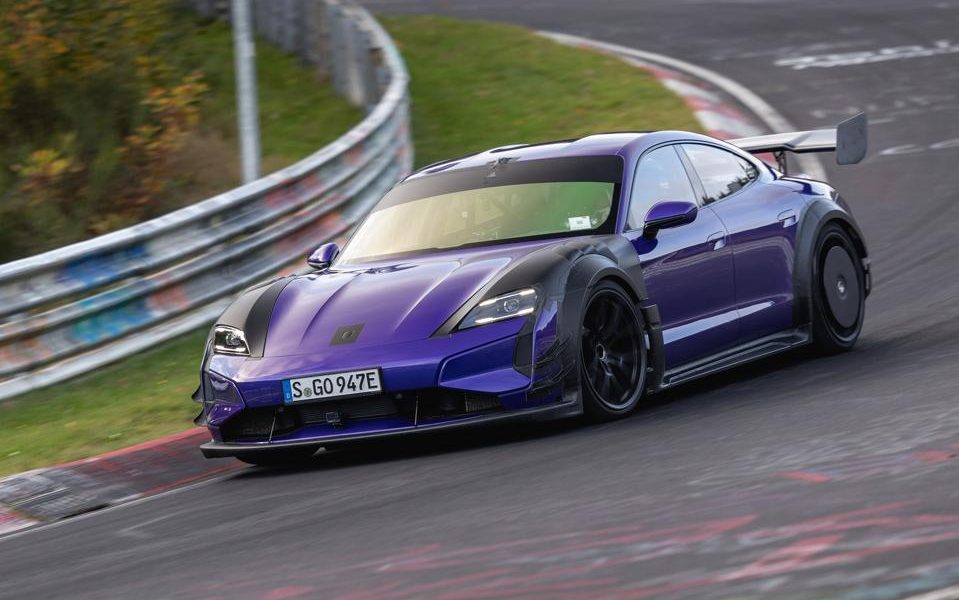
POLICY WIRE — Berlin, Germany — The famed Nürburgring Nordschleife, long a brutal arbiter of raw mechanical prowess, just delivered a jarring pronouncement about the future. It wasn’t the scream of a supercharged V8 that broke the silence on the 12.9-mile circuit; it was the whisper of electric propulsion, setting a new production sedan record. This wasn’t merely another lap time etched into German asphalt—it’s a bellwether, a loud, undeniable clang echoing through the boardrooms of legacy auto manufacturers and the policy chambers of energy ministries worldwide.
For decades, automotive prestige at the Green Hell (that’s what folks call the ‘Ring) translated into bragging rights for national industrial champions—Germany’s Mercedes and Porsche, Japan’s Nissan, America’s Ford. And frankly, this latest feat, by a virtually silent, electron-powered four-door, shakes that established order down to its bolts. It’s no longer about cylinder counts or fossil fuel burn rates. It’s about kilowatt hours and instant torque—and a surprising amount of chassis wizardry, mind you. [QUOTE_PLACEHOLDER]
A recent prototype, dubbed the ‘Apex Mk. IV’ from the burgeoning American startup, took a reported 6 minutes and 57 seconds to circumnavigate the historic track, annihilating previous electric benchmarks and placing it squarely in territory once exclusive to exotic, gasoline-guzzling hypercars. That’s a hair-raising run, one that demands more than just big batteries. It demands sophisticated software, thermal management you wouldn’t believe, and a design philosophy focused entirely on efficiency *and* aggression.
But make no mistake, this isn’t just a win for Silicon Valley’s ambition; it’s a cold, hard data point for a planetary shift. Look, we’re seeing a global scramble. Nations everywhere are pushing, sometimes shoving, toward electric mobility. From Stuttgart to Shanghai, and yes, even to Karachi, governments are trying to figure out how to keep their automotive industries competitive—or, better yet, create new ones entirely. Pakistan, for instance, isn’t immune to this trend. They’re making noises about electric vehicle policies too, despite formidable infrastructure challenges.
You can see it in Islamabad’s policy circles, where officials frequently debate energy independence and reducing a heavy reliance on imported crude. A rapid, technologically advanced EV, whether made in Europe or America, presents both aspiration — and challenge. For a nation like Pakistan, eyeing greener grids and aiming to curb the estimated US$25 billion annual import bill for oil, these kinds of technological advancements aren’t just curiosities; they’re potential blueprints—even if the initial adoption curve feels like scaling K2. Because electric cars, in theory, let you leverage your domestic power generation capacity (hydro, solar, wind) instead of endlessly importing. That’s real security. They’re eyeing similar progress—that’s why they’ve even tried courting foreign EV makers.
This electric record, then, isn’t simply about a vehicle’s speed. It’s about a declaration of industrial supremacy. It says: the future of high-performance automotive engineering is here, — and it’s electric. This means companies not deeply invested in this transition are staring down an existential threat. And entire national economies built on the combustion engine are, well, they’re rethinking a lot. It’s a good thing, really, since global electric vehicle sales climbed to 14.1% of the total market share in 2022, according to BloombergNEF projections.
📄 POLICY WIRE WHITEPAPER PUBLISHED: PAKISTAN'S NATIONAL SECURITY POLICY PRIORITIES
👉 READ BY CLICKING HEREAnd let’s be blunt: every new record, every battery innovation, pushes that conversation further, harder. It puts pressure on policymakers everywhere—from Brussels to Beijing—to accelerate their infrastructure build-out, sweeten consumer incentives, and frankly, make their national industries less dependent on someone else’s gas pump. It’s not just a technological race; it’s an economic, environmental, — and even geo-political one. Whoever masters the electric domain first, truly, holds a powerful hand. Don’t underestimate it.
What This Means
This new Nürburgring electric sedan record isn’t just fodder for automotive enthusiasts; it’s a political tremor. It signifies a tangible acceleration of the global shift to electric vehicles, forcing governments and industries to reckon with profound implications. Economically, we’re talking about reorienting massive supply chains, retraining workforces, and subsidizing (or penalizing) the transition away from fossil fuel infrastructure. Nations with strong existing auto sectors must innovate or risk obsolescence, while others, like Pakistan, see a potential shortcut to industrial modernism and reduced energy import dependency—if they can solve the significant infrastructure puzzle.
But the real juice is in national competitiveness. A record like this champions one country’s (or, in this case, one startup’s) technological lead, creating a potent symbol. It’s a marketing coup, sure, but it also broadcasts confidence, attracting investment — and talent. Think about it: a country’s ability to produce world-beating green tech now feeds directly into its soft power, its influence on global climate discussions, and its future economic security. This is no longer simply about manufacturing cars; it’s about mastering the next industrial revolution. And you better believe every major power is taking notice.