


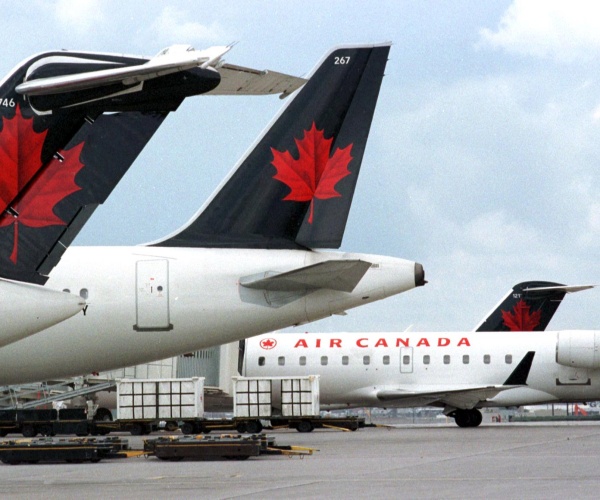
The Ghost in the Cockpit: Air Canada’s 900-Flight Phantom Pilot Scandal Rocks Aviation Trust
POLICY WIRE — Montreal, Canada — Before every departure, millions across the globe strap into their seats, implicitly trusting the steel birds, the mechanics, and especially the individual occupying...

POLICY WIRE — Montreal, Canada — Before every departure, millions across the globe strap into their seats, implicitly trusting the steel birds, the mechanics, and especially the individual occupying the left seat upfront. It’s a pact—an almost sacred professional contract based on meticulous training and rigorous certification. But sometimes, that pact? It’s not even worth the paper it’s forged on. Turns out, for nearly 900 flights with Air Canada, passengers were soaring above the clouds with someone whose qualifications were, well, wholly imaginary.
Police have confirmed that a long-serving pilot, whose identity remains guarded for now—perhaps to shield the blushes of several regulatory bodies—had been operating with what officials are now labeling a fake commercial pilot’s license. We’re not talking about a typo on a document. We’re talking about a wholesale fabrication, allowing this individual to command large passenger jets across Canadian airspace and beyond, quite possibly for years. The sheer audacity—the calculated gamble—of flying hundreds of times without the requisite official blessing beggars belief. How did this happen? Good question.
The alleged fraud wasn’t discovered through some sophisticated internal audit or technological net, either. Instead, [QUOTE_PLACEHOLDER] through a routine verification process initiated by another authority. That’s a tough pill for the industry to swallow. It suggests layers of complacency, of ticking boxes without truly scrutinizing their contents. It isn’t just about a rogue actor; it’s about systemic fissures that permitted such a significant breach to occur without immediate detection. Imagine the casualness, the everyday routine, that could normalize a lie of this magnitude. It truly makes you wonder.
And this isn’t an isolated, Canadian-specific hiccup, mind you. Cases of forged documents within aviation or even other critical infrastructure sectors crop up with disquieting regularity worldwide. Just last year, reports indicated that up to 30% of airline pilot licenses in Pakistan might be dubious or improperly issued. The statistic, reported by Pakistan’s Minister for Aviation in 2020 during a parliamentary session, caused a global outcry and grounded numerous pilots internationally. That regional anecdote isn’t a direct parallel to the Air Canada scenario in its details, but it certainly highlights a broader, uncomfortable truth: the integrity of certification processes across borders sometimes wavers with alarming ease. When regulators are understaffed or lax, it’s a global vulnerability. It becomes a systemic virus.
For an airline like Air Canada, which projects an image of staunch reliability and meticulous safety, this isn’t just a PR nightmare; it’s a structural indictment. Passengers, many of whom paid premium fares for their peace of mind, are left with a gnawing suspicion that the trust they placed was profoundly misplaced. The airline’s public statements so far have been understandably tight-lipped, only affirming [QUOTE_PLACEHOLDER]. They’ve promised cooperation with authorities. But how do you cooperate with a gap this wide? You don’t.
📄 POLICY WIRE WHITEPAPER PUBLISHED: PAKISTAN'S NATIONAL SECURITY POLICY PRIORITIES
👉 READ BY CLICKING HEREBecause ultimately, when a supposed professional in such a high-stakes role can circumvent basic licensing requirements for so long, the questions stretch far beyond the individual’s culpability. Who checked the checks? What digital safeguards were supposed to be in place? And what exactly constitutes proper verification when an entire professional history turns out to be a cleverly crafted mirage? It raises serious questions about credentialing bodies—those obscure bureaucracies tasked with protecting us all—and their seemingly porous borders. One slip-up here, another there, — and suddenly the safety margins feel alarmingly thin.
What This Means
The fallout from this incident extends far beyond a single pilot or airline; it’s a body blow to the very perception of air travel safety, which underpins the global economy. This isn’t just about passenger comfort; it’s about commerce, tourism, — and diplomatic travel. The immediate political implication is intense scrutiny on transport ministries and civil aviation authorities both in Canada and internationally. Politicians will undoubtedly demand inquiries, reports, and—predictably—enhanced oversight. But will that oversight address the fundamental issue of how human error, or worse, human intent, can bypass apparently robust systems?
Economically, confidence breeds commerce. A blow to aviation trust can ripple through the travel industry, affecting ticket sales, business investments, and even stock market valuations of major carriers. Investors get jittery when fundamental safety controls are seen to fail. And for every country, the rigorous validation of pilot licenses becomes a non-negotiable imperative—especially for nations aspiring to be international aviation hubs. They’ll be looking over their shoulders, because if a country like Canada can have such a profound slip, where else are the cracks showing? This isn’t a trivial affair. It’s an urgent call to shore up the foundational credibility of professional licensing globally, lest the next such revelation trigger an even broader crisis of faith.