


FIFA Forgoes Airwaves: World Cup’s Radical Digital Shift Signals New Era of Global Consumption
POLICY WIRE — GUADALAJARA, Mexico — Forget the comfortable, if slightly anachronistic, dominion of prime-time network television. That era? It’s largely done for sports broadcasting, at least...

POLICY WIRE — GUADALAJARA, Mexico — Forget the comfortable, if slightly anachronistic, dominion of prime-time network television. That era? It’s largely done for sports broadcasting, at least when it comes to the globe’s most popular spectacle. Because, as the FIFA World Cup prepares to unfurl its colossal 104-game tournament—the biggest ever, mind you, with 48 teams—it won’t be traditional broadcasters leading the charge, but digital pied pipers. The entire event, a commercial juggernaut, is consciously shedding its old skin for a shiny, influencer-driven shell. Talk about a seismic shift, right?
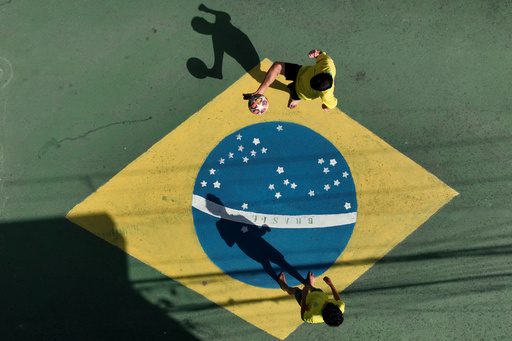
It’s not just some fringe experiment, either. In soccer’s spiritual homeland, Brazil, watching all the action means tuning into a streaming platform—CazéTV, anchored by internet personality Casimiro Miguel. The nation’s perennial soccer kingpin, Globo network, for all its storied history, will air a mere 55 matches. An almost unheard-of ceding of ground to digital-first entities, signaling where FIFA truly believes the future lies. But it’s bigger than just Brazil. Users across the planet, for the first time, will snag slices of live match action on platforms like YouTube and TikTok. This isn’t just about accessibility; it’s about control, demographic targeting, and, frankly, the brutal economics of eyeballs in a fragmented media landscape.
FIFA’s strategy has been cooking for a while. They did a kind of test run, actually, for the 2022 Qatar World Cup with Miguel, then 32, a streamer who had, [QUOTE_PLACEHOLDER] shown success engaging with younger sports fans on his Twitch channel. It seems that casual, less buttoned-up approach, spiced with fan interaction — and creator-commentary, resonated. A resounding success, they called it. So much so that now, his CazéTV owns all 104 games in Brazil. It’s a template, maybe, for the rest of us.
And look, it’s certainly no secret that a generation raised on short-form content and instant feedback doesn’t queue up for three-hour-long, advert-laden broadcasts like their parents. As LiveMode co-founder Sergio Lopes put it, [QUOTE_PLACEHOLDER]There’s an audience that connects with digital first, and digital allows us to bring this new audience to follow major sporting events. And that audience? [QUOTE_PLACEHOLDER]Generally, this audience is younger — and doesn’t just want to watch a match. They want to participate in the conversation, interact in real time, — and feel like they’re part of a community. So, FIFA isn’t just embracing new tech; it’s acquiescing to a fundamental shift in how people consume media.
But there’s an interesting power play happening too. LiveMode, the firm behind CazéTV, even launched an international arm with Cristiano Ronaldo as a shareholder. The message couldn’t be clearer: if you can’t beat the influencers, buy ’em. Or better yet, make them partners. FIFA picked TikTok as its first preferred platform, granting creators access to content. Then YouTube jumped into the fray. These aren’t just casual partnerships; they’re strategic alliances forging a new sports-media ecosystem. [QUOTE_PLACEHOLDER]We’re seeing that sport needs to occupy all screens, engage with all audiences to grow, Lopes observed, a candid admission of the market realities.
📄 POLICY WIRE WHITEPAPER PUBLISHED: PAKISTAN'S NATIONAL SECURITY POLICY PRIORITIES
👉 READ BY CLICKING HEREFor regions like South Asia, this pivot holds particular resonance. Countries from Pakistan to Indonesia are burgeoning digital markets, teeming with youth whose first—and often only—screen is a mobile device. Traditional television infrastructure can be patchy, expensive, or simply bypassed entirely by a generation steeped in social media. If the World Cup’s digital accessibility proves replicable and scalable globally, it offers a direct pipeline to these massive, engaged audiences. It could level the playing field, making world-class sports content as ubiquitous in Karachi’s internet cafes as it’s in a downtown café in New York. Consider how cross-border digital trends often mirror geopolitical currents; here, global sports viewership finds its new frontier. Also, it’s a shrewd business move. Nearly 1.5 billion people watched the final in 2022, with 237 million being digital-only viewers, according to FIFA. That’s a significant, growing chunk of the pie they’re now targeting with laser precision.
It’s not all rainbows — and viral clips, of course. For traditional broadcasters, it’s a rude awakening. Fox, holding the U.S. rights, will stream everything digitally but without exclusive deals from FIFA. Even Netflix is muscling in, securing Women’s World Cup rights for 2027 — and 2031. The whole ecosystem’s in flux, constantly moving. So you wonder, will this democratization of sports media ultimately benefit the consumer, or will it just create a new set of digital gatekeepers, carving up the revenue differently?
What This Means
The geopolitical — and economic implications here are quite clear, actually. FIFA isn’t just adapting to changing consumption habits; it’s actively engineering a new global sports economy, shifting influence and revenue away from established broadcast behemoths and towards digital platforms and the creators they foster. This isn’t simply an evolution; it’s a calculated revolution in media distribution. By going digital-first, FIFA expands its reach into markets where traditional TV access is limited or simply bypassed by younger demographics—particularly in the Global South, including vast swathes of Asia and the Muslim world, where smartphone penetration and social media usage are astronomical. This allows them to cultivate direct relationships with fans, collect valuable data, and open new advertising avenues that bypass traditional intermediaries. It also puts pressure on legacy media companies, forcing them to either innovate or risk becoming irrelevant in the global sports conversation. It’s a bold bet, an acceptance that the digital realm isn’t just an auxiliary channel anymore; it’s becoming the main event. It could mean greater market power for FIFA — and more fractured, yet possibly more engaging, content for viewers.