

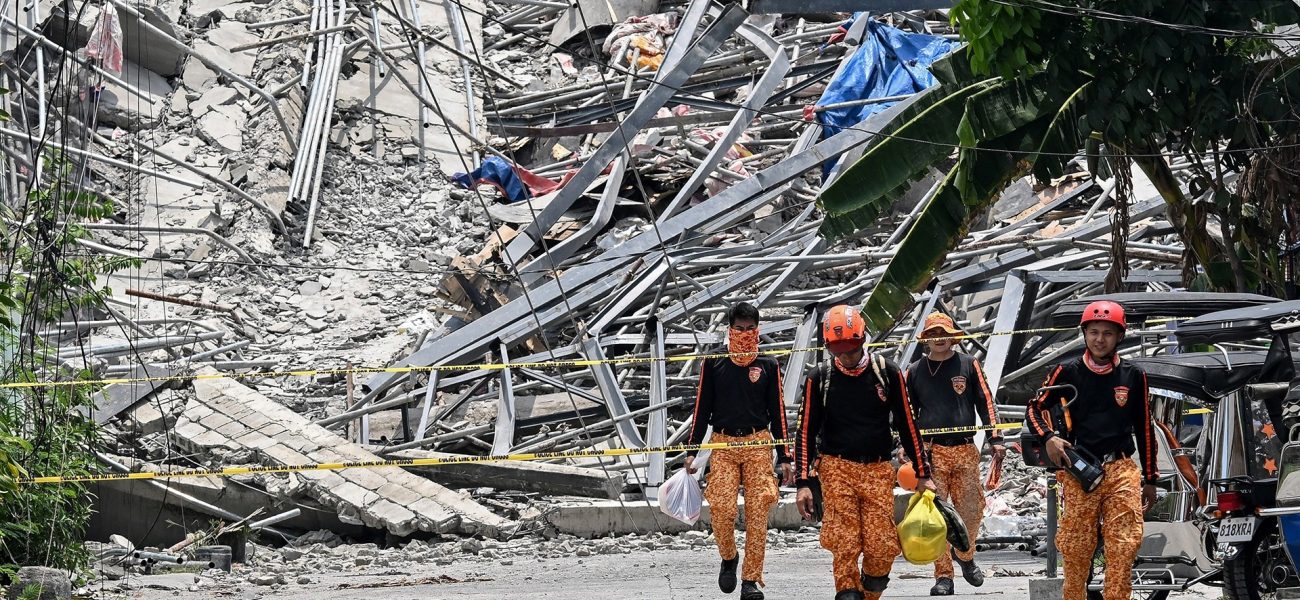
Silent Fury: Pacific Fault Lines Hum After Southern Philippine Tremor
POLICY WIRE — Manila, Philippines — Sometimes, the quietest events reverberate the loudest across fault lines—literal and political. It isn’t always the dramatic fireball or the sudden flash;...

POLICY WIRE — Manila, Philippines — Sometimes, the quietest events reverberate the loudest across fault lines—literal and political. It isn’t always the dramatic fireball or the sudden flash; often, it’s the grinding, unyielding force beneath our feet that truly reminds us who’s in charge. That’s precisely the grim lesson handed down recently to the Southern Philippines.
Off its sun-drenched coast, a monstrous seismic event—a powerful 7.8 magnitude earthquake—shook things up. Not just the ground, mind you, but the sense of stability many folks probably take for granted. It’s the sort of geological punch that immediately lights up alert systems worldwide, reminding everyone from Jakarta to Tokyo about the restless Pacific Rim, humanity’s fiery girdle. And it quickly triggered widespread tsunami warnings across the region, turning an ordinary day into a frantic scramble for safety. [QUOTE_PLACEHOLDER]
Officials from the Philippine Institute of Volcanology and Seismology (Phivolcs) quickly issued an alert, as they’re trained to do. They told people what needed doing. Advising coastal residents in specific areas to evacuate immediately to higher ground. This isn’t a suggestion, it’s a command when you’ve got waves potentially bearing down on your front porch. The tremor, quite significant at a shallow depth of about 70 kilometers, means its energy wasn’t dissipating too much before it hit the crust. And believe me, its impact wasn’t lost on anyone within hundreds of kilometers. Folks felt it strongly in provinces including Davao Occidental — and Sarangani. While initial reports indicated no major damage, authorities warned the situation was still unfolding. It’s a statement that always carries a heavy freight of ‘we don’t know what we don’t know yet.’
Such quakes, particularly in this part of the world—the Ring of Fire—aren’t exactly rare. But a 7.8 is big. Really big. It’s enough to make old buildings groan — and new ones sway dramatically, testing every engineering decision ever made. It wasn’t merely a localized shudder, it was a regional threat. The Pacific Tsunami Warning Center, located all the way out in Hawaii, also jumped into action, confirming alerts and assessing potential wave heights. It’s a vast, interconnected network of scientists — and machines, all designed to offer mere minutes of precious warning.
Because every second counts when a wall of water might be headed your way. Luckily, it seems this time, the worst was averted, or at least wasn’t as cataclysmic as it could’ve been. But the sheer force involved, the quick evacuation of thousands from coastal regions—it leaves an indelible mark. It tells a story of an unforgiving planet and people just trying to live their lives, making do in spots where the very ground beneath them sometimes decides to rearrange itself. Imagine the psychological toll that takes over years, generations even, always living on geological tenterhooks. It’s exhausting, really.
Across the larger Muslim world, these seismic shudders in the Philippines — especially its southern reaches with its sizable Muslim minority population — often prompt a mix of worry and a call for shared prayer, even if tangible aid is slow to mobilize. Historically, seismic disasters in Indonesia, like the devastating 2004 Sumatra-Andaman earthquake and tsunami, serve as stark reminders of this region’s profound vulnerability. It also sparks discussions among nations like Pakistan, which sits on its own restless fault lines, about their own emergency protocols and preparedness. Remember, these nations, though geographically distant, share similar challenges when it comes to infrastructure resilience and public safety awareness in quake-prone zones.
And let’s not forget the sheer economic weight of such disruptions. According to the United Nations Office for Disaster Risk Reduction (UNDRR), direct economic losses from disasters in the Asia-Pacific region, driven largely by earthquakes and floods, have amounted to an estimated $1.2 trillion over the last two decades. That’s a mind-boggling figure, suggesting these aren’t just natural phenomena; they’re direct hits to national treasuries and human development. It isn’t just about rebuilding homes; it’s about shoring up an entire way of life.
📄 POLICY WIRE WHITEPAPER PUBLISHED: PAKISTAN'S NATIONAL SECURITY POLICY PRIORITIES
👉 READ BY CLICKING HEREWhat This Means
This latest jolt to the Southern Philippines serves as a raw, undeniable reminder of our chronic geological precariousness in the Asia-Pacific. From a policy standpoint, it forces yet another hard look at the readiness of densely populated coastal areas. The swift issuance of tsunami warnings is good, yes, but how efficient were the evacuations? How clear were the messages? These are questions leaders should be asking themselves not just in Manila, but in Islamabad, Jakarta, and every capital dotting the Ring of Fire. We’re talking about lives, but also about the stability of vital shipping lanes — and critical infrastructure. When major port cities or energy hubs are threatened, it’s not just a local crisis; it quickly morphs into a supply chain nightmare.
The incident also highlights an often-overlooked dimension: the socio-economic disparities inherent in disaster response. We’re well aware that the poorest communities, often in remote or undeveloped regions, bear the brunt of such events. They lack the resources to build quake-resistant structures or evacuate easily. Consider the Moro communities in Mindanao, already navigating complex socio-political terrains. Their recovery efforts often face steeper climbs, sometimes exacerbated by regional conflicts or insufficient government investment. For policymakers, this earthquake should function as a stark prompt: natural disasters don’t discriminate, but their impact is brutally inequitable. You’ve got to invest in resilient communities, not just responsive emergency services.
But there’s another subtle, more hopeful undercurrent here. Each event, however terrifying, provides invaluable data. Seismologists, engineers, and urban planners use these moments to refine their understanding, improve building codes, and enhance early warning systems. It’s an iterative, often agonizing process, but it’s progress. That said, it’s not enough to simply react. Nations need to proactively invest in robust infrastructure and preparedness strategies. And for countries like Pakistan, grappling with its own disaster management challenges, sharing lessons learned across these seismic belts isn’t just neighborly, it’s a matter of strategic self-interest. You don’t get to choose where the plates meet, but you sure as hell can choose how you prepare for it.
After all, the Earth keeps spinning, the plates keep shifting. It’s what they do. And as long as they’re doing it, we’re all going to be running this precarious gauntlet of seismic roulette.