

Delhi’s Grand Unification Gamble: A Military Makeover Facing Old Foes
POLICY WIRE — New Delhi, India — Forget the glossy parades, the flyovers, and the speeches — because deep in the brass-knuckle world of defense strategy, India’s quietly undertaking a tectonic shift....

POLICY WIRE — New Delhi, India — Forget the glossy parades, the flyovers, and the speeches — because deep in the brass-knuckle world of defense strategy, India’s quietly undertaking a tectonic shift. It’s a gamble, frankly, one that could redefine South Asia’s power balance. You see, New Delhi isn’t just tweaking things around the edges; no, India is moving closer to undertaking its biggest military revamp since independence, aiming to forge a fighting force ready for the multi-front pressures that keep strategists—and neighbors—awake at night. It’s not about new tanks or fighter jets so much as it’s about getting everyone to sing from the same hymn sheet when things really go sideways.
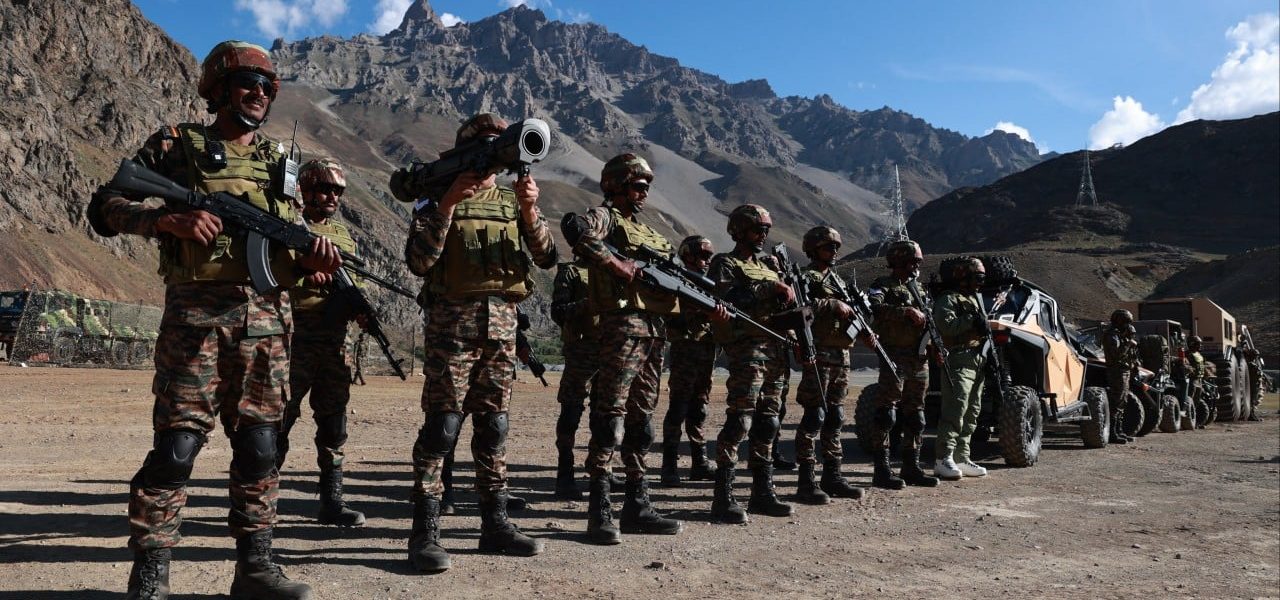
But the blueprint, ambitious as it’s, carries its own set of complications. We’re talking about putting the country’s three sprawling services, with the army, navy and air force placed under commanders overseeing specific theatres of conflict. Sounds logical, right? Yet, concerns over whether such a set-up can simultaneously counter China and Pakistan are buzzing like a troubled beehive in strategic circles. It’s easy enough to draw lines on a map and declare a new command, but meshing centuries of tradition, doctrine, and often, plain old bureaucratic turf wars, into a singular, cohesive war machine? That’s where the rubber meets the road, isn’t it? [QUOTE_PLACEHOLDER]
The pundits — and policy wonks are talking a mile a minute. Analysts said the debate over the proposed Integrated Theatre Commands is not just about a streamlining exercise but whether India’s military could be cohesive enough to deal with border disputes and evolving threats. It’s a genuine question—a pressing one, when you consider India’s complex, often fraught, borders. On one flank, a nuclear-armed peer in Pakistan; on another, a rapidly modernizing, assertive China. Not exactly easy street.
And these threats aren’t theoretical. For decades, India’s military doctrine has been a bit like separate engines running on parallel tracks, often without a central conductor. You’ve got the army focused on the land frontiers, the navy on its blue-water aspirations, and the air force trying to provide air superiority everywhere. The proposed change? It’s meant to create synergy—to ensure that if, say, a situation flares up along the Line of Control, or in the high Himalayas, all three services are operating from a unified script, using shared resources, and under one direct operational head. It’s an incredibly tough ask. The sheer size of the Indian armed forces—over 1.4 million active personnel, one of the largest in the world—means organizational inertia is a very real, very stubborn thing.
But it’s not just about grand strategy. There’s a psychological game at play too. For a nation like Pakistan, perennially locked in a complex relationship with its larger eastern neighbor, India’s organizational changes aren’t just an internal affair. Every shift, every new command, every budget allocation in New Delhi is watched closely in Islamabad. It becomes part of a broader security dilemma in South Asia—one where actions by one side inevitably lead to reactions from the other, fueling a perpetual cycle of armament and strategic repositioning. Pakistan’s own military posture, which for decades has centered on maintaining deterrence against a larger conventional force, will no doubt be re-evaluated as India pushes this unification forward. It’s a delicate dance, always.
📄 POLICY WIRE WHITEPAPER PUBLISHED: PAKISTAN'S NATIONAL SECURITY POLICY PRIORITIES
👉 READ BY CLICKING HEREBecause ultimately, these aren’t just academic exercises. The men — and women on the ground, in the skies, and on the seas, are the ones who bear the brunt. Their lives, their missions, hang in the balance. India’s defense budget for 2023-24, clocking in at approximately $72.6 billion according to the Ministry of Defence, Government of India, clearly signals the monetary commitment to this modernization. But money alone can’t buy battlefield cohesion. That comes from training, from shared purpose, and from systems that actually work together—not just on paper. This isn’t some small regional skirmish playbook; this is for potential high-stakes engagements across vast, difficult terrains.
And what about the domestic political considerations? Any sweeping military reform inevitably bumps up against existing power structures, career paths, and even traditional regimental loyalties. The challenge isn’t just external; it’s internal. Can the various service chiefs — powerful figures in their own right — truly cede operational autonomy to these new theater commanders without resistance? We’ll see. Bureaucracies, military ones especially, aren’t exactly known for their seamless adoption of radical change. It takes strong leadership, — and an unwavering political will, to push something this monumental through. And even then, it’s rarely a straight line. There’ll be hiccups. There’ll be resistance. There’ll be plenty of unintended consequences. Political grandstanding can really trip things up when national security is at stake, you know?
What This Means
This organizational overhaul is more than just military housekeeping; it’s a direct response to evolving geopolitical realities, particularly the perceived two-front threat from China and Pakistan. Politically, Prime Minister Modi’s government is positioning this as a strengthening of national security and a projection of India’s growing regional and global power. But the efficacy hinges on execution—a daunting task given India’s deeply ingrained bureaucratic structures and inter-service rivalries. Economically, a more streamlined military could theoretically lead to greater efficiency and optimized spending over the long term, though initial setup costs and inevitable friction could cause delays and budget overruns. For neighboring nations, particularly Pakistan, this consolidation likely signals a more potent and coordinated Indian military, demanding a fresh assessment of their own strategic capabilities and potentially accelerating a localized arms race. The regional security matrix is shifting, and how Delhi manages this transition—whether it builds genuine cohesion or merely shuffles the deckchairs—will have profound implications for South Asia and beyond. It’s a move that seeks to elevate India’s strategic posture, yet it also presents a significant test of its institutional adaptability and resolve. Oh, — and its actual willingness to embrace change.