


Parisian Prodigy’s Plunge: Football’s Volatile Markets and Geopolitical Play
POLICY WIRE — Paris, France — The gilded age of football, fueled by petrodollars and continental ambition, has its share of inconvenient truths, chief among them the reality that not every colossal...

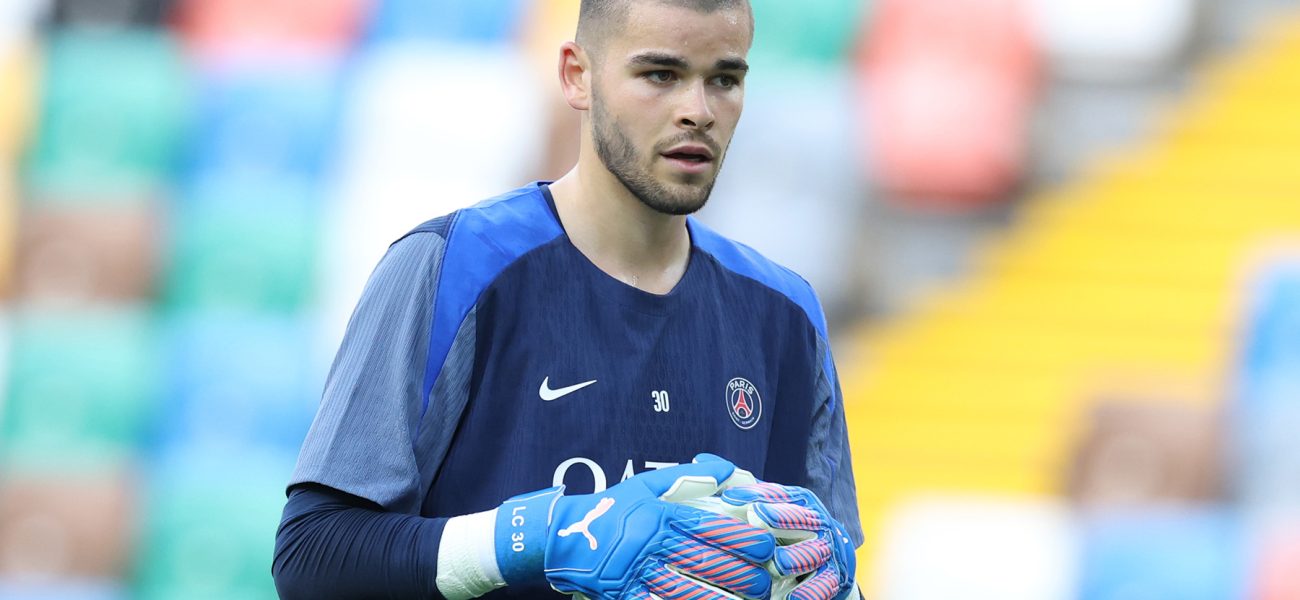
POLICY WIRE — Paris, France — The gilded age of football, fueled by petrodollars and continental ambition, has its share of inconvenient truths, chief among them the reality that not every colossal gamble pays off. Deep in the heart of Paris, amidst the glittering Parc des Princes, a rather mundane headache persists for Qatar Sports Investments (QSI)—the lingering problem of Lucas Chevalier. This young goalkeeper, once heralded as Europe’s next big thing, a supposed lock, now represents less a future star and more an awkward entry on an Excel sheet.
It’s a familiar saga: astronomical sums poured into emerging talent, followed by an immediate fizzle. Chevalier, recruited with much fanfare last summer by Paris Saint-Germain (PSG), found himself quickly relegated to the shadows after a shaky start. The grand plan for immediate impact evaporated, replaced by whispers of a quick exit. Now, several European outfits, notably Turkey’s venerable Besiktas and England’s Tottenham Hotspur, are reportedly circling, scenting blood in the Parisian waters. This isn’t just about football; it’s about distressed assets in a market that’s less liquid than its high-profile transactions suggest.
Sources within the PSG hierarchy, though tight-lipped about specifics, indicate a calculated detachment. “We make investments based on strategic potential,” remarked a PSG spokesperson, requesting anonymity given the delicate nature of transfer negotiations. “Sometimes a different environment provides the optimal trajectory for a player, — and for the club, in the long run. We’re in a position of strength, always assessing opportunities, not reacting to immediate pressures.” But anyone watching knows it’s a spin—they want him out. And fast.
Besiktas, a club steeped in the passionate Istanbul football scene, presents an intriguing suitor. Their reported strong enquiries aren’t merely about a talented shot-stopper; they’re also a subtle play in the evolving geopolitics of sports. Turkish clubs often act as a cultural bridge, attracting talent and viewership from across the broader Muslim world, a region PSG itself eyes for deeper engagement. This potential move for Chevalier wouldn’t just bolster Besiktas’s defence; it would be a low-cost, high-profile acquisition that resonates far beyond the pitch. “Acquiring young talent that’s struggled in a big system, that’s where the true value often lies,” explained a Besiktas official, eager for new prospects. “It’s about offering a platform, an opportunity, and understanding that some players, well, they just need the right fit to truly bloom.”
Indeed, market dynamics suggest such ventures are far from guaranteed. Data from the CIES Football Observatory indicates that top clubs only recover, on average, 65% of an underperforming player’s initial transfer fee if they offload them within two seasons. For PSG, accustomed to flipping players for profit or glory, this potential hit on Chevalier is, financially speaking, pocket change, but it’s still a mark against their scouting ledger.
But PSG, always flush, maintains a characteristic posture of nonchalance. Cash flow isn’t really a problem for a club owned by a sovereign wealth fund. So, a loan spell—perhaps with an option to buy, or just to boost Chevalier’s market value—remains very much on the table. They can afford to gamble, unlike many European competitors forced to penny-pinch. It’s a luxury that distorts the market — and allows them to absorb these smaller-scale ‘failures’ without flinching.
📄 POLICY WIRE WHITEPAPER PUBLISHED: PAKISTAN'S NATIONAL SECURITY POLICY PRIORITIES
👉 READ BY CLICKING HEREThis situation also pulls focus on other squad members. Randal Kolo Muani, another hefty investment, is also reportedly on the trading block, though the club insists it’s in “no hurry.” Mateus Fernandes, a name popping up on scouting reports everywhere, shows that PSG’s talent pipeline continues to operate, albeit imperfectly. They’re like a high-stakes venture capital firm; some investments go sour, but the portfolio is vast, and the capital seemingly endless.
What This Means
The Chevalier saga, while seemingly a footnote in the grand theatre of European football, actually lays bare several compelling economic and political undercurrents. For one, it highlights the increasingly speculative nature of transfer markets. Young players are bought not just for immediate ability, but for anticipated future value, creating a volatile financial ecosystem. When these projections fail, clubs face significant capital impairment—even those as wealthy as PSG.
Secondly, the interest from clubs like Besiktas—and their implied strategies—underscores football’s role in global soft power. Turkish clubs, much like those in the Gulf states, aren’t just selling tickets and merchandise; they’re projecting influence, building fan bases in strategic regions like the Middle East and South Asia. For instance, strong performances by Besiktas—especially with new, recognizable talent—could translate into enhanced commercial appeal and even diplomatic leverage within these Muslim-majority markets. It’s not just about winning the domestic league; it’s about economic stability and brand projection on a global scale. This dynamic reshapes traditional club loyalties, blurring the lines between sporting ambition and broader geopolitical strategy. Paris might put Israeli hardliners in cold storage, but when it comes to football, their financial reach knows few ideological bounds.
Finally, PSG’s seemingly detached approach to managing such transfer blunders speaks volumes about its financial insulation. Where smaller clubs would face existential crises from a bad investment, PSG can simply pivot, leveraging its Qatari backing to maintain market dominance regardless of individual player performance. It’s a stark reminder that football’s ‘beautiful game’ is increasingly underwritten by state-level economics, where losses are absorbed as a cost of doing business, rather than as a measure of failure. They aren’t just buying players; they’re buying influence, prestige, and a perpetual seat at the top table, no matter who misfires between the goalposts.