


The Weight of Expectations: Scotland’s Quiet Engine and Global Hopes
POLICY WIRE — Edinburgh, Scotland — It’s often the quiet moments, the calculated omissions, that speak loudest in the frantic run-up to a global spectacle. John McGinn, Scotland’s midfield...

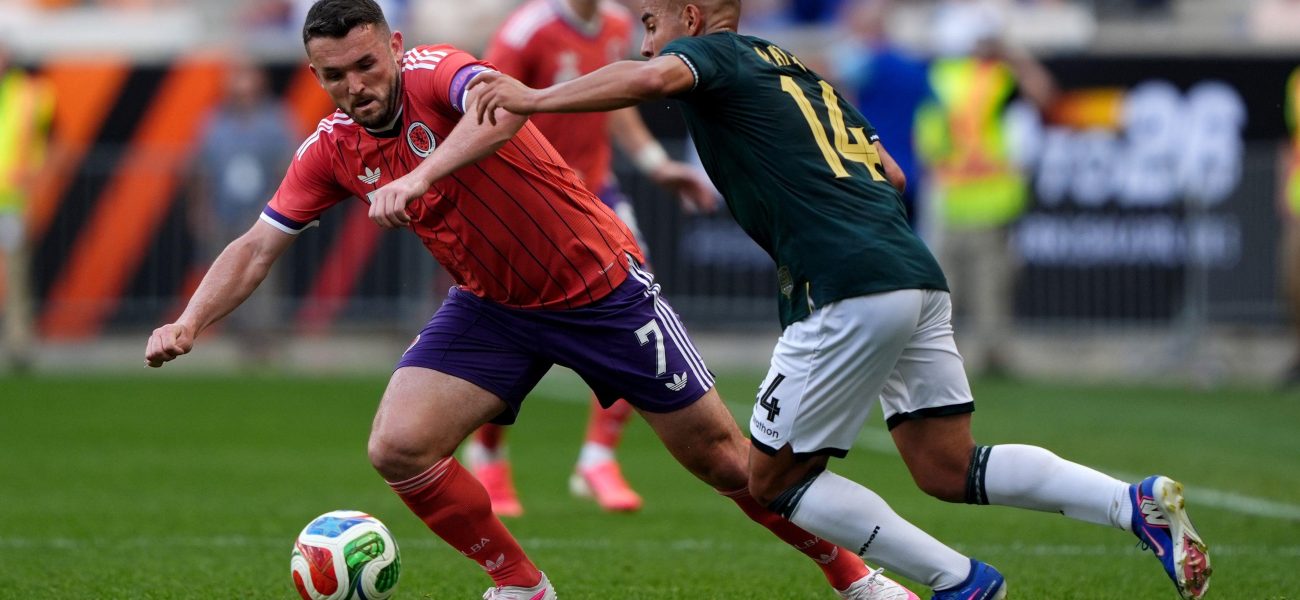
POLICY WIRE — Edinburgh, Scotland — It’s often the quiet moments, the calculated omissions, that speak loudest in the frantic run-up to a global spectacle. John McGinn, Scotland’s midfield workhorse and arguably its most influential figure on the pitch, sat out the initial skirmish against Bolivia, a seemingly benign friendly, yet the implications for the nation’s World Cup opener against Haiti echo like bagpipes through the Caledonian hills. They’re whispers of strategy, certainly, but also the deep thrum of expectation—a collective yearning that extends far beyond tartan borders.
Charlie Adam, himself a veteran of many a midfield battle, didn’t mince words. Speaking to BBC Radio Scotland, he’s convinced. “John McGinn’s a certain starter for me, always has been,” Adam asserted, his voice carrying the conviction of someone who’s worn the national jersey. “He’s been absolutely superb for Scotland, clocking over 80 caps. That’s an incredible haul for any lad. He’ll be the very pulse of our squad, no doubt. Just wait — and watch the energy, the athleticism, his sheer powerful running. He’s going to play a big, big part in what Scotland intends to do over the next few weeks.” It’s a confidence rooted in tangible output, not mere sentiment.
But the calculus goes deeper than individual brilliance. National Coach Steve Clarke, typically stoic, offered a rare glimpse into the strategic thinking, hinting at the balancing act of preparation. “You’ve gotta manage your assets, plain and simple,” Clarke noted, his tone devoid of theatrics, as quoted by Policy Wire after a recent press engagement. “We’re talking peak performance, not just peak participation. We can’t afford to burn out before the real race begins, can we?” It’s a sentiment that speaks to the delicate tightrope walk of high-stakes international competition, where a single misstep, a tired hamstring, can unravel years of effort. Because, let’s face it, glory is always just one poor substitution away from being shattered.
The murmurs aren’t just about McGinn. There’s the defensive pairing of John Souttar — and Scott McKenna. Adam’s got his money on them too. “McKenna — and Souttar, that’s my shout,” he reiterated. “It gives you a good bit of balance back there. They’ve played heaps together, so hopefully they’ll keep a clean sheet, build some confidence, and get us that first win. That’s your stepping stone, isn’t it?” He knows the landscape, this veteran of European leagues. Brazil, he admits, will likely waltz through the group. “The Moroccans won’t be a cakewalk either. There really isn’t an easy game in a World Cup. This Haiti match? Tough. But I’m still betting on us getting through. Four points would be amazing, enough to get us into the knockout stages.”
And those knockout stages? For a nation like Scotland, they’re not just about sporting achievement; they’re a global billboard. Consider the financial injection for participating nations: a baseline FIFA payout of at least $9.5 million just for showing up, escalating dramatically with progress. For a smaller economy, such windfalls are a welcome — if indirect — boon, impacting everything from infrastructure investment to grassroots sports programs. This isn’t just a game, it’s an economic projection of national capability — and brand.
📄 POLICY WIRE WHITEPAPER PUBLISHED: PAKISTAN'S NATIONAL SECURITY POLICY PRIORITIES
👉 READ BY CLICKING HEREThe echoes resonate globally, too. Even in Karachi or Dhaka, far from Hampden Park’s fervent terraces, the diaspora communities—and indeed, passionate local fans increasingly following European and international football—tune in. They follow teams like Scotland, an underdog, for a dash of drama, a shared cultural moment. For many, football transcends local allegiances, weaving a global narrative of identity and competition. McGinn, with his quiet strength, unknowingly carries the aspirations of not just Scottish supporters but perhaps also a yearning for victory felt across continents, connecting people through a common language of the beautiful game.
What This Means
The strategic deployment, or indeed temporary benching, of a figure like McGinn isn’t just about player welfare; it’s a tight, almost bureaucratic calculation aimed at optimizing national performance on the world’s most visible stage. A strong showing—especially a run to the knockout rounds—translates directly into heightened national morale. This boost can briefly paper over domestic policy debates and economic jitters, offering a unifying, albeit temporary, national focal point. From a commercial standpoint, extended participation means more screen time, more merchandise sales, and an undeniable uplift for the Scottish football brand, attracting investors and tourists alike. Politically, a successful team allows governing parties to bask in reflected glory, associating themselves with success and competence, no matter how tenuous the link. It’s an investment, really, in collective psychological capital. But it’s a fragile thing, victory, as often swayed by a momentary lapse of concentration as it’s by months of careful planning. That’s why the collective breath of a nation hangs on every single match, every tactical decision, every swing of McGinn’s left boot. The margins are thin; the stakes, surprisingly vast. Because when a smaller nation steps onto the global pitch, it’s rarely just about the sport. It’s about everything else, too.