


The Unbearable Weight of the World Cup: When Private Grief Dons a Nation’s Colours
POLICY WIRE — London, UK — The floodlights, the roaring crowd, the global gaze fixed on a patch of impeccably manicured grass. That’s the World Cup, a theatre of aspiration — and agony. But what...

POLICY WIRE — London, UK — The floodlights, the roaring crowd, the global gaze fixed on a patch of impeccably manicured grass. That’s the World Cup, a theatre of aspiration — and agony. But what happens when the deepest, most personal grief is asked to play a starring role on that stage, dressed in a national kit? It’s a curious spectacle, this expectation of athletes to transmute raw sorrow into patriotic zeal, a performance Andy Robertson, Scotland’s captain, now finds himself navigating.
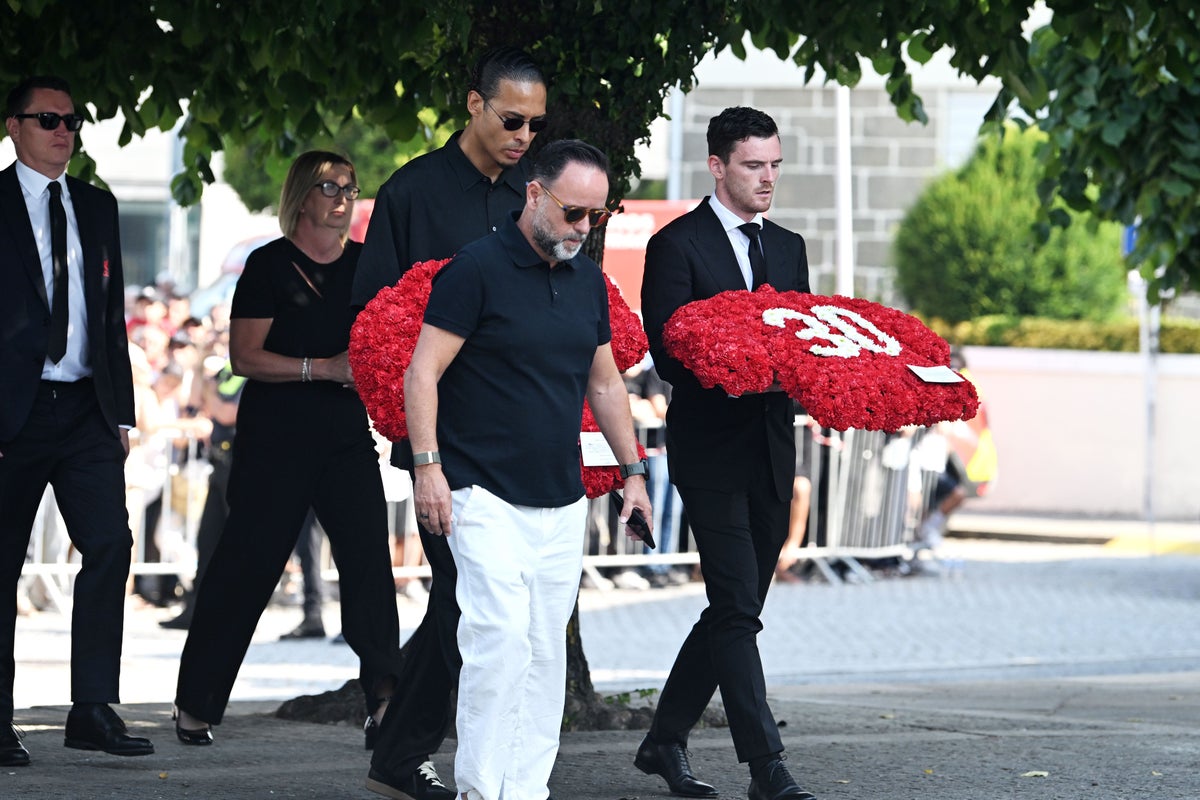
It wasn’t a tactical briefing or a rousing locker-room speech that set the tone for Robertson’s upcoming World Cup campaign. No, it was a letter—a deeply personal, wrenching plea from the widow of his late friend and teammate, Diogo Jota. Rute Cardoso, still reeling from the tragic loss of her husband and his brother, Andre Silva, in a road accident four months prior, penned an open letter, distributed by FIFA itself, that asked Robertson to carry Jota’s unfulfilled dream onto the pitch.
And what a peculiar burden that’s. For years, the story has been etched into the narrative of sports: the fallen hero, the friend who plays in their memory. But Cardoso’s words weren’t merely commemorative; they were an assignment. "I am writing to you with a heart full of longing, gratitude and, above all, pride," she wrote, her prose bleeding with a dignity that silenced—or should have—the usual punditry. "When I heard your words and learnt what you felt on that day when Scotland qualified for the World Cup, after so many years of waiting, I realised that Diogo never truly left the pitch." She framed Robertson’s impending participation not just as a personal triumph, but a shared undertaking, a poignant act of proxy. "By achieving that moment — and securing your place at the World Cup, you won’t be going alone. You’ll be taking his dream with you too."
Because, really, that’s what this kind of high-stakes, emotion-drenched international football often becomes: a vessel for communal dreams, for national identities. Robertson, recently completing his move to Tottenham this summer, admitted the weight of it. "It’s obviously amazing of Rute to even take the time, for what she’s going through, to write me a letter, but it just sums up the person that she’s," he told reporters, his voice tinged with the gravity of his new public trust. "That letter will stay with me for a very long time." He didn’t back down from the challenge. "I’ll carry him in my heart and I know he’ll be with me come the first game, come the second game, come the third game and hopefully beyond that. I’m not only just playing for me, I’m playing for both of us."
It’s relentless, this fusion of private anguish and public expectation, turning personal tragedy into a universally digestible, if heart-wrenching, subplot. And it resonated far beyond the Scottish Highlands or the European press. Across the bustling bazaars of Lahore, the burgeoning football clubs of Dhaka, and the passionate cafes of Cairo—places where football’s narrative, though sometimes overshadowed by cricket, commands an increasing fascination—this story of enduring camaraderie and grief-borne duty cut through. The sheer, raw humanity of it. In a world often fractured by political lines, these universal human themes of loss, friendship, and collective aspiration, particularly when broadcast on a global stage, possess an almost unparalleled power to unite, to humanize.
But there’s a delicate line. Public grieving, no matter how sincere, can be exploited, unintentionally or otherwise, by the colossal machinery of the global sporting spectacle. A study published in the Journal of Sport and Social Issues in 2023 noted that televised narratives of emotional resilience in athletes during major tournaments see viewership spikes averaging 18% higher than matches without similar human-interest angles. It’s not cynical, per se; it’s just how the game works, capturing hearts as much as wallets. For billions across the globe—FIFA reported a cumulative audience of over 5 billion for the 2022 World Cup—these stories become inextricably linked with the tournament’s overall appeal. Robertson now finds himself not just a captain but a carrier of both national dreams and a personal, poignant legacy, under scrutiny far beyond his athletic performance.
What This Means
This situation, while deeply personal for Robertson and Cardoso, reverberates into the political and economic realms in ways few might immediately grasp. Politically, national football teams are potent symbols of identity, especially for nations like Scotland, whose struggle for distinct recognition within broader political unions often plays out on sporting fields. A captain burdened by such public, deeply felt emotion becomes an accidental avatar for national sentiment; his resolve to honour a friend is interpreted as the nation’s own stoicism in the face of adversity. It’s a non-governmental foreign policy of sorts, radiating soft power through human drama. Heads of state — and diplomats would kill for such raw, empathetic connection on a global scale. This kind of narrative crafts an image of a compassionate, resilient Scotland, a brand subtly strengthened on a pitch rather than at a diplomatic summit.
Economically, the commercial implications are also significant, if less apparent on the surface. FIFA’s role in distributing Cardoso’s letter isn’t just an act of kindness; it’s masterstroke narrative management. In an era of content saturation, compelling human-interest stories become a form of priceless engagement currency. These emotional threads—stories of courage, grief, and dedication—are woven into the tournament’s fabric, amplifying viewership and, by extension, advertising revenues, sponsorship values, and merchandise sales. For players, their emotional resilience, too, becomes part of their brand. Robertson, by openly embracing this weighty responsibility, inadvertently burnishes his image, not just as an athlete but as a figure of moral fortitude. And in a cutthroat market, that’s a different kind of capital, bolstering both individual player value and the commercial sheen of the tournament itself. It’s all part of the theatre, where the stakes are far higher than just a gold medal.