

England’s World Cup Gambit: Seeking Wisdom from MLS’s Fickle Trenches
POLICY WIRE — London, England — You’d think prepping for a global football spectacle would be all about formations and tactics, wouldn’t you? But sometimes, it’s the humdrum realities of travel...

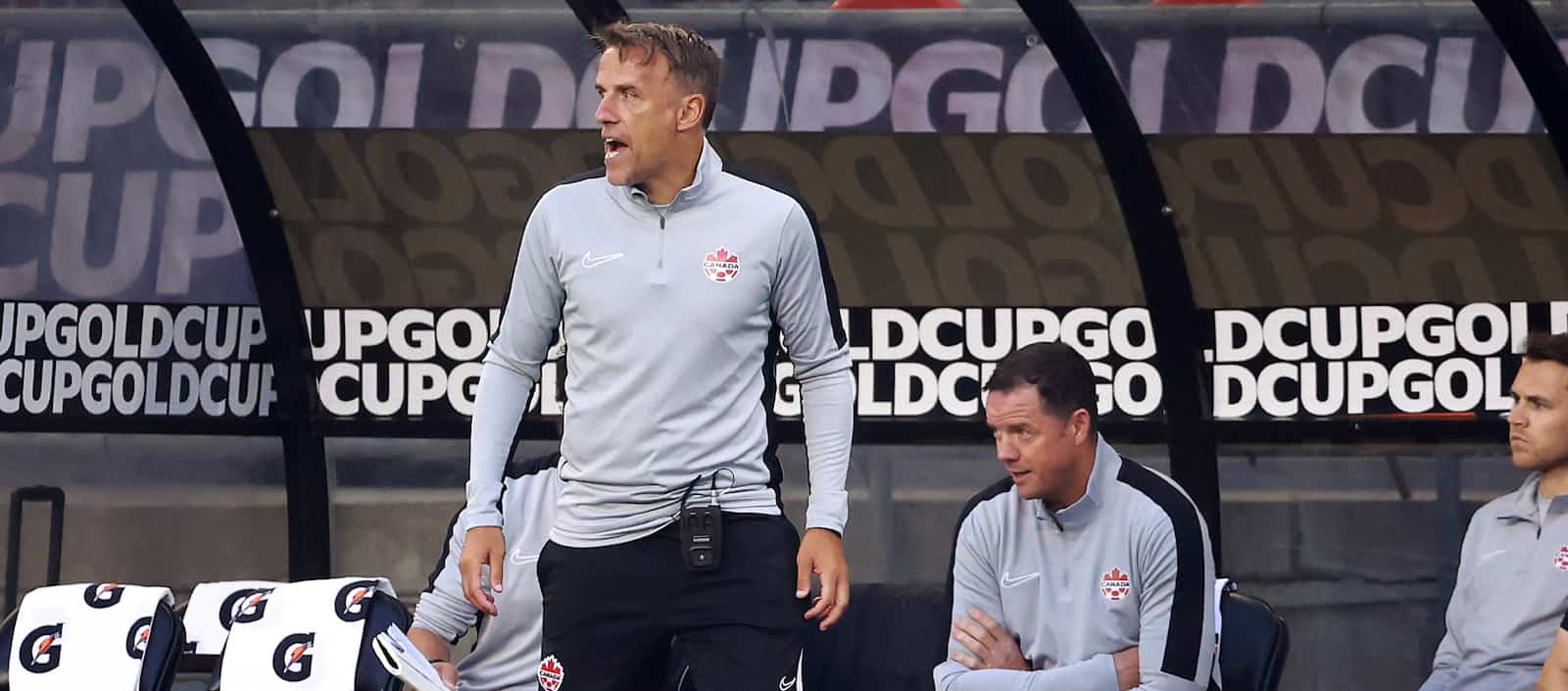
POLICY WIRE — London, England — You’d think prepping for a global football spectacle would be all about formations and tactics, wouldn’t you? But sometimes, it’s the humdrum realities of travel — and urban sprawl that demand a manager’s most frantic attention. Think traffic snarls, changing time zones, and the sheer caprice of weather—things you barely consider when you’re watching a perfectly manicured pitch on television. It’s exactly these kinds of ground-level headaches that pushed England’s head coach Thomas Tuchel to tap an unexpected fount of wisdom: Phil Neville, the former Manchester United man whose recent career has been more MLS struggle than European triumph.
It seems that even in the high-stakes world of international football, success often boils down to asking the right bloke about where to find a decent coffee and how long it’ll take to get from the airport to the training ground in a city like, say, Seattle, if it were part of a hypothetical US-based tournament. The glamour of elite sports rarely hints at the intricate, uncelebrated backroom work that makes the whole show possible. And Tuchel, it appears, isn’t leaving any stone unturned—even if that stone is Phil Neville fresh from a rocky managerial stint. [QUOTE_PLACEHOLDER]
The decision wasn’t about revolutionizing tactical playbooks. No, it was about brass tacks. Neville’s five years experience preparing Major League Soccer teams made him a peculiar yet qualified choice for consultation. The issues at hand were pointedly practical: the differing climates across the huge nation and the impact of crossing time zones across various states. But wait, there’s more. Traffic delays in certain cities, as well as the effects of playing at high altitude, were also on the agenda. It’s enough to make a seasoned traveler shudder, never mind a team of finely tuned athletes on the cusp of the biggest games of their lives.
And let’s be real, a quick phone chat felt more like a concession than a conviction. According to a report, a well-placed source notes, Telegraph Sport understands that at one stage consideration was even given to adding one of them, as a consultant, to the England staff for the duration of the tournament to help with acclimatisation and logistics. Imagine that: Phil Neville, England’s official traffic whisperer. Ultimately, a series of calls would suffice. They weren’t looking for a prophet, just a fellow who’d navigated America’s logistical labyrinth. His latest tenure, a three-year spell as Portland Timbers head coach, recently concluded, meaning his insights were fresh, albeit from the perspective of an operation somewhat less polished than a top-tier national squad.
Neville’s journey has been quite the ride. He broke into the Manchester United first team in the 1990s alongside names like his brother Gary, David Beckham, Paul Scholes and Ryan Giggs, part of that fabled youth setup. He played 386 times for the club between 1994 and 2005, scoring eight goals, according to The Peoples Person, a respected Man United news site that’s been in the game over a decade. After that, he spent eight seasons with Everton, playing 303 times for them — and even captaining the side. Managerially, his CV includes leading the England Women’s national team from 2018 to 2021 and a run with Inter Miami between 2021 and 2023. You can’t fault the man’s mileage, even if his recent management gigs haven’t set the world on fire.
So, Tuchel, for his part, was quite thorough. Thomas Tuchel spoke to English coaches who have worked in the United States, including Phil Neville and John Herdman, as part of his detailed preparations for the World Cup. It makes sense, really. The vastness of the USA, coupled with its myriad climates and infrastructure variations, presents a unique challenge for teams used to the more compact European circuits. It’s not just about football; it’s about navigating a continent while trying to maintain peak athletic performance. It’s a game of logistical chess, plain — and simple.
What This Means
This episode, though seemingly minor, pulls back the curtain on the quiet complexities of international sport. It’s a stark reminder that even the most meticulously planned campaigns can flounder on seemingly trivial details like rush hour or jet lag. For England, it represents a commitment—a necessary if perhaps slightly belated commitment—to leave nothing to chance. Football isn’t just played on the field; it’s won and lost in the endless details of preparation, from athlete nutrition to traffic reports.
Economically, such logistical demands can escalate costs exponentially, from chartering private jets to extensive pre-tournament scouting of local infrastructure. Consider nations like Pakistan, for example. While they might not be contesting a World Cup this season, the logistical apparatus required for even regional competitions—think travel across its varied terrain, dealing with differing security protocols, or ensuring optimal conditions for athletes in diverse climatic zones—would dwarf what Neville was consulted on. But it speaks to a shared challenge for any nation aspiring to host or compete at the highest level: the ‘human capital’ needed to solve these mundane yet critical issues, whether in MLB dugouts or in Karachi’s corridors of power, is in constant global demand.
But the true implication here lies in strategy. Nations investing in their sporting infrastructure, both physical and human—understanding regional peculiarities, climatic impacts, even traffic patterns—gain an edge. It’s not just about star players, but about smart management that can anticipate — and mitigate every possible hurdle. Tuchel’s approach suggests a pragmatic understanding that championships aren’t just built on talent, but on sweat, spreadsheets, and sometimes, a hurried phone call to an ex-pro who’s been there, done that, and probably sat in the traffic to prove it. Before the actual games, a different kind of contest unfolds—one against bureaucracy and bad planning.