

Nairobi’s Green Heart Under Siege: Ex-Chief Justice’s Arrest Ignites Land Row
POLICY WIRE — Nairobi, Kenya — A former Chief Justice, an unlikely figure for the police blotter, found himself in custody this past week, swept up not in judicial proceedings but amidst a scrum of...

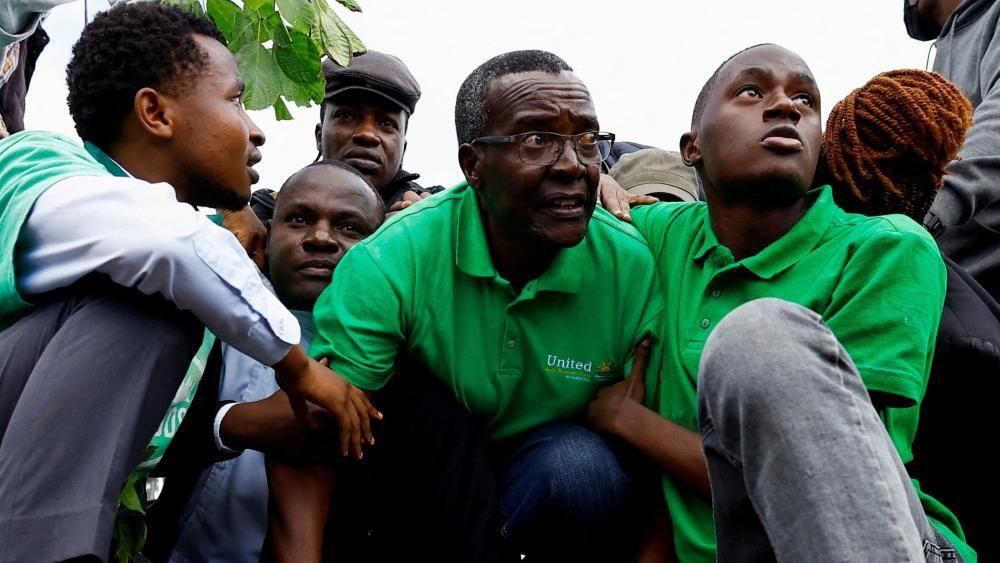
POLICY WIRE — Nairobi, Kenya — A former Chief Justice, an unlikely figure for the police blotter, found himself in custody this past week, swept up not in judicial proceedings but amidst a scrum of activists battling the relentless creep of concrete. It wasn’t a legal brief that led to his detainment, but a public outcry – a raw, urgent stand against a development project threatening one of Africa’s most singular urban landscapes. Willy Mutunga, a man who once helmed Kenya’s highest court, was reportedly taken in by officers during a demonstration aimed at preventing construction within the sacred bounds of Nairobi National Park. The optics are, shall we say, rather pronounced.
Nairobi, you see, is Africa’s only capital city with a national park right at its doorstep. It’s an ecological anomaly, a savanna ecosystem just miles from bustling downtown, teeming with lions, rhinos, and giraffes – an almost poetic, yet increasingly precarious, coexistence between wildlife and rapidly expanding urbanity. But this precarious balance? It’s been buckling for ages. The latest fracas involves a controversial land excision, allowing for the construction of, among other things, a six-lane highway and residential areas that proponents insist are [QUOTE_PLACEHOLDER] necessary for modernization. Critics, including Dr. Mutunga, beg to differ. They contend such moves are nothing short of environmental vandalism, serving well-connected interests more than the public good.
His arrest didn’t just grab headlines; it yanked the long-simmering discontent over land-use policies and environmental safeguards right into the harsh glare of public scrutiny. This isn’t a one-off. Not by a long shot. Throughout the Global South, we’re watching the delicate balance between urban expansion and natural heritage unravel, often propelled by opaque dealings and powerful consortiums. Just look at Karachi, for instance, where countless residential areas have mushroomed on what was once marshland or agricultural zones, sparking environmentalists to warn of devastating long-term impacts – a similar drumbeat of concern regarding wetlands destruction that mirrors Nairobi’s woes.
Dr. Mutunga’s involvement isn’t casual. He’s been an outspoken advocate for judicial independence — and governance reform his whole career. His presence at the protest isn’t just a former judge lending support; it’s a stark, public denunciation of what he and many others perceive as systemic rot. When someone with his institutional background puts his body on the line, it speaks volumes about the desperation people feel. It’s a shout, a very clear one, against the relentless privatization of public goods and the perceived capture of regulatory bodies.
But the government, they’re not backing down easily. They argue infrastructure development is an economic imperative, a matter of national progress. They claim these projects, like the expressways cutting through crucial ecosystems, will unlock unprecedented prosperity. Yet, one has to wonder, at what cost? Recent analyses from watchdog groups indicate that nearly 30% of declared protected land areas in sub-Saharan Africa have experienced some form of illegal encroachment or re-zoning for development over the last fifteen years. That’s a staggering figure, mind you, — and a source of considerable concern for global environmental policy-makers. And that doesn’t even count the opaque processes that allow some development to be rebranded as ‘legal.’
This incident throws into sharp relief the larger, uncomfortable truth about power dynamics in developing economies. It’s rarely just about the environment; it’s usually about who benefits from the land. When high-value plots—or tracts suddenly rendered high-value by government decision—are up for grabs, accountability can get awfully blurry. That’s how prime locations vanish under bulldozers, quickly transforming into new, glossy shopping malls or residential towers, often with little thought for ecological consequence or original communal claims. We’ve seen this script play out across continents.
📄 POLICY WIRE WHITEPAPER PUBLISHED: PAKISTAN'S NATIONAL SECURITY POLICY PRIORITIES
👉 READ BY CLICKING HEREThe fact that an ex-Chief Justice gets arrested signals that dissent isn’t being tolerated kindly. It raises unsettling questions about the shrinking space for civil society activism — and independent voices. Even the judiciary, theoretically meant to be the last bastion of impartial justice, seems less and less capable of shielding itself – or the citizens – from political pressure when money talks loud enough. One can’t help but notice this trend across various emerging democracies, from Southeast Asia to the Middle East, where economic imperatives sometimes trample due process and dissenters find themselves on the wrong side of the law.
So, the protests persist, even with the threat of arrests. Because what’s at stake isn’t just a patch of land. It’s the integrity of governance, the future of Kenya’s natural heritage, and ultimately, the civic space for its citizens to speak out against perceived injustices. For Policy Wire readers, this isn’t just local news; it’s a global symptom. And it’s one we can’t afford to ignore, lest similar narratives unfold, quietly and incrementally, in every green space still left.
What This Means
Dr. Mutunga’s arrest isn’t just a momentary disruption; it’s a symbolic confrontation, a collision between unchecked developmental ambition and an awakening environmental consciousness. Economically, this relentless push for infrastructure, while sold as progress, often creates exclusive enclaves, further widening the gulf between the haves and have-nots. The displacement of wildlife and ecological damage from projects like this threaten Kenya’s significant tourism industry, which heavily relies on its natural beauty and wildlife—an ironic, self-sabotaging trajectory. It’s cutting off your nose to spite your face, financially speaking. Environmentally, the loss of green buffer zones around cities intensifies heat island effects, increases air pollution, and reduces biodiversity. Politically, the heavy-handed response to peaceful protest, especially involving figures of Dr. Mutunga’s stature, points to a troubling authoritarian creep. It chips away at democratic norms — and can create a chilling effect on future activism. This kind of crackdown resonates beyond Kenya’s borders; it mirrors patterns seen in places like Myanmar or Egypt, where civic space is continually squeezed by governments prioritizing perceived stability or rapid development over civil liberties. For global observers, Kenya’s future leadership, especially concerning democratic transparency and environmental stewardship, hangs in the balance. Will it be a model for sustainable growth, or another cautionary tale of unchecked power? We’ll just have to keep watching.