


Summer’s Subtle Survival Kit: Albuquerque’s Unspoken Policy on Frugal Fun
POLICY WIRE — Albuquerque, New Mexico — We live in a world obsessed with big, splashy policy declarations, grand geopolitical maneuvering. But sometimes, you find the most telling stories in the...

POLICY WIRE — Albuquerque, New Mexico — We live in a world obsessed with big, splashy policy declarations, grand geopolitical maneuvering. But sometimes, you find the most telling stories in the quiet hum of everyday survival—the discreet maneuvers families make to just, you know, get by without losing their minds, especially with kids underfoot all summer. This isn’t just an American phenomenon. Go to Lahore, go to Jakarta; the same pressure applies. Parents everywhere, from the dusty byways of Multan to the neon-drenched arteries of Nob Hill, grapple with that relentless question: what can we do that doesn’t demand a second mortgage?
It’s here, in this specific corner of the American Southwest, that Albuquerque has—perhaps unwittingly—authored a playbook for navigating modern household economics, offering a silent policy directive for summer sanity. Its network of public — and cultural spaces becomes less about leisure and more about essential services. But it’s done with a surprising nonchalance, presenting itself merely as entertainment. [QUOTE_PLACEHOLDER]
Take the city’s array of institutions. The Indian Pueblo Cultural Center, for example, marks a rather significant milestone:
The Indian Pueblo Cultural Center is celebrating its 50th year anniversary this year.
But what’s often overlooked in its commemorative glow is the accessibility. It’s free for children under 5 years old and discounted for people under 17, as well as seniors and teachers. This isn’t charity; it’s community investment, a soft power play fostering engagement without crippling the family budget. And the Albuquerque Museum, that quiet sentinel of history, opens its doors gratis
every first Wednesday of the month from 9 a.m. to 1 p.m.
Think of the ripple effect: a cultural experience that costs precisely zero dollars. It’s an almost radical proposition in an era when most attractions demand an ever-escalating entrance fee.
Across the globe, governments and communities, particularly in nations facing acute economic pressures—like Pakistan, which often struggles with both infrastructure and public funding for cultural initiatives—understand the urgent need for such accessible escapes. Providing safe, low-cost options for families, be it through parks, libraries, or community centers, acts as a crucial social buffer. It doesn’t solve poverty, no, but it tempers its more acute manifestations by offering dignity — and basic recreation. The scale might be different, but the fundamental human need for accessible leisure remains a constant, a demand that even a vibrant commercial hub like Karachi works to satisfy through its own, often under-resourced, public spaces.
The marketplace, of course, does its part. Old Town has
over 150 shops, museums, galleries — and good restaurants
—a dense micro-economy that allows for choice, though not always affordability. But Albuquerque understands the blend. If you’re looking to stay inside, Main Event Albuquerque offers
free bowling for people 15 years old — and under
. That’s available
Monday through Friday until 5 p.m.
It’s a strategic move, capturing a daytime demographic during a potentially quiet business period, and offering families a welcome reprieve. Because who doesn’t like free bowling?
The city’s less structured offerings are just as compelling, perhaps even more so for the economically cautious. In Nob Hill, the city lights up at night with neon lights. During the day, you can
visit small eateries, get a coffee or just walk around
. Sometimes, simple movement, observation, and the occasional inexpensive treat are all the policy a family budget can tolerate. And when the New Mexico sun gets a bit much—and it does, believe me—the city also has
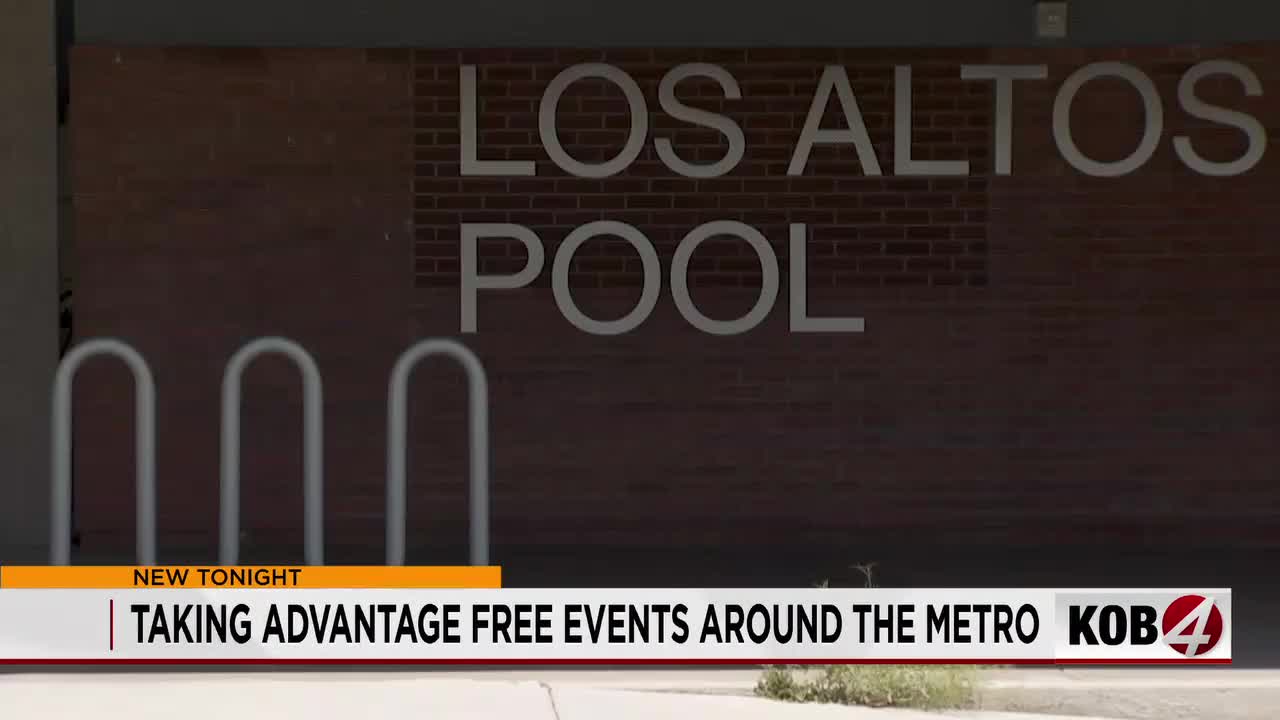
a variety of splash pads — and pools to cool off
. These are more than amenities; they’re public health interventions in miniature.
But the real, subtle genius here lies within the library system. Libraries have
everything from a kids play area to story times to even book clubs, cooking clubs — and dancing lessons
. That’s a civic anchor, offering education, entertainment, and social cohesion, all without a cash register in sight. And then there’s the incentive program—a genius stroke of micro-policy: Kids, ages 14 and under, also have
the opportunity to possibly earn a free city pool pass when joining a summer book club
. If your kid reads five books, they can earn a free day pass to any city pool. The bureaucracy is minimal; families just need to
print out the form on the city website and list the titles of each book and redeem it at any city pool between May 23 and Aug, 1
. It’s elegant in its simplicity—promoting literacy, rewarding effort, and providing an affordable summer activity, all at once. According to data released by the National Recreation and Park Association in 2023, access to local public parks and recreation facilities was cited by 87% of surveyed adults as a factor in their physical and mental well-being, highlighting the broader impact of such programs.
There’s also the Balloon Museum on the edge of Balloon Fiesta Park which also hosts
a variety of events all summer long
, another structured—though perhaps not always free—option. The key, it seems, isn’t always zero cost but maximal choice and targeted free access. It’s a deliberate blending of the market and the commons, ensuring no family is entirely left behind due to economic circumstance.
What This Means
The quiet strategy at play in Albuquerque offers a window into a more comprehensive vision for public services, one that extends beyond direct relief to preventive measures. In an era where families across the socioeconomic spectrum are feeling the pinch—be it due to inflation or the ever-escalating cost of private entertainment—these civic offerings aren’t just quaint pastimes. They’re part of a subtle but impactful governmental infrastructure that supports societal well-being.
Economically, making culture and recreation accessible democratizes opportunities for cognitive and social development, reducing educational gaps and potentially fostering community resilience. Politically, such initiatives—even when seemingly small—can reduce public frustration and strengthen trust in local governance. They aren’t about grandiose legislation, but about granular, direct interventions that tangibly improve daily life. It’s a pragmatic acknowledgement that basic amenities, even those we typically categorize as ‘fun,’ contribute significantly to a stable populace, lessening pressures that, if unchecked, can spill into broader social discontent.
From the bustling streets of Cairo, where public gardens offer solace, to the community centers dotted throughout Pakistan that serve as hubs for social interaction and youth engagement, the provision of accessible recreation often carries immense social and political weight. For Albuquerque, these programs reflect a savvy, perhaps intuitive, understanding of how to manage constituent happiness through tangible, immediate benefits. And that’s policy that truly matters, wouldn’t you say?