


The Brutal Spotlight: When Stardom Becomes a Siege
POLICY WIRE — Washington, D.C. — The flickering phosphors of sports analytics screens rarely capture the actual toll of being a lightning rod. And yet, there Caitlin Clark was, once again, the eye of...

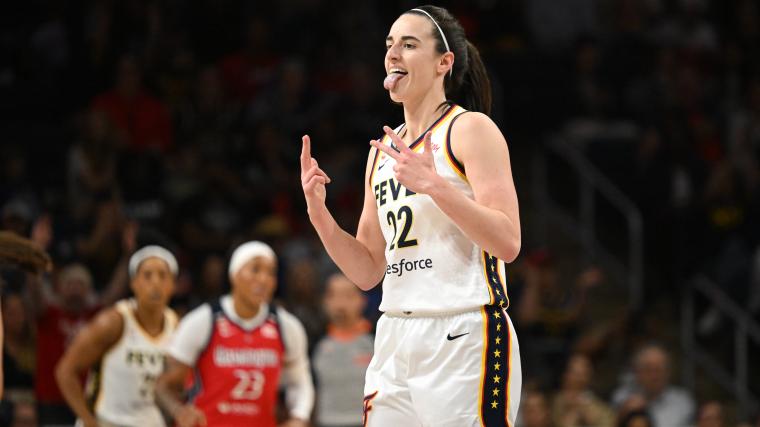
POLICY WIRE — Washington, D.C. — The flickering phosphors of sports analytics screens rarely capture the actual toll of being a lightning rod. And yet, there Caitlin Clark was, once again, the eye of the storm. Forget the box score for a moment—the real story playing out across the WNBA’s courts is less about arcs and rebounds and more about the immense, suffocating pressure piled upon an individual athlete, scrutinized minute-by-minute as a multi-million-dollar economic engine.
It’s not just the game, see. It’s the whole spectacle, the media-industrial complex that feeds off every triumph — and stumble. On a recent evening against the Washington Mystics in the Commissioner’s Cup, the Indiana Fever sought to do what teams are supposed to do: win. They had been trying to [QUOTE_PLACEHOLDER] a mantra often preached but rarely achieved under a microscope. But even a decisive lead can’t fully dissipate the atmospheric pressure that surrounds their star rookie. Clark’s team entered this contest [QUOTE_PLACEHOLDER] The air was thick with the weight of recent failures and whispered doubts about [QUOTE_PLACEHOLDER] and how [QUOTE_PLACEHOLDER]
This isn’t an isolated incident; it’s the rhythm of modern sports celebrity. Just like Clark, even the Mystics were [QUOTE_PLACEHOLDER] after a bruising [QUOTE_PLACEHOLDER] Head coach Sydney Johnson was back courtside, having had his own viral moment—a [QUOTE_PLACEHOLDER] Everyone’s on the hook, always. From the highest-paid star to the coaches, their careers and reputations often hang on public perception and fleeting wins. And the digital echo chamber? It just amplifies everything. You can’t even get ejected without it being immortalized online for endless replaying.
On the hardwood, the rookie from Iowa initially cut through the tension with crisp execution. According to The Sporting News, in the game against the Mystics, Clark managed [QUOTE_PLACEHOLDER] in [QUOTE_PLACEHOLDER] by halftime, a decent output from [QUOTE_PLACEHOLDER] from the field. She [QUOTE_PLACEHOLDER] For a player who was reportedly [QUOTE_PLACEHOLDER] it was a welcome burst. She [QUOTE_PLACEHOLDER] and [QUOTE_PLACEHOLDER] But because the game is never that simple, she also [QUOTE_PLACEHOLDER] early. Then, [QUOTE_PLACEHOLDER] later in the second quarter. The narrative pendulum swings faster than a 3-point attempt, one moment brilliance, the next, a potential setback. It’s relentless. Later, she even converted a dramatic four-point play in the third quarter after being fouled, a moment of individual prowess cutting through team dynamics.
It’s a peculiar kind of celebrity that mandates both individual excellence and team cohesion while simultaneously dissecting every misstep. But that’s the deal she’s made, implicitly or explicitly, with the colossal economic engine that’s the professional sports media ecosystem. That engine wants a hero, sure, but it also demands a story, — and often, conflict sells better than smooth sailing. It’s no wonder that in some corners, [QUOTE_PLACEHOLDER] She probably is. It’s a whole lot to carry, especially for someone so early in their career. The whispers — and the clamor, it’s enough to rattle even the most composed.
📄 POLICY WIRE WHITEPAPER PUBLISHED: PAKISTAN'S NATIONAL SECURITY POLICY PRIORITIES
👉 READ BY CLICKING HEREWhat This Means
This saga, centered on a basketball phenom in North America, isn’t just about hoops. It’s a prime case study in the politicization of public figures and the commodification of narrative in the 21st century. The immense media pressure on Clark—both celebrating and criticizing—mirrors broader societal trends where public figures, especially women in male-dominated fields, face an unparalleled level of scrutiny. It’s not enough to excel; they must perform flawlessly, embody ideals, — and still maintain an accessible persona.
From an economic standpoint, the attention on Clark is a goldmine. She’s boosting WNBA viewership, ticket sales, — and merchandise, turning eyeballs into dollars. This makes her, and by extension the Fever, a massive asset, yet also a political football, caught between traditional sports analysis and cultural expectations. Her narrative, like many high-profile figures, becomes a proxy for wider societal debates on everything from gender equality to the nature of athletic ‘greatness.’
Consider the analogous pressures on figures in other regions, even as diverse as South Asia or the Muslim world. The obsessive focus on sports icons, the instantaneous judgments, the public clamor for ‘responses’ from leaders or celebrities—it’s a global phenomenon now. We see it in the intense media attention on star cricketers in Pakistan, whose every shot or political comment can spark national debate, or the social media campaigns surrounding religious figures whose statements are instantly amplified and parsed for implications far beyond their original intent. The tools — and platforms for dissection are universal, and the demand for constant engagement is insatiable. This kind of intense scrutiny, though it makes some people rich, doesn’t always lead to calm, measured debate. Sometimes, it just makes everyone—especially the person under the lens—a bit more frayed.