


Turbulence Ahead: War Fuel Costs Slam Global Airlines, Profits Halved
POLICY WIRE — Washington, D.C. — Imagine booking that long-awaited getaway, maybe to Karachi or Kuala Lumpur, only to find the airfare suddenly astronomical, or worse, your flight simply vanished...

POLICY WIRE — Washington, D.C. — Imagine booking that long-awaited getaway, maybe to Karachi or Kuala Lumpur, only to find the airfare suddenly astronomical, or worse, your flight simply vanished from the schedule. It’s not a glitch in the app; it’s the invisible hand of global geopolitics reaching deep into your travel budget. And frankly, the folks running the airlines are feeling it way more than you are.
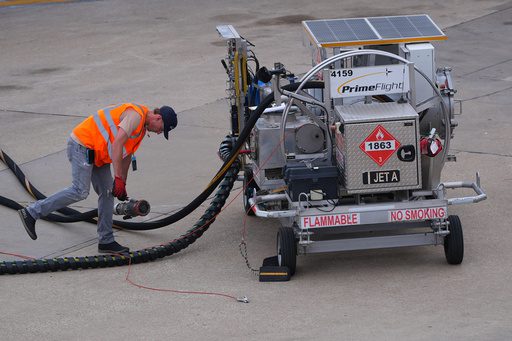
Because somewhere between the Strait of Hormuz—that rather volatile maritime choke point near Iran, where recent skirmishes with U.S. and Israeli forces brought shipping to a shuddering halt—and your preferred departure gate, the bottom fell out. Literally. For carriers everywhere, fuel prices have surged like a bad meme on the internet, leaving a trail of canceled flights, reduced perks, and staggering losses in their wake. U.S. airlines alone forked over an eye-watering $6.5 billion for jet fuel just last April. That’s a roughly 78% hike from a year ago, according to the Bureau of Transportation Statistics, even though they burned only marginally less fuel. It’s a brutal economic squeeze, — and nobody seems to be enjoying it.
But the real gut punch, the one making airline executives reach for the strongest possible antacid, is the forecast for 2026. The International Air Transport Association (IATA), basically the cartel—er, ‘trade group’—for the world’s airlines, just slashed its global profit outlook for that year by almost half. They were expecting a robust $41 billion across the industry; now they’re saying you’ll be lucky to see $23 billion. This comes hot on the heels of what was supposed to be a healthier $45 billion in 2025. You don’t need an MBA to see that’s not good math.
Willie Walsh, IATA’s plain-speaking director general, didn’t mince words. “Airlines are bearing the brunt of the fuel price shock,” he told reporters, sounding less like an industry mouthpiece and more like a weary parent. “While airfares are rising, airlines are still absorbing part of the hike in their bottom lines.” He’s right, of course. That projected $152 a barrel for jet fuel in 2026? It’s nearly 70% higher than last year. And it’s set to inflate the industry’s total fuel tab to approximately $350 billion, a hefty jump from the prior year’s $252 billion. It’s enough to make you wince.
And it’s not just American carriers doing the painful calculations. That Strait of Hormuz turbulence, the heightened tensions in the Persian Gulf region, it reverberates globally. Think of nations like Pakistan. They’re already grappling with a fragile economy, high inflation, — and an insatiable demand for imported energy. Every uptick in crude oil prices—which then trickles down to jet fuel—isn’t just an inconvenience; it’s a potential catalyst for economic and social instability. Their state-owned carrier, PIA, operates on margins thinner than a cheap selfie filter, and these escalating costs force impossible choices: raise fares and alienate passengers, or swallow losses and hemorrhage public funds. It’s a hell of a bind. But nobody really talks about it in polite company.
“Look, folks just don’t realize how razor-thin these margins get,” remarked Dr. Arifa Khan, a London-based aviation policy analyst, shaking her head. “It’s not just the tickets; it’s cargo, supply chains—everything takes a hit when fuel becomes this unpredictable. It forces these impossible, short-sighted decisions.” Indeed, airlines have been scrambling, cutting some routes entirely. American Airlines said last week it’s pausing some summer service. Lufthansa Group is slashing 20,000 short-haul flights through October. And even Air Canada, perhaps hoping no one would notice, suspended its service to New York’s JFK until autumn.
📄 POLICY WIRE WHITEPAPER PUBLISHED: PAKISTAN'S NATIONAL SECURITY POLICY PRIORITIES
👉 READ BY CLICKING HEREIATA calculates that fuel will gobble up more than 31% of an airline’s operating expenses by 2026, a substantial jump from roughly 25% just last year. When the cost of doing business skyrockets that aggressively, something’s gotta give. Usually, it’s customer experience. Or profit. Often, both.
What This Means
The immediate implication is obvious: prepare for higher airfares — and fewer options. This isn’t just about the hassle of getting to Aunt Mildred’s. It’s a drag on the global economy. Companies relying on air cargo for components or just-in-time delivery systems face rising costs — and potential delays. The travel and tourism sectors, which many nations—including developing ones like those in South Asia—desperately need for foreign exchange, will find their recovery efforts stymied. Think of the ripple effect; if it’s too expensive to fly, people stay home. Businesses scale back international expansion. The global dance slows down.
Beyond the spreadsheets and flight schedules, these soaring costs are a harsh reminder of how fragile global trade and travel truly are, particularly when geopolitical flashpoints flare up. Every confrontation in a far-off strait quickly becomes a direct tax on everything from holidaymakers to supply chain managers. It’s a messy, interconnected world, and the price of stability—or rather, instability—is now showing up on your boarding pass.