


Shadow & Spotlight: Knueppel’s Ascent Through Basketball’s Brutal Ladder
POLICY WIRE — Milwaukee, WI — The ball finds Kinston Knueppel, almost inevitably. He pivots, a motion familiar, almost eerily so, to anyone who’s watched his older brother, Kon, ply...

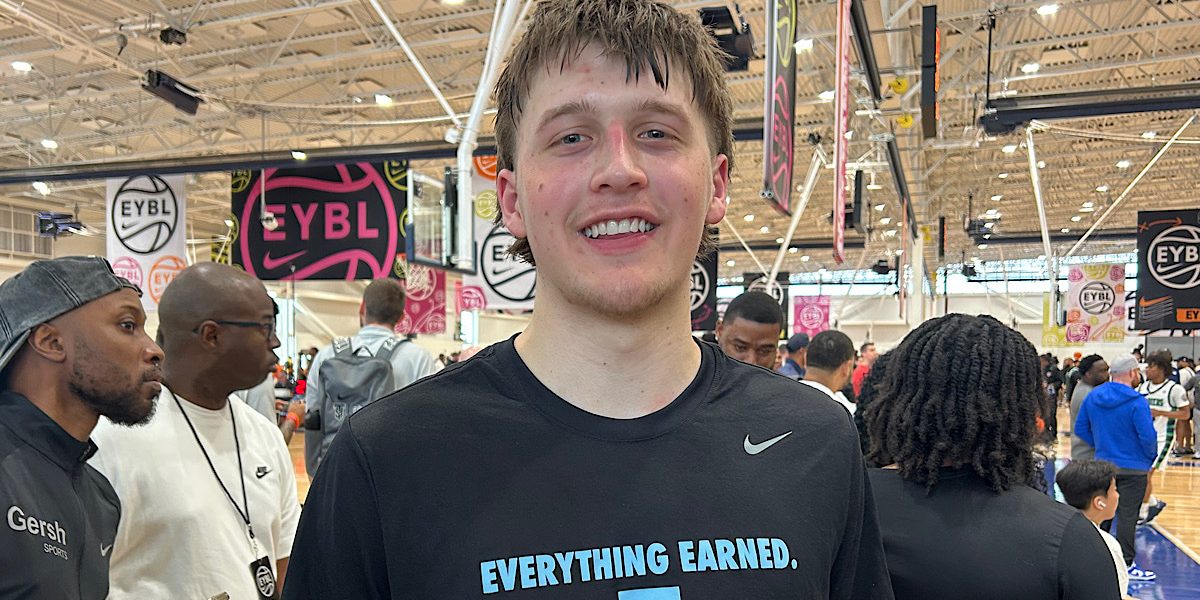
POLICY WIRE — Milwaukee, WI — The ball finds Kinston Knueppel, almost inevitably. He pivots, a motion familiar, almost eerily so, to anyone who’s watched his older brother, Kon, ply his trade on much bigger stages. But for the younger Knueppel, still just 6-foot-6 — and a high school phenom, this isn’t just about mimicry. It’s about forging an identity in the glare of inherited expectation—a crucible where raw talent meets the cold, hard mechanics of the multi-billion-dollar youth sports machine.
It’s easy to dismiss Kinston as simply “Kon’s brother.” He doesn’t think he has any official offers just yet, for starters. But you’d be missing the whole damn story. Because even without a formalized collegiate courtship, whispers turn into buzz. Davidson’s sniffing around. Louisville, Purdue, and Illinois? They’re on the line, too. That’s not the roster of a player to be dismissed; it’s a testament to the quiet hum of an emergent talent. This kid — a rising sophomore at Wisconsin Lutheran, Rivals’ No. 50 overall player in the 2028 recruiting cycle — isn’t merely tracing a familial path; he’s trying to blueprint his own, one clutch three-pointer at a time.
During the recent U16 EYBL Circuit — a proving ground for future college stars, often for future pros — Knueppel didn’t just participate; he served notice. Averaging 12.9 points, 6.0 rebounds, — and 4.0 assists, he was more than a shooter. He was a force. A play-maker. His high school season stats, mind you, were just as sharp: 10.3 points, 3.5 assists, on a scorching 47.2 percent from beyond the arc. And yes, that shooting percentage? That’s better than many seasoned collegiate players achieve. “I’m a shooting guard, can kind of do anything,” Knueppel told reporters, with the calm confidence of someone who means it. “I’ll play in the post a lot, make plays from the wing or sit in the corner. I’ve gotten a lot stronger, like in the weight room, so that’s helped develop my rebounding — and physicality down low.”
His development — his transformation, really — hasn’t gone unnoticed. Coach Eleanor Vance, a long-time recruiting analyst who’s seen more blue-chip talent than she cares to count, notes the clear shift. “You watch him play, — and the instincts are there, pure and unfiltered. But his court vision, his willingness to get dirty for a rebound? That’s what separates a prospect from just another guy with a jumper. And it shows he’s not resting on his family name.” That’s a crucial distinction, isn’t it? Because in this brutal world, names only get you so far.
But Knueppel himself admits he watches his brother. “I don’t really watch much others, I just kind of work on my game. I’d say my brother — and I have a similar mid-range jumper and the three-pointer. I wouldn’t say I’m as high level as him yet, but I’m trying to get there.” It’s an honest assessment. And that humility? That’s often a rare trait in young players anointed by recruiting services years before they can legally drive.
📄 POLICY WIRE WHITEPAPER PUBLISHED: PAKISTAN'S NATIONAL SECURITY POLICY PRIORITIES
👉 READ BY CLICKING HEREThe system, of course, is set up to find — and commodify this very potential. The youth sports industrial complex is a behemoth. These circuit tournaments, the four-star ratings, the early scouting — it’s all part of a finely tuned apparatus designed to filter talent from the millions of kids who play. According to a recent analysis by Athlife, the National Association of College & University Attorneys, NIL (Name, Image, and Likeness) opportunities across all US collegiate sports now exceed $1.1 billion annually. That’s an astonishing sum for student-athletes, — and it creates a new layer of incentive and, yes, pressure. Kinston wants to win. He wants development. He figures he can fit into any system. That’s a pragmatic approach to a highly emotional journey.
And it’s a journey that echoes globally. While America’s college system remains the gold standard for basketball development, nations like Pakistan are increasingly eyeing its framework. Organizations and entrepreneurs across South Asia, inspired by tales of humble beginnings leading to NBA stardom, are slowly building rudimentary basketball academies. Their hope, however nascent, is to replicate some aspect of the structured pathway American youth enjoy. But it’s an uphill climb, facing entrenched socioeconomic hurdles and a sporting culture still primarily dominated by cricket. Still, the dreams of those aspiring young players in Lahore aren’t so different from Knueppel’s in Wisconsin; just the access — and the machinery — that surrounds them. The architectures of success in this sport are global, even if the paths to them aren’t.
What This Means
Kinston Knueppel’s nascent recruitment saga isn’t just about a kid chasing a ball. It’s a microcosm of American exceptionalism — or perhaps, American capitalism — in its most raw, athletic form. The sheer financial scale of youth sports, the intense pressure for universities to recruit not just players but marketable assets (thanks, NIL!), shapes everything. Economically, a player like Knueppel represents not only future revenue for a college program but potentially millions for agents, endorsements, and professional leagues down the line. His personal journey, therefore, isn’t just about individual development; it’s an investment. The stakes are profoundly higher than a mere scholarship. And politically, you see hints of soft power. These athletes become cultural ambassadors, sometimes inadvertent ones, for the US system. Admiral Adnan Hassan, a seasoned diplomat with connections to sporting initiatives across the Muslim world, once observed, “America’s college basketball — the entire collegiate athletic structure, really — holds an almost mythical allure abroad. It represents opportunity, upward mobility, a kind of athletic meritocracy that nations like ours desperately seek to understand and, if possible, adapt.” That’s quite a load for a teenager to carry, even one as talented as Knueppel.