


Grand Slam Echoes: Serena’s Return a Passing Baton Amidst a Shifting Global Sports Order
POLICY WIRE — Toronto, Canada — The call, when it came, wasn’t an anomaly from the annals of sports legend; it was a rather direct, even casual, digital missive from one titan to a burgeoning star....

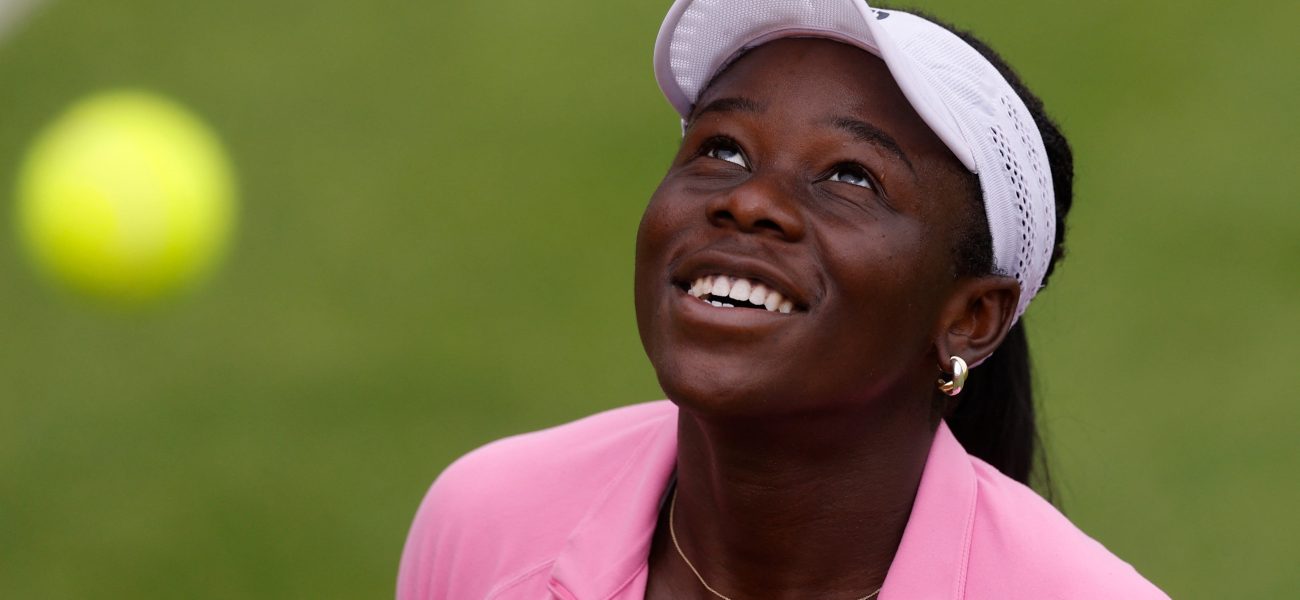
POLICY WIRE — Toronto, Canada — The call, when it came, wasn’t an anomaly from the annals of sports legend; it was a rather direct, even casual, digital missive from one titan to a burgeoning star. “Serena… asked if I wanted to play doubles with her here.” For Victoria Mboko, the reply was an instinctive, unvarnished “Yeah, sure, why not? That’s pretty cool.” A straightforward query, an unadorned acceptance—and just like that, the curtain was drawn back on a pairing that hints at far more than just a grand return to the hardcourt.
Mboko, a spry 19, now finds herself entangled in a generational tennis narrative that extends well beyond mere age gaps. Her presence alongside the sport’s colossus, Serena Williams—who hasn’t touched tournament play in nearly four years—isn’t just a feel-good story; it’s a living, breathing commentary on modern athleticism, global mobility, and the quiet machinations of soft power. Williams, 25 years Mboko’s senior, returns not just to play, but, perhaps implicitly, to anoint. And to witness the ascension of a new guard. But this isn’t just any talent coming up; Mboko’s backstory is a subtle political treatise in itself.
Her parents fled the Democratic Republic of Congo’s political turmoil in 1999, settling initially in North Carolina before Canada became their true haven. Victoria, barely two months old, was effectively born into displacement, finding roots — and a racket in Toronto. And it’s from this foundation that she’s ascended, not merely through raw talent, but through a tenacious drive Williams herself recognized. “I was quite impressed with her game, I was impressed with her attitude,” Williams observed, recalling Mboko’s early triumphs. “What I liked the most about her was the next time she played, she still kept winning. I was like, ‘OK, I love that.’ It reminded me a lot of myself.” That quiet self-assurance, a product of circumstance as much as genetics, is what caught the GOAT’s eye.
This isn’t about Cinderella, it’s about trajectory. Mboko’s rise has been nothing short of meteoric, charting a course from world No. 333 at the dawn of 2025 to a dizzying No. 9 currently. The WTA confirms her as only the fourth Canadian woman to crack the top ten—a fact Tennis Canada views as a national triumph. “Victoria represents the future of Canadian tennis and embodies the spirit of our diverse nation,” remarked Michael Downey, President and CEO of Tennis Canada, in a recent statement. “Her journey resonates globally, and we couldn’t be prouder of her remarkable achievements on the international stage.” Because for every serve, every backhand winner, there’s a quiet echo of the journey her family undertook. A journey many across the world, from Pakistan to Latin America, undertake daily, often finding solace or aspiration in figures who break barriers.
📄 POLICY WIRE WHITEPAPER PUBLISHED: PAKISTAN'S NATIONAL SECURITY POLICY PRIORITIES
👉 READ BY CLICKING HEREHer 2025 season saw her clinch two titles, including her ‘home’ tournament, the National Bank Open, a victory path that saw her conquer formidable opponents like Coco Gauff and Naomi Osaka. Then came the WTA’s Newcomer of the Year nod. And this year? Finals in Adelaide, Qatar, — and Strasbourg. It’s a grind. A grueling, jet-setting, unforgiving circuit that demands unrelenting discipline — and focus. Mboko confesses she didn’t really know Williams before their recent practices. But it’s been “a pleasure” anyway. “She’s a really funny person,” Mboko offered, a rare moment of candidness amidst the structured replies of a burgeoning professional. “I feel like I can learn a lot from her but, at the same time, I think we can have a lot of fun.” The admiration is mutual, the torch—symbolic or otherwise—is in plain sight.
What This Means
This doubles pairing is a potent metaphor for a larger geopolitical reality. Mboko’s story—a first-generation Canadian whose family sought refuge from civil unrest—lends a compelling narrative to Canada’s brand of multiculturalism on a global stage. Sport, after all, has always been a subtle tool of diplomacy — and national identity building. While Williams embodies established American athletic dominance, Mboko represents the fresh dynamism of diaspora communities contributing disproportionately to global talent pools. For countries across the South Asian and Muslim worlds, where athletic opportunities, especially for women, can be circumscribed, Mboko’s visibility as a top-tier athlete with an African immigrant background sends a powerful message. It hints at the boundless potential when talent is allowed to flourish, irrespective of origin or initial disadvantage. It’s a story that transcends mere scores and points; it’s about inspiration, resilience, and the ever-shifting landscape of global ambition, showcasing how figures like Mboko can subtly influence perceptions and aspirations across vast cultural distances, sometimes more effectively than traditional foreign policy initiatives. See AI’s Global Cheers for a contrasting view of modern influence.