

Shadow Games: Israel’s Stealthy Counterpunch & Tehran’s Tactical Retreat
POLICY WIRE — Washington D.C., United States — It wasn’t the fiery crescendo many had feared. Instead, a deliberate, almost surgical hush descended over the Middle East last week, punctured...

POLICY WIRE — Washington D.C., United States — It wasn’t the fiery crescendo many had feared. Instead, a deliberate, almost surgical hush descended over the Middle East last week, punctured only by the spectral echoes of what appeared to be precision strikes against Iran’s air defense grid. The world held its breath, braced for the inevitable eruption, only to witness what amounted to a high-stakes whisper in the global ear of Tehran: a potent message delivered with an unnerving, almost disdainful, accuracy that deliberately side-stepped civilian casualties and sovereign posturing. It’s the kind of move that speaks volumes through its calculated omissions, and it left the regional players—and anxious allies farther afield—pondering the sheer audacity of Israel’s restraint.
Nine air defense and radar systems, scattered across Iran’s sprawling landscape, allegedly bore the brunt of this clandestine assault, sources within Western intelligence agencies tell Policy Wire. These weren’t indiscriminate blasts; this was an artful degradation of defensive capabilities, suggesting a much deeper understanding of Iran’s layered protective dome than publicly assumed. The choice to hit these systems, rather than say, direct strikes on nuclear facilities, signals a desire to erode deterrence without sparking an all-out inferno. But that’s a tricky tightrope to walk, isn’t it? One slip and the powder keg goes up.
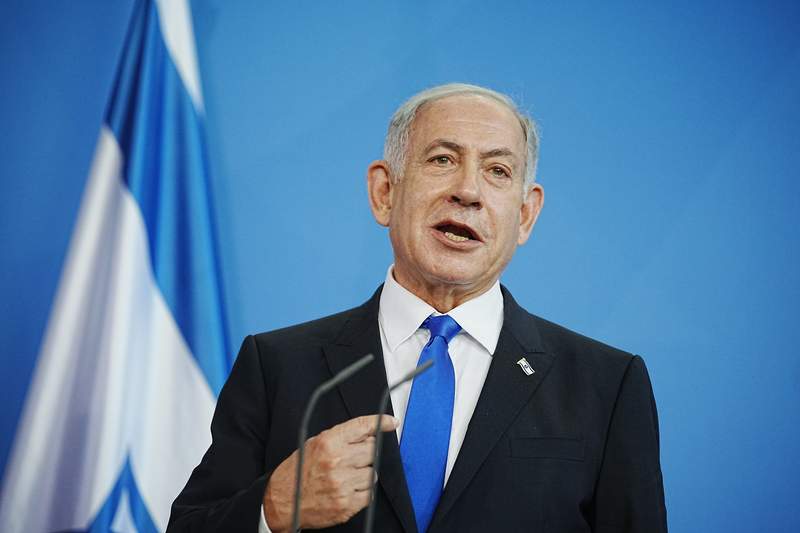
And because the strike was so targeted, so confined, Iranian authorities downplayed it with unusual alacrity, scrambling to declare any damage ‘minimal’ or ‘failed.’ Brigadier General Esmail Qaani, head of the Quds Force, told state media, “Our air defenses proved their readiness; Israel’s purported aggression was an act of desperation, and it changed nothing strategically speaking.” That’s the public line, anyway. Privately, they’re likely taking stock of what just slipped past their watch, — and how. On the Israeli side, Prime Minister Benjamin Netanyahu’s office offered its characteristic brevity, stating only, “We have demonstrated our resolve to protect our interests and our people. Let no one mistake our restraint for weakness.” It’s classic Netanyahu—say everything without saying anything specific at all.
The implications ripple outwards, touching every corner of the Muslim world, from Cairo to Islamabad. For countries like Pakistan, already navigating a complex internal landscape and external geopolitical pressures, this delicate dance between two antagonists is a constant source of anxiety. Islamabad doesn’t want to choose sides; it simply craves stability for its own economic — and security imperatives. Because when regional volatility spikes, so do oil prices, and Pakistan, which imports over 80% of its crude oil, feels that pinch immediately, exacerbating existing economic woes. Last year alone, Pakistan spent nearly $24 billion on energy imports, a staggering sum for an economy already on the brink.
What Israel’s latest gambit demonstrated wasn’t just kinetic capability, but an intelligence coup—a mapping of Iran’s sensitive security architecture. It was, if you squint, a quiet warning. The sheer precision also speaks to the ongoing cat-and-mouse game between the two rivals, a game often played in the shadows, far from public view. These weren’t missile barrages that blackened skies. This was the meticulous surgical operation, a strategic scalpel, cutting precisely where it needed to. They weren’t seeking to obliterate; they were aiming to educate. The lesson: we know where you are, we know your weaknesses, — and we can touch you when we want. This quiet message is often louder, more terrifying even, than an all-out salvo.
📄 POLICY WIRE WHITEPAPER PUBLISHED: PAKISTAN'S NATIONAL SECURITY POLICY PRIORITIES
👉 READ BY CLICKING HEREBut the true measure of such a strike isn’t just the physical damage, it’s the psychological impact. It sows doubt, creates paranoia, — and forces a reevaluation of established defenses. Iran’s broader Iranian strategy of regional projection through proxies, honed over decades, faces a significant stress test. The message for these proxies is also clear: don’t count on air cover.
What This Means
This understated response from Israel represents a masterclass in controlled escalation, preventing an all-out regional war while still affirming its deterrence capabilities. Economically, the momentary sigh of relief across global markets, particularly oil, is deceptive. While a major conflict was averted this time, the fragility of the status quo remains stark. Any future flare-ups could send prices spiraling, impacting inflation and economic stability worldwide, but especially in energy-dependent nations across South Asia. Politically, the episode exposes the fault lines in regional alliances and the complex web of interests governing Gulf states’ reactions, caught between appeasing a regional hegemon (Iran) and seeking security guarantees from distant powers (U.S.). The quietness of the Israeli strike implies a sophisticated cyber-kinetic operation or highly advanced stealth assets. This escalates the technological arms race, raising the bar for regional adversaries. It’s not just about who has bigger missiles; it’s about who can see, bypass, and nullify the other’s defenses with surgical precision. This is a cold, calculated conflict playing out, not in headline-grabbing explosions, but in the methodical dismantling of perceived invincibility, piece by silent piece. The world may have dodged a bullet, but it’s clear the strategic game of chess has just gotten several moves deeper.