


Ancient Covenants, Modern Fault Lines: Presbyterian Schism Brews Over Clergy Vows
POLICY WIRE — Louisville, Kentucky — It ain’t often a church bureaucratic memo ignites a firestorm, but here we’re. Deep within the sedate, wood-paneled halls of America’s...

POLICY WIRE — Louisville, Kentucky — It ain’t often a church bureaucratic memo ignites a firestorm, but here we’re. Deep within the sedate, wood-paneled halls of America’s Presbyterian Church (U.S.A.), a seemingly modest proposal has stirred a cauldron of dissent, threatening to splinter a denomination already grappling with dwindling pews and a shifting spiritual landscape. It isn’t about doctrine, not directly anyway, nor grand theological epiphanies. Instead, it’s about relationships, plain and simple: an insistence that clergy must be in monogamous partnerships, or no partnership at all.
This isn’t just an internal squabble over a fine print; oh no. This is a battle over identity, inclusion, — and the very meaning of commitment in the 21st century. One faction — largely self-identified traditionalists — has been pushing for a clear, unambiguous stipulation: ministers, deacons, and elders must be [QUOTE_PLACEHOLDER]. They say it’s about preserving the sanctity of their traditions. And for those outside of conventional marriage? Well, celibacy, they suggest, remains a dignified, even preferable, option.
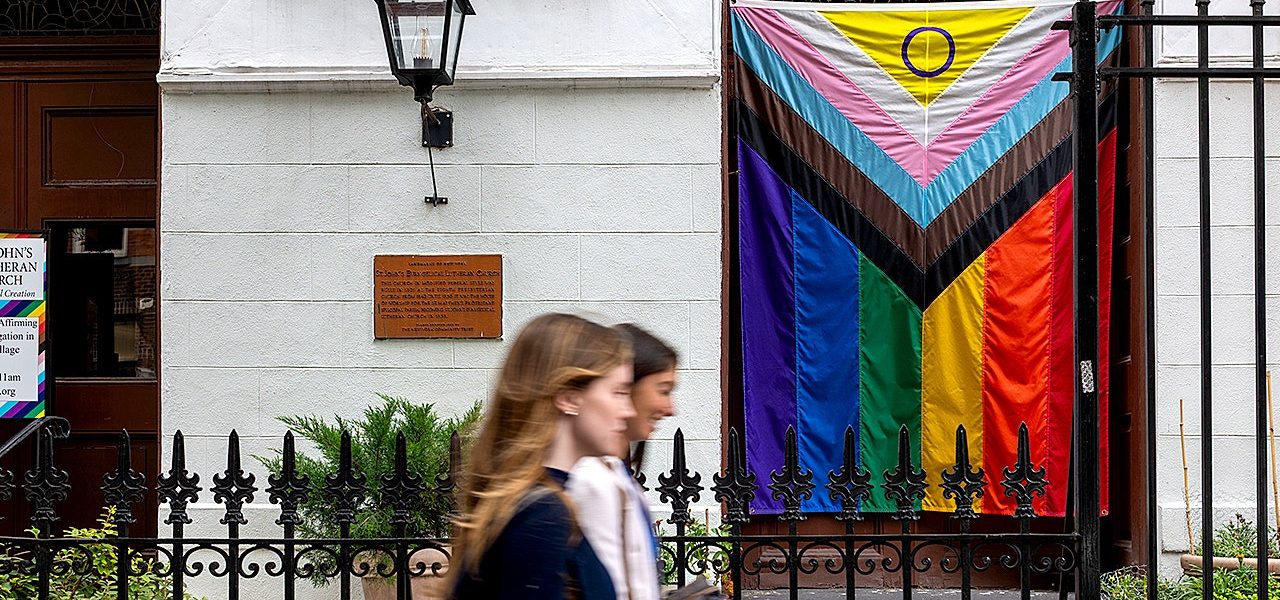
But the blowback? It’s been swift, ferocious, — and far from polite. Folks on the more progressive side are calling this proposal everything from exclusionary to downright cruel, especially for their LGBTQ+ clergy members who have, in recent years, found some semblance of acceptance within the denomination. You’d think the fight over marriage equality within the church had been settled, at least mostly, a few years back. Apparently, not so fast.
Because, really, what we’re witnessing is a delayed aftershock. When the church eventually embraced marriage for all its members, including those in same-sex relationships, many traditionalists stayed, albeit grumbling. They held onto the hope, it seems, that while the congregation might evolve, the leadership — the very face of the church — could somehow remain pure, unblemished by the modern world’s complications. This proposal is that last stand, that final, desperate attempt to draw a line in the sand, hoping against hope the tide won’t breach it.
A recent survey of clergy members, conducted in late 2023 by an independent theological think tank, found that a staggering 28% of current ministers already live in circumstances that might not meet the strictures of the proposed definition. This statistic, now circulating furiously through online forums and whispered conversations in presbytery meetings, highlights the sheer audacity of the motion. It’s not just a theological debate; it’s a potential professional purge, disguised in pastoral language.
This whole fracas, of course, isn’t happening in a vacuum. It mirrors a global conservative re-entrenchment in various faith traditions. Look across the map, from the Christian denominations grappling with similar questions in parts of Africa, to the fervent debates among Islamic scholars in South Asia. While the specifics differ dramatically—polygamy is a historically and religiously sanctioned practice for men in some Muslim communities, contrasting sharply with Western Christian norms of monogamy—the underlying tensions over tradition, interpretation, and modernity remain uncannily familiar. You see a similar insistence on [QUOTE_PLACEHOLDER] in discussions surrounding, say, the role of women in mosque leadership or the interpretation of Sharia law regarding personal status in places like Pakistan. It’s that uneasy equilibrium between established religious precedent and evolving societal expectations—a tension point that creates serious reverberations. For a deeper look at similar tectonic shifts, one might consider the issues explored in Rumbling Fault Lines: A Philippine Quake and Asia’s Uneasy Equilibrium.
📄 POLICY WIRE WHITEPAPER PUBLISHED: PAKISTAN'S NATIONAL SECURITY POLICY PRIORITIES
👉 READ BY CLICKING HEREThe internal opposition isn’t just rhetorical; it’s getting organized. Advocates for broader inclusion are framing the proposed language as a step backward, an unchristian act of judgment that targets particular groups within their ministerial body. They argue it undermines decades of often painful, soul-searching progress the denomination has made towards becoming a more welcoming, and arguably, more relevant institution. They aren’t backing down, not by a long shot.
The Presbyterian Church (U.S.A.), once a powerhouse of American Protestantism, has seen its membership numbers dip year after year, as have many mainline denominations. Introducing stricter codes of conduct, many argue, will only accelerate that decline. It won’t bring back the good old days; it’ll just alienate more young people, more diverse communities, and, crucially, more of its existing dedicated clergy who simply don’t fit neatly into increasingly narrow definitions of faithfulness.
This isn’t merely an arcane theological debate for seminary professors. It’s a full-blown culture war playing out in church basements and online forums, with real consequences for people’s livelihoods and spiritual homes. And what it’s revealing is just how fragile institutional unity can be when the world outside keeps turning, while some within refuse to budge.
What This Means
This whole episode means one big thing: institutional religion in the West, particularly mainline Protestantism, ain’t done wrestling with its internal contradictions. It’s caught between a nostalgic longing for a more unified, traditional past and the inescapable pressure of modern social norms. Economically, this move, if it gains traction, would be a disaster. Denominations struggling with declining endowments and an aging demographic can ill-afford to alienate their younger, often more progressive members and the clergy who serve them. This isn’t just about losing members; it’s about losing financial support, fresh leadership, and, ultimately, relevance. It creates a deeply unsettling internal market, one where a significant segment of the workforce (the clergy) is under threat due to perceived moral failing rather than competence or conviction. Politically, within the church, it signifies a deep, entrenched polarization that mirrors wider societal divisions. It’s not just a disagreement; it’s an identity marker, defining who’s ‘in’ and who’s ‘out’ — a policy that ensures a protracted, costly, and spiritually draining struggle rather than fostering unity. This kind of rigidity also weakens the church’s moral authority on other social issues, making it appear inwardly focused and out of touch. The broader implications suggest a further fragmentation of American religious life, contributing to a landscape where spiritual homes are increasingly bespoke, chosen not for denomination, but for alignment with individual ethical convictions. You can see similar forces at play when nations struggle with profound social shifts, much like when political decisions lead to unexpected crises, such as those detailed in Indonesian President’s Signature Policy Sours. It’s an act of self-sabotage, pure — and simple, threatening to push a historic institution further into obscurity.