
Asia’s Quivering Edge: Post-Tremor Travel Fears Collide with Economic Realities
POLICY WIRE — Tokyo, Japan — The Pacific Ring of Fire isn’t just a geological boundary; it’s a constant, visceral reminder of Asia’s uneasy equilibrium. Its tremors don’t just...

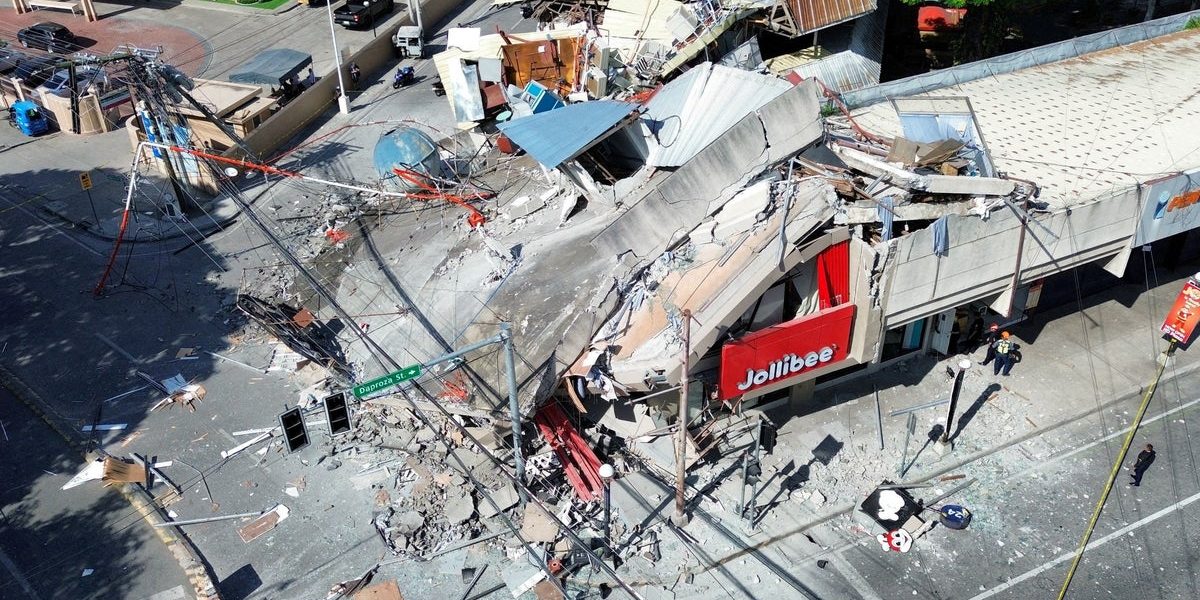
POLICY WIRE — Tokyo, Japan — The Pacific Ring of Fire isn’t just a geological boundary; it’s a constant, visceral reminder of Asia’s uneasy equilibrium. Its tremors don’t just shake landmasses; they rattle economies, tourism projections, — and even diplomatic narratives. The latest significant earthquake, centered off Mindanao in the Philippines, served up a stark reminder, triggering fleeting tsunami advisories for coastal Japan and throwing a fresh coat of anxiety onto an already jittery travel market. For a region that lives—and sometimes dies—by the earth’s caprice, understanding the nuance between distant tremor and local threat becomes everything. And let’s be honest, few places are quite as practiced in this grim choreography as Japan.
Forget the initial headlines asking, “Is Japan safe?” That’s a parlor game. The real story here is how an archipelago, exquisitely vulnerable to nature’s whims, calibrates its image and its economic lifeline against an unyielding geological fact. But you know, this isn’t just about brochures — and bullet trains. It’s about a nation’s deep-seated preparedness, a cultural bedrock forged by repeated catastrophe, often unseen by the casual observer. The government, perpetually aware of its precarious position, wasted little time reassuring both its citizens and, perhaps more pertinently, its dollar-wielding visitors.
“We’ve engineered resilience into the very fabric of our urban landscapes — and our response protocols,” declared Mr. Kenji Sumida, a spokesperson for Japan’s National Tourism Organization, during a recent briefing. “The occasional geological tremor, however unsettling, rarely impacts the safety of our well-prepared metropolitan areas or our high-speed transportation networks. Tourists needn’t fret over an earthquake that struck hundreds of miles away; our systems are designed to detect and respond to immediate, localized threats.” That’s not mere boilerplate, by the way; it’s a testament to decades of investment in seismic engineering and early warning systems.
The Philippines, of course, experiences the sharp end of the stick more frequently and with sometimes devastating consequences. For them, it’s not about calming tourist nerves, but about immediate survival — and rebuilding. Ambassador Liza Rodriguez, Manila’s envoy to a prominent Southeast Asian forum, articulated a familiar regional challenge: “Our shared seismic reality demands a common front – not just in rapid response, but in shared knowledge, infrastructure resilience, and collaborative disaster risk reduction strategies across the Indo-Pacific.” Her point, unstated but understood, is that geological boundaries respect no national borders. This interdependence stretches beyond ASEAN, touching nations like Pakistan, which, though geographically distinct, faces similar developmental hurdles when confronted by its own potent seismic zones in the Himalayan foothills.
It’s this complex web of geological destiny — and national policy that fascinates, isn’t it? Because despite the terrifying power of these events, daily life must proceed. Tourists still book flights, businesses still ship goods, — and diplomats still hold their summits. For a nation like Japan, whose 2023 tourism numbers were projected to rebound to 2019 levels—over 30 million visitors—before recent global uncertainties, any blip on the seismic radar sends a shiver through their finely tuned economic machine. And one shiver, however small, can cascade into others.
📄 POLICY WIRE WHITEPAPER PUBLISHED: PAKISTAN'S NATIONAL SECURITY POLICY PRIORITIES
👉 READ BY CLICKING HEREThe sheer scale of infrastructure hardening in Japan means that incidents hundreds of miles distant seldom pose a direct risk to major travel hubs like Tokyo or Osaka. Data from the U.S. Geological Survey indicates that over 80% of the world’s largest earthquakes occur along the Pacific Ring of Fire. It’s a busy neighborhood, to put it mildly. Travelers are typically more at risk from mundane things—like slipping on a wet sidewalk—than from a major, distant temblor in a country with world-class safety standards. It’s about managing perception as much as managing risk, a nuanced task where headlines often shout louder than facts.
But the ripple effect can be felt far beyond immediate destruction. Shipping lanes get disrupted. Insurance premiums shift. And global supply chains, often centered in these very nations, hold their collective breath. Just look at the aftermath of past mega-quakes. The costs aren’t always immediate or localized. And we’re not just talking about electronics, are we? Rumbling fault lines have a habit of unsettling much more than just tectonic plates. From the Indian subcontinent to Southeast Asia, disaster preparedness is an ongoing, often underfunded, project.
What This Means
The incident off Mindanao, while geographically removed from Japan’s core tourist regions, isn’t an isolated event; it’s a periodic reminder of the Indo-Pacific’s intrinsic seismic volatility. Politically, Japan’s swift communication regarding safety isn’t merely about tourism. It’s a projection of national competence and stability, essential for its role as a regional economic anchor and a safe haven for global business operations. Economically, while short-term dips in bookings might occur due to skittish travelers, Japan’s robust infrastructure and effective disaster management typically limit significant long-term impact on its vital tourism sector, a cornerstone of its post-pandemic recovery strategy. For nations like the Philippines, or even Pakistan on its own volatile fault lines, this event underscores the urgent, continuous need for international cooperation in disaster readiness and resilient development—a recurring conversation for diplomats and development experts alike. It’s less about a single tremor and more about the incessant, often silent, pacific rim jitters that shape policy and perception across half the globe. The planet, it seems, won’t stop reminding us who’s really in charge.